

-1024x576.png)
When I requested a translation, I sent the game build with the message, "Thank you in advance. Please make sure to play it first before starting the translation."
Quoted from the text
Two days later, I received emails from two people with the same content.
I cried a lot.
At that time, there was still no music in the game.
In January of this year, the new title 'We Must Solve the Unsolved Cases' by the South Korean solo developer SOMI has recently garnered over 5,000 overwhelmingly positive reviews on Steam, creating a significant buzz. The game's system, sound, and story have all received high praise, with many reviews commonly expressing sentiments like "moving," "relatable," and "healing."
SOMI, who has been in the legal field in Busan, South Korea for nearly 20 years, has released six works over the past decade, including the "Guilt Trilogy" consisting of 'REPLICA,' 'LEGAL DUNGEON,' and 'The Wake.' He has attracted attention for his works that primarily convey social messages, and this time he expressed a desire to create "a world completely separate from himself," which has sparked great interest among users who enjoyed 'Unsolved Cases.'
Today, SKOOTA conducted an interview with SOMI, an indie creator gaining global attention beyond Korea. We want to vividly convey the behind-the-scenes stories about the production of this work and the thoughts embedded within it, focusing on aspects that any user who has played his games would be curious about.

SOMI
Debuted in game development with 'RABBIT HOLE 3D' in 2014
Notable works: 'REPLICA' (2016), 'LEGAL DUNGEON' (2018), 'The Wake' (2020)
Latest work: 'We Must Solve the Unsolved Cases' (2024)
2016 INDIE STREAM Festival Award Winner
2020 Indie Arena Booth Best Story Game Award Winner
2024 A MAZE./Berlin 2024 Grand Prize Winner, BitSummit Drift Game・Design Excellence Award, BIC Fest 2024 Jury Award・Social Impact Award Winner, among many other accolades
Currently working in the legal field while also being a solo developer
20 Years in Law and 10 Years as a Game Developer: SOMI on "Game Development That Started from Chance and Curiosity"
――Recently, we welcomed SOMI, a well-known developer in the indie game scene that has been making waves not only in Korea but also in Japan. Could you please introduce yourself briefly?
SOMI: First of all, I don't think "famous" suits me at all (laughs). I am SOMI, a solo indie game developer who has been creating games in Busan, South Korea for about 10 years. Since releasing 'RABBIT HOLE 3D' in 2014, I have released six works. My notable works include the Guilt Trilogy, which consists of 'REPLICA' (2016), 'LEGAL DUNGEON' (2019), and 'THE WAKE' (2020). This January, I released my latest title 'We Must Solve the Unsolved Cases' (2024), and I am currently working hard on promotional activities.
――I hear that you are not a full-time developer but are balancing your main job with indie development. As you mentioned, it's been 10 years since you started making games, but what kind of creative activities were you involved in before entering game development?
SOMI: During my university days, I had a strong desire to become a novelist. I wrote short stories and entered literary contests, really striving to debut as a novelist. Unfortunately, I didn't have the skills to make a proper debut... but I had that experience. Before that, in high school, I wanted to be a manga artist and spent a lot of time copying manga.
――Could you tell us how you transitioned from wanting to be a novelist or manga artist in university to game development?
SOMI: I majored in law in university, so I still work in a legal-related job. I've been at my current workplace for about 20 years, and I'm very accustomed to the daily grind of company life, like a hamster on a wheel. In that context, I thought that having my own creative activities, my own creations, or engaging in very creative activities could be a source of vitality in my life. I also thought it could be a way to express my thoughts and relieve stress, so I initially decided to self-study programming. Through that, I started creating apps and releasing them on app stores, like an app for tarot card readings or an app that sends emails a year later. I was making things like that.
――From what you've shared, it seems like rather than sticking to one thing, you tried various things from different perspectives. How did you settle into game development?
SOMI: After self-studying programming and creating and selling apps, there was a time when I was thinking about what to create next. At that time, there was a very popular mobile game called 'Super Hexagon' (2012). That game is truly an amazing indie game, but at the time, I didn't even know what indie games were, and I wasn't someone who enjoyed games that much. Even when I played that game, I couldn't understand how wonderful it was, and I thought, "If I could just make something like this, I could make it even better." With such an outrageous thought, I created 'RABBIT HOLE 3D.'
――I think the current SOMI and the atmosphere of 'RABBIT HOLE 3D' are quite far apart (laughs).
SOMI: Actually, I still have a strong passion for rhythm games. So when I was asked, "What do you want to create next?" I often replied, "I want to make a full-fledged rhythm game next." I also really love chiptune, and I still have a small goal of creating a wonderful rhythm game that surpasses 'Super Hexagon' using chiptune.
――I heard that you were making apps, and you even reached 3rd place in the Korean app store. In a way, I think you might have had more motivation with the app, so why did you transition to game development?
SOMI: I think it was very coincidental. The start of making apps was also a chance occurrence... though I feel like that's not a story for now. The transition from making apps to games actually happened when I was thinking, "What should I make for the next app?" and I thought, "Is a game that looks so simple getting such a great response? Then I should try too..." That's how I started. As I was doing that, I began to realize, "Oh, making a game is really a difficult process, and even games that seem very simple are the result of extensive research and effort," which took some time to understand.
From Form to Message: "Don't Bring Politics into Games"
――Since the word "curiosity" came up, I have a question. You created your first game out of curiosity, but what kind of curiosity drove the creation of SOMI's representative work, the "Guilt Trilogy"?
SOMI: After making 'RABBIT HOLE 3D', I created a 2D puzzle platformer game called 'RETSNOM' (2015). I think I was gradually determining the direction of such 2D games, like incorporating a story little by little into pixel art. When I was making 'REPLICA', after releasing 'RETSNOM', I was thinking about what to make for the next game when I came across a piece of art made in pixel art for a mobile phone screen. I couldn't get that image out of my head and wondered, "Is there a game that uses the entire mobile phone screen?" At that time, there were no such games at all. So, I thought that if I displayed the entire screen in pixel art, it would look really beautiful, and I remember starting from that approach.
In other words, 'REPLICA' was a game created from form first. I started with the idea of structuring the mobile phone screen within the game, creating a system where the screen, message apps, photos, and various apps would operate. After that, I worked on adding the story later. By the way, the story I initially included in 'REPLICA' was completely different from the version that is currently released.
*The work that marks the beginning of the Guilt Trilogy.
――It's shocking to hear that 'REPLICA', which can be said to be the beginning of the Guilt Trilogy, was a game created from form. You mentioned that the story was completely different from now, could you share a bit more detail about that?
SOMI: Initially, I was trying to create a story based on the novel 'The Talented Mr. Ripley' (1955). The basic storyline is about a protagonist named Tom who kills another person and lives that person's life, approaching the wealthy son Dickie, killing him, and pretending to be Dickie. Right after Tom kills Dickie, he has Dickie's phone and is creating a story about how to create an alibi for the murder while Dickie's friends still think Dickie is alive. I structured that and showed it to friends, and while playtesting, the events of 2016 occurred. As you may know, there were protests demanding the impeachment of President Park Geun-hye in South Korea, and prior to that, there were various demonstrations.
SOMI: And before that, there were pressures on media, publishing, and broadcasting, and various blacklist incidents. During a time when the atmosphere in the country was becoming increasingly totalitarian, I felt ashamed of myself for not doing anything while seeing other citizens fighting in the streets. So I wanted to do something too, and I thought, "What if I tell a story through this game?" and decided to completely change the story I was going to include. That led to the creation of the current 'REPLICA' and sparked the beginning of the Guilt Trilogy.
――So it was in 2016. I believe many people in Japan who hear this story will remember it as a significant event, but it's surprising to hear that the events of that time influenced your creation. However, dealing with social issues in the medium of games was, and still is, met with strong backlash, especially back then. How did you actually feel about that at the time?
SOMI: Yes, I remember that at that time, it was almost unheard of to address social issues through games. I had never seen works that dealt with political issues or various social problems occurring domestically. Rather, when I was really young, there were parody games where presidents fought each other, but after that, I don't recall any works that directly or aggressively addressed social issues. I think the atmosphere of not recognizing the approach of treating games as an artistic medium really narrowed the genre of games. That's how I feel.
Additionally, I think the aspect of "games must be fun" and "games should provide enjoyment" has been overly emphasized, which can sometimes block various possibilities that can be realized through the characteristics of the medium from the start. I believe the reason the flow is slowly changing recently is partly because games have established a position as a genre of art, while still maintaining the system that games must be fun, recognizing that the notion of fun varies greatly from person to person. So, while some people find joy in very simple games like a basic ping pong game, others experience immense pleasure in dissecting the changes in story structure and the relationships of the characters that appear... it's a difference in perception. There are people who find joy through various genres and layers, and I think the younger generation, recognizing the potential for their games to reach many people, is starting to create games.
Moreover, I feel that the global perspective itself is changing, and there seems to be a growing viewpoint that sees so-called impact games, influencer games, or serious games as a genre. Awards have been created to gather such games separately, and there is a recognition that there is a certain demand for these games, with people starting to think that these games are good from a marketing perspective. I believe that various reasons have contributed to a significant change in the atmosphere.
――I truly believe you are right. That very awareness is what supports the emergence of diverse games, including indie games, in this era. Living through such a tumultuous time, do you still hear voices saying, "Don't bring politics into games," SOMI?
SOMI: Yes, indeed. There are reviews of 'We Must Solve the Unsolved Cases' that say, "In the end, it’s a game made because I wanted to do politics." Also, during a time when various feminist issues were arising in South Korea, I strongly expressed my stance on ideological scrutiny for the suppression of feminism, which made me a target of criticism among gamers. So, I received a lot of malicious comments, and every time a game is released, if you look at internet forums related to unsolved cases, there are basically two major trends.
One is the perspective that "this is a game made by a feminist developer," leading to comments like "I won't look at it again, I'll avoid it" or "I absolutely must not buy it." The other is from people who think, "This person has a proper perspective, so it’s safe to trust and play their game." To put it simply, there are still many people who view discussing personal opinions, perspectives, ideologies, and philosophies within games as a huge taboo. I have experienced this both in the past and still do now.
――In a related interview, you mentioned that you were very grateful to receive the evaluation of "You are the best feminist," which was quite impressive (laughs).
SOMI: I strive to be that way. It’s something I need to study and learn a lot about.
What I Tried to Erase from the Game Was None Other Than 'Myself' — "I Wanted to Create a Completely Fictional World"
――I would like to get to the main topic. I saw in an interview that you mentioned 'We Must Solve the Unsolved Cases' is made as a "game with faces," which is different from the guilt trilogy we discussed earlier. What do you mean by "a game with faces"?
SOMI: In the previous guilt trilogy, there were no illustrations of characters at all. Normally, as you get to know the characters, you read their lines, right? Through those lines, you infer, "Oh, this character probably looks something like this" or "They are probably around this age," and the story progresses in that way. One day, 'LEGAL DUNGEON' was released with a terrible Japanese translation. Despite that translation, the two people from Petit Depotto, who created 'Gnosia' (2019), really loved this work.
They contacted me, and even though 'Gnosia' was about to be released, they corrected the translation from start to finish and even drew illustrations. The Switch version was sold with these illustrations, and the people's reactions were completely different from before. It was just one illustration that made the difference compared to the initial version of 'LEGAL DUNGEON.' The translation issues had already been resolved before the Switch version was released, so I felt at that time that through just one illustration, people’s perception of this character changed completely. While I think illustrations can limit people's imagination, I also felt that they could serve as a trigger to make people feel the reality of this character's existence, and I pondered that a lot back then.
――I heard the news that 'Gnosia' has recently been decided to be adapted into an anime.
SOMI: Yes, I think that’s really amazing.
――Can we hope that someday your work will also be adapted into an anime?
SOMI: That would be truly wonderful. If I could see a work like 'LEGAL DUNGEON' in anime or film, there would be no greater honor.
――In your previous answer, you mentioned that "having illustrations can limit imagination." Did you have a negative impression of illustrations before 'LEGAL DUNGEON'?
SOMI: No, I didn’t think they were bad. When I was making 'REPLICA' and 'LEGAL DUNGEON,' I had the idea that I needed to draw out the most suitable image for the user. For example...
Hmm, I actually thought 'REPLICA' was a game that didn’t need characters. By emphasizing the abstraction of characters, I wanted to express that it’s a situation that anyone can experience. Or I wanted to highlight the situation of the prisoner's dilemma itself, or I felt I was focusing on creating a game that was more about the functions of this mobile phone. In the case of 'LEGAL DUNGEON,' during conversation scenes, the rank insignia appears by replacing characters. I wanted to emphasize that they are not treated as people but merely function as cogs within the system. Also, in 'LEGAL DUNGEON,' the protagonist's gender is hardly revealed. You don’t find out their gender until just before the ending. I think I considered that kind of ambiguity could give people an unrestricted imagination.
――I see. Through the illustrations by Kotori, you realized a new perspective on the work, and that led you to think about creating "a game with faces" in 'We Must Solve the Unsolved Cases.'
SOMI: I think my greedy side influenced that. This time, I wanted to create while properly looking at children with faces... that was a personal desire or thought I had.
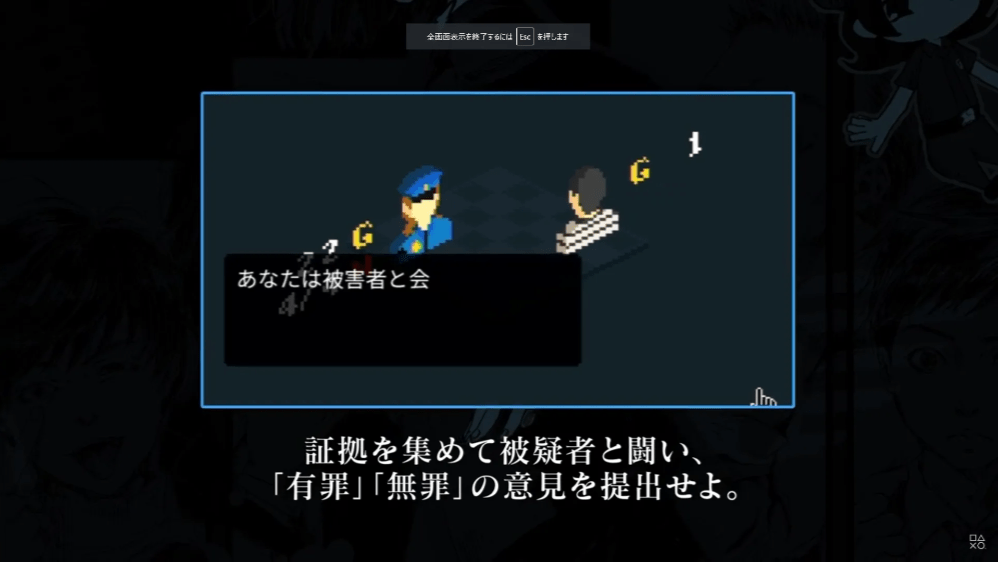
Quoted from the PS4 release trailer. https://www.youtube.com/watch?v=Up95daqmWL8
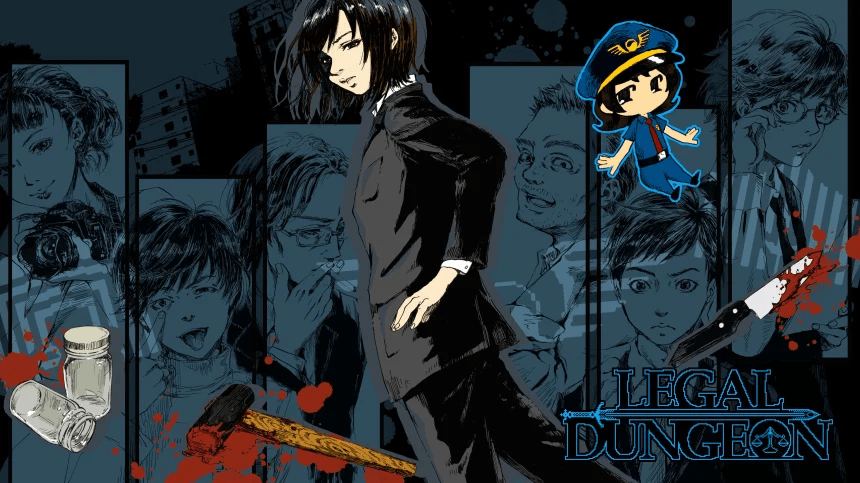
Quoted from the PS4 release trailer. https://www.youtube.com/watch?v=Up95daqmWL8
――So, SOMI, you created children without faces in your previous works, but in 'We Must Solve the Unsolved Cases,' you created children with faces. How did this mindset influence the actual production?
SOMI: Creating children with faces was very distinctive, and it was something I realized later on. After finishing the game, I thought, "Ah, this is the difference." Unlike the guilt trilogy I mentioned earlier, 'We Must Solve the Unsolved Cases' was created with the content first. It wasn't about creating the form first like 'REPLICA,' 'LEGAL DUNGEON,' or 'THE WAKE.' In 'We Must Solve the Unsolved Cases,' I created the entire story first and then thought about how to best present that story, which naturally led me to focus more on the character's appearance.
――So, unlike the works created before, you made the content first. I would like to ask about that. In a previous interview, you mentioned, "While the message is important in a game, the game must be beautiful and significant before the message." Could you elaborate on what you meant by that?
SOMI: I don't have a perfect philosophy on that part either. However, while creating the guilt trilogy, I felt like I was constantly stripping away parts of myself during the game-making process. In other words, the guilt I felt at the time, the parts of society I wanted to change, and even things like, "Why don't you all feel the same emotions?" and "What would you do in this situation?" There was a strong aspect of using the medium of games to convey this situation completely, and I felt that most acutely when creating 'THE WAKE.'
SOMI: That game has become a story that is entirely my experience. So, the game development process also became a way to relieve my traumas and underlying stresses, but I also felt strongly that it became a game that relied too much on the author. Therefore, when creating the next game, I felt a desire to create a "complete work of fiction." In other words, "Let's really create a fictional world." That way, the characters that appear in it will have nothing to do with me. The episodes within it and the emotions that arise from them feel quite detached from my experiences in society or the current reality. I wanted to create an unfamiliar space. So, I thought about creating a perfect world on my own, so that even if SOMI is removed, the work would already be a complete world that wouldn't collapse, and I had that abstract idea.
Yes, along with that thought, I wanted to talk about a perfect and beautiful world in terms of themes as well. Therefore, my approach to games and my thoughts on that theme have aspects that emerged as a reaction to the existing ideas I had about games. So rather than having a clear proposition that games must be this way, I hope you can see it as, "Since I've been making games based on existing ideas, this time, let's try to create a game with a new atmosphere," with that kind of weight.
――You mentioned wanting to depict a world that can stand on its own without you, and that it is a "world filled with warm affection and human beauty," which feels very complex and lonely. And through such a world, the fact that everyone feels moved and their hearts are warmed is quite significant, isn't it?
SOMI: There is a sense of loneliness, yes (laughs).
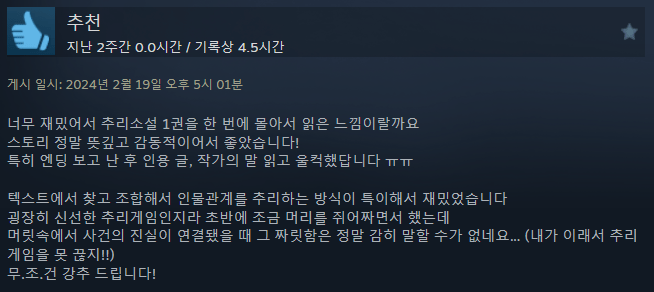
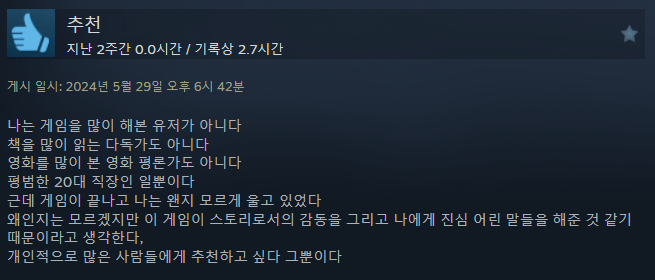
――Did you anticipate that a world without you would receive such cheers and empathy from so many people, or was it completely unexpected?
SOMI: I feel like I'm experiencing both "I expected this" and "I didn't expect this" at the same time. Usually, my emotions fluctuate as the release date approaches. Some days I think, "Isn't this going to be a huge hit game?" while on other days I wonder, "Who would play such a boring game?" Amidst these thoughts, when I sent the game to my developer friends and publishers, the reactions were not good at all. So I thought, "I've made another game just for my own satisfaction." However, after that, I sent the game to translators to localize it. Initially, I planned to release it in English, Japanese, and Chinese. When I requested the translation, I sent the game build with a note saying, "Please play it first before starting the translation." Then, two days later, I received the same email back: "I cried so much." At that time, there was still no music in the game. I was in the process of creating the music while translating, and when I saw that email, I felt, "Ah, this is going to work. It's going to be okay." It gave me a sense of relief, in a way. It might sound overly dramatic, but I felt saved.
――That's a very impressive story. You encountered such feedback while progressing with the localization. By the way, it seems like there's a lot of talk about translation in this interview, but how did you proceed with the localization for 'Unsolved Cases Must Be Resolved'?
SOMI: I had a really hard time with translation requests in the past. Until 'REPLICA', I couldn't even imagine making money from games, so the translations were terrible. After releasing it in a horrible translation state and gaining popularity, fans started translating it one by one. Then for 'LEGAL DUNGEON', I decided to properly handle the translation and requested a domestic translation company, but the English, Japanese, and Chinese translations were worse than machine translations, and it was a disaster.
In the end, for 'LEGAL DUNGEON', as I mentioned earlier, fans ended up doing the translations. From 'THE WAKE', English translation became almost standard and spread to other languages, so instead of looking for someone in the game industry for English-Korean translation, I searched for people who translate domestic literary works into foreign languages. However, many of those who handle numerous works in the industry were extremely busy and didn't have the capacity to pay attention to games. I personally emailed and contacted those who had won awards through literary translations at places like the Literary Translation Institute. Most of them declined because it was a game, but after some persuasion, I was able to meet someone I'm currently working with. Thanks to that person, I feel like the expressions in the English version of the game are being conveyed properly. I'm still working with that person now. The same goes for 'Unsolved Cases Must Be Resolved'.
――Are there any particular points you pay special attention to in translation?
SOMI: There are expressions that are trending lately, like poetic prose. How well can we convey poetic prose? I often pay attention to that in translation. Also, translating and localizing are completely different aspects. I know that localization is very important in Japan, so I made an effort to ensure proper checks. For 'Unsolved Cases Must Be Resolved', I conducted two rounds of checks. I first translated the Japanese, and for the second round, instead of the translator, I asked someone who understands the game and Japanese emotions well to check it again. The content and atmosphere within the game, and even the title, can change depending on how it's expressed. This includes the way characters speak and even their names. For example, the name of the girl in the game is Seika (犀華) in Japanese. How to handle the name Seika, since the kanji is already decided, and how to read it so that the girl won't be bullied at school, was something we constantly discussed and exchanged feedback on.
That's why I try not to work with translators who don't ask questions during the translation process. Each sentence contains metaphors, and within them, there are symbolic systems. There are also original texts with sources or other types of media that can be referenced, so if we don't communicate through messages about those things, I don't think we can create proper text.
That's why I always tell them, "Please ask a lot of questions" during the translation process.
(To be continued in Part 2.)