
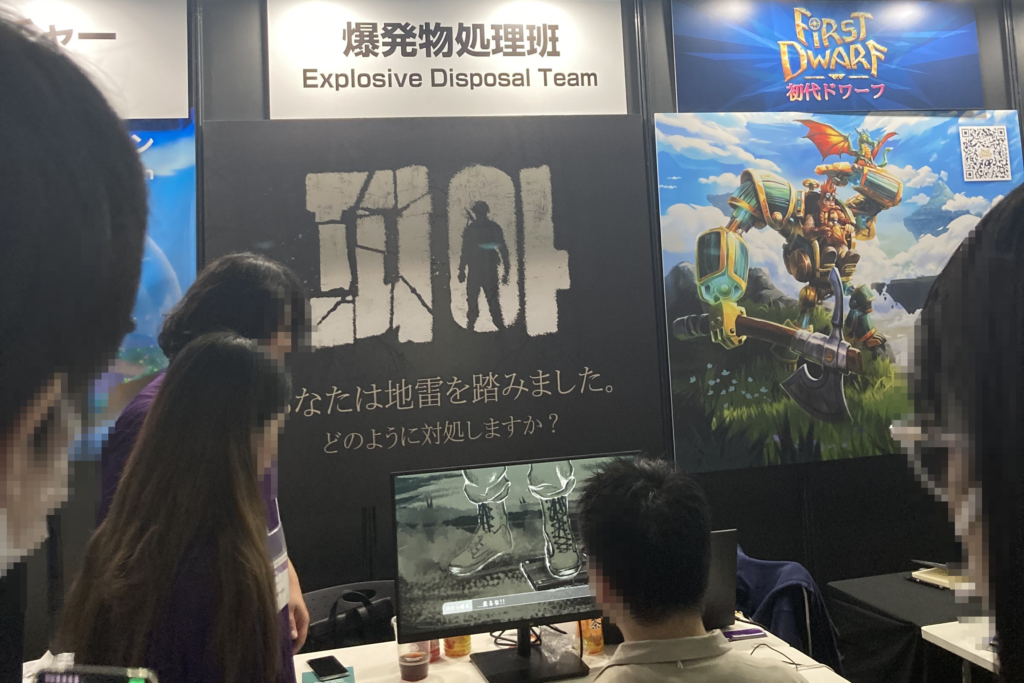
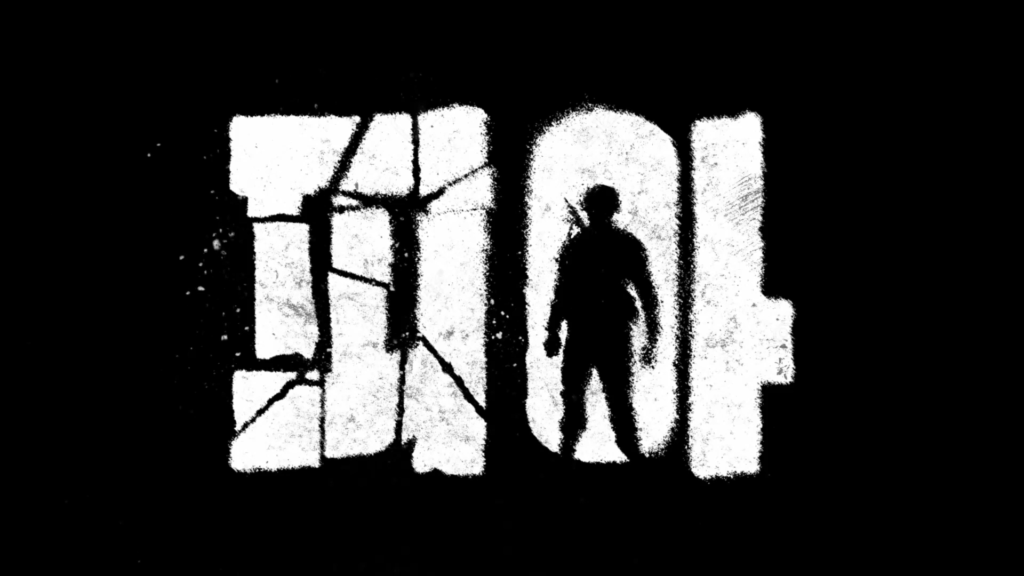
"You have stepped on a landmine. How will you respond?"
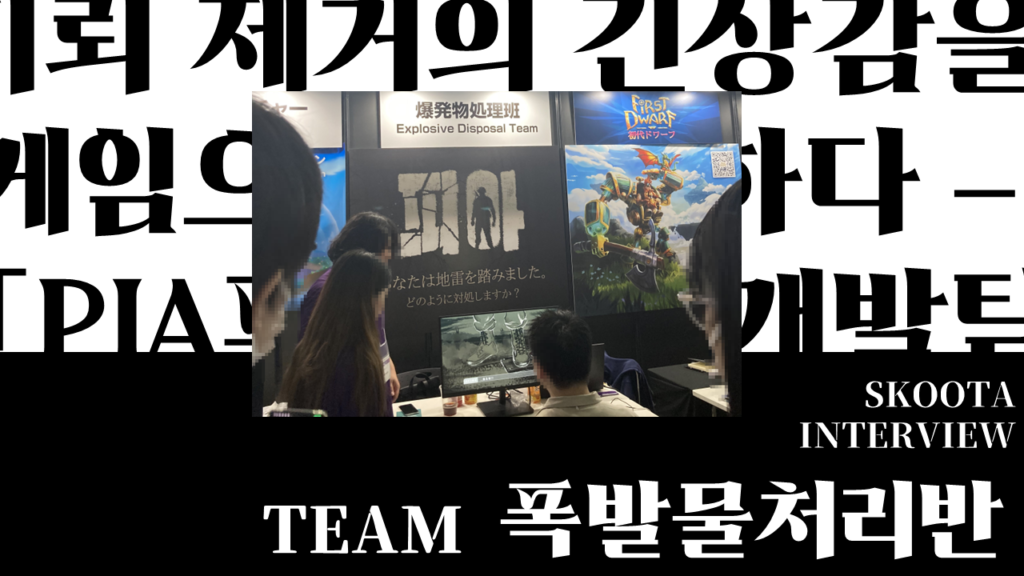
One of the most talked-about indie games at the 2024 Tokyo Game Show (TGS2024) is "PIA." Developed by a team called "Explosive Ordnance Disposal," this game was completed in just three weeks and captivated audiences with its unique gameplay and historical message. It portrays the tense situation of a soldier who has stepped on a landmine, questioning whether he can defuse it and survive, while also conveying the heavy message that the scars of war continue to this day.
In such a short period of three weeks, why did they choose the theme of "landmine removal," and how did they create such a unique game? We spoke with the "Explosive Ordnance Disposal" development team at SKOOTA about their thoughts, concerns during the development process, and the message they wanted to convey.
Interviewee:
Explosive Ordnance Disposal (Game Talent Institute, 5th Term)
- Kim Taekun: Team Leader (Planner)
- Kim Teuk: Planning and Programming
- Chang Soeun: Art Director (Background)
- Park Eunhee: Art (Objects)
What We Valued Most in the Production Process: "We Wanted to Create a Game with Tension and Immersion"
-- The experience of "removing a landmine" is unique, and the theme of the Korean War is also striking. First, I would like to hear about the initial inspiration for creating this game, that is, the original idea.
Kim Taekun: First, we wanted to create a game with tension and immersion, but what we valued most was immersion. We thought about how to provide immersion in the game, and concluded that aligning the character's situation with the actions the player experiences would allow for a more immersive gameplay experience. Thus, the idea for "PIA" was born from the thought that the process of defusing a landmine would be difficult, and we wanted to express that through gameplay mechanics.
-- I believe tension and immersion are important in other games as well. It’s unique that you came up with the direction of "aligning actions," but I'm curious why you wanted users to experience "landmine removal."
Kim Taekun: During the process of deciding the game's concept, one of our team members shared a family story. That team member's grandfather, the late Colonel Park Jeongsop, was killed in action on September 6, 1966, while removing landmines used in the Korean War with the 15th Division, and he is now buried in a national cemetery. That’s when we decided to create a landmine game, and since that team member said, "It’s fate that I joined this team," we decided to go in that direction to help people learn about his grandfather.
-- So, the idea of a landmine game came first, and then the story of the development member emerged.
Kim Taekun: Yes, the material of landmines is often used in movies to create tense situations. That’s why we wanted to use landmines to create a tense game. Additionally, by realizing the experience of defusing a landmine in the game, we thought we could directly convey the life-threatening emotions associated with such a situation, which is why we chose to use landmines as our material.
-- It seems that the element of "not being able to stop" is very important. PIA also has a game structure that gradually decreases the player's health, which creates a sense of urgency, but when I actually played it, it didn’t seem like there was a need to rush that much (laughs). I felt that the biggest enemy in this game is not the wild boars or enemy troops, but rather oneself, as the tension is well expressed.
Kim Taekun: Thank you.
Dealing with an Endless War: "The Danger is Ongoing"
――As I mentioned earlier, this game is themed around the Korean War. I think dealing with actual history can be very challenging, so I would like to hear about how difficult it was to handle history in the game development process and the risks that came with it.
Kim Taekun: Since we are dealing with actual historical events, we made sure to include a disclaimer stating, "The mines featured in the game are fictional, and real mines explode the moment they are stepped on," to avoid any misunderstandings caused by incorrect information or representations. Additionally, balancing the atmospheric aspects of the game while respecting the gravity of the Korean War, without losing the fun of the game, was a bit challenging.
――Yes, balancing is important. Could you share any difficulties you faced in terms of the art aspect?
Park Eunhee: Ah, when creating the background to represent the Korean War, we considered including barbed wire. However, due to the very short production period, we couldn't include it, which was quite disappointing. I tried to replicate the mines designed by Taekun as closely as possible, but I feel that there were few elements represented aside from the characters' clothing. That was a bit disappointing.
Chang Soeun: Since the Korean War is the backdrop, I struggled with the environmental settings to convey a solemn atmosphere of war, and I think I searched for many props that would have been used at that time. We couldn't use modern props that are used in recent demolition work, so I think we put a lot of thought into creating props that would resemble those used back then, like logs.
――The tools used by the protagonist for mine clearance were also part of that research, right?
Chang Soeun: Yes, when we first looked for references, we primarily searched for images that would have been used in the past, deliberately avoiding modern props. Originally, there was something like chocolate among those props, but we discussed that it probably wasn't the products available now, and that it might have just been a rough chocolate bar made back then, trying to align with the historical context.
――You put in a lot of effort to recreate the war of that time. I think that aspect was highly appreciated at TGS. However, what differences do you think there were between the "war" you wanted to express and the "war" that users actually experienced on-site?
Kim Taekun: First of all, I am always aware that the very word "war" carries a heavy weight. Of course, I have retired from active duty, but I believe that our current peaceful daily lives are thanks to the efforts of the military personnel who are protecting the country at this very moment. I am always grateful for that. Still, since Korea is a country where the war has not officially ended, and given the many issues in recent international relations, I think we are more cautious about speaking of peace at this time.
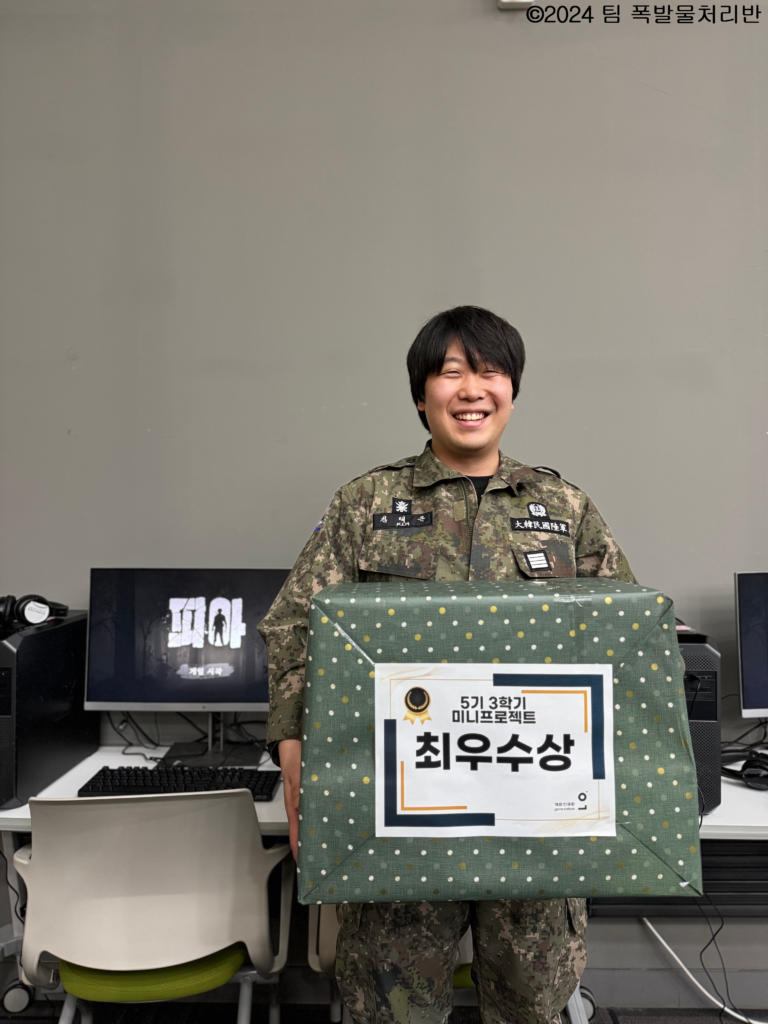
Kim Taekun: While our game cannot fully express the weight of that reality of war, I hope that players can enjoy our game while also receiving the message we want to convey... Just as many mines remain even after the ceasefire, war does not simply end with fighting; the pain lingers on, and we must always remain vigilant. I also hope it serves as an opportunity to reaffirm our gratitude to the military personnel who create our peace. However, I was glad to hear that players enjoyed this game and said afterward, "This was a meaningful game about the Korean War," as I felt that the war we envisioned and the war that players thought of connected.
――What does programmer Kim Teuk think about this part?
Kim Teuk: The part about "the war is still not over" is something I also wanted to convey through this game. In reality, the perception of military personnel in Korea is not very good lately, but there have been efforts to reach this peace in Korea... I wanted to convey that our peace was not just given, but that it was achieved through the efforts of the military.
――The issue of perception towards military personnel in Korea might be difficult for overseas users who first experienced the game at TGS to understand. I think it was good that we could address that background through this interview.
The Development Team Formed at the Game Talent Institute: "The Moment I Heard the First Project Presentation, I Thought 'This is It'"
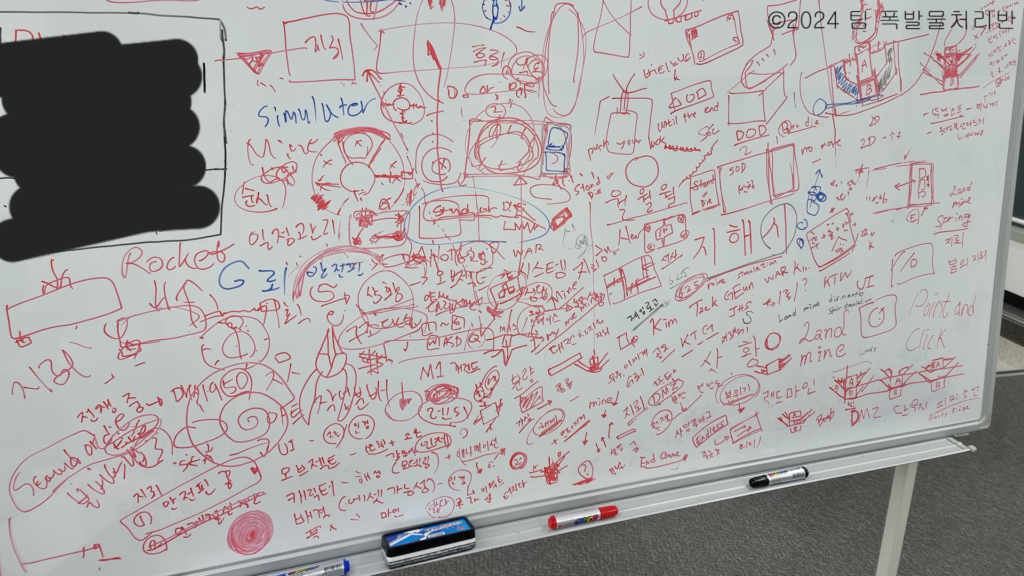
――As you mentioned earlier, I heard that this game was made in just three weeks. It's a short period, but I'm curious about the differences between the initial concept and the final game that was created.
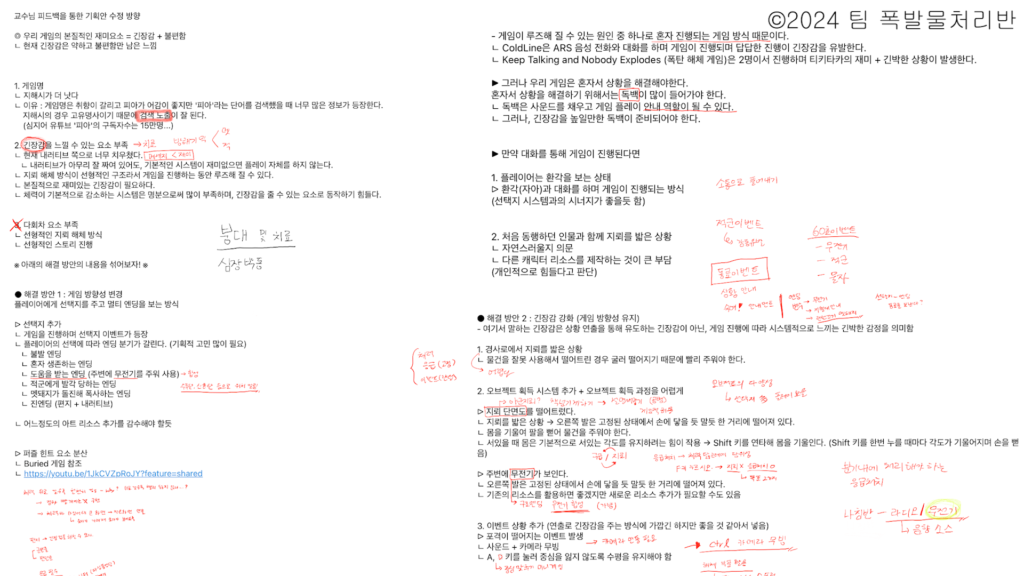
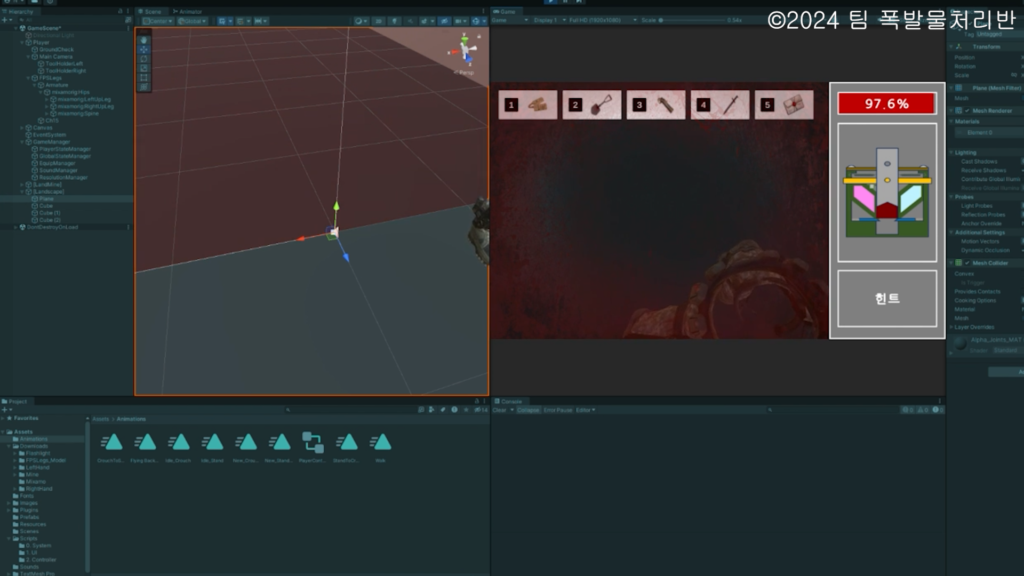
Kim Taekun: First of all, we are a team composed of undergraduates from the Game Talent Institute, which is part of the Korea Creative Content Agency. The development of "PIA" was conducted as a three-week project at the Game Talent Institute. Due to the three-week time limit, there were more elements removed than added, but initially, the unlocking process was more complex than it is now. For example, there was an element where you had to create a hook by tying a belt to the field shovel you have and use it to bring items from a distance to unlock them, utilizing the tools you currently possess.
There were also several ideas that we thought would be interesting to include, but due to scheduling constraints, we couldn't incorporate everything. We are still progressing with additional development, so I believe it will serve as very good nourishment for future development.
――Ah, excuse me. I think it would be easier to understand if you first explain about the "Game Talent Institute."
Kim Taekun: Yes. The Game Talent Institute is an educational institution under the Ministry of Culture, Sports and Tourism, specifically the Korea Creative Content Agency. We have three classes: Planning, Art, and Programming, and we have a two-year educational curriculum where we take classes for one year and then work on our graduation projects for the following year. "PIA" is a game that originated from mini-projects conducted every semester in the first year, and now that we are in our second year and participating in graduation projects, we are working on additional tasks for "PIA" in our personal time so as not to interfere with our individual projects.
――So, the current members gathered at the educational institution. I would also like to hear how these four came together.
Kim Taekun: First, I mentioned that we progress projects every semester at the Game Talent Institute, and the "PIA" project was conducted in the third quarter. However, what made this project special was that it was a unique project where only the planning and art classes participated without any members from the programming class. The planners prepared and presented their proposals, and the artists listened to those proposals and chose the ones they liked to proceed with.
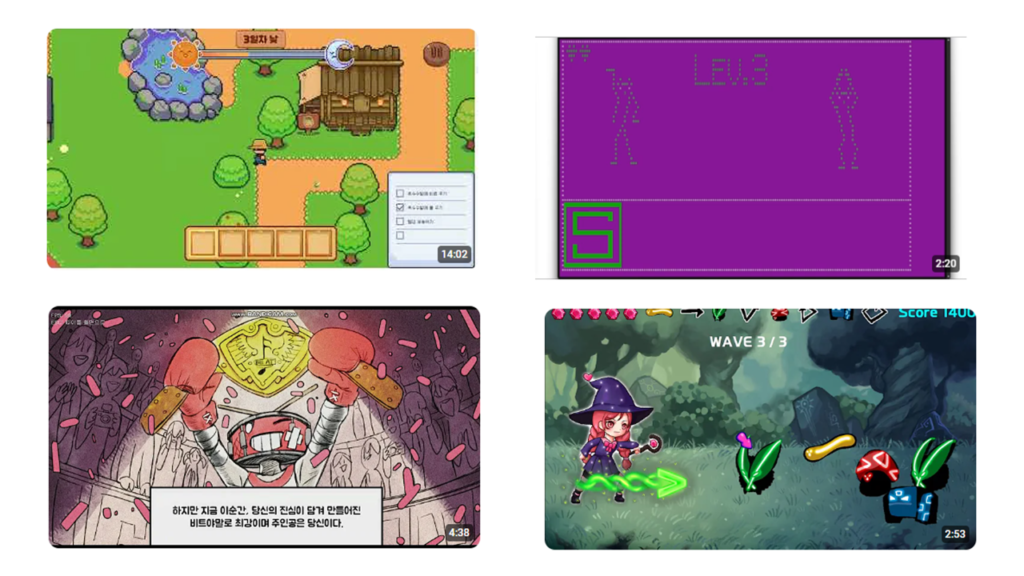
Kim Taekun: Teuk is a classmate from the planning class, and he is the second best at programming in our class. I studied with Teuk every night, working on assignments and playing games together, so I reached out to him to form a team. Teuk also shared my desire to create an immersive and unique game, so he joined as both a programmer and planner. We prepared the initial idea together and presented it, after which the artists chose to form the team.
――So there was an initial concept, and the artists joined the team after seeing it... that was the structure, right?
Kim Taekun: Yes.
――Then I would like to hear from the artists about why they wanted to join the PIA team.
Park Eunhee: The moment I heard Taekun's PIA concept, I thought, "This is it." I found it really interesting. The idea of recreating the inconvenience and anxiety felt while defusing landmines through gameplay was very fresh and truly creative, so I immediately told Taekun, "Please choose me," without thinking about anything else. Initially, the title wasn't PIA; it was an abbreviation for landmine defusal simulation, "Jihaesi."
――It's good that it changed personally (laughs). How about you, Soeun?
Jang Soeun: I feel similar to Eunhee. I have always liked unique and fresh things. However, when PIA was first presented by the planners, they showed difficult controls and such, which immediately caught my interest. I have played many simulation games, but usually, they adjust the difficult controls by increasing sensitivity, which makes it feel forced. However, while I had seen games with the concept of bomb defusal, I had never seen a game with the concept of landmine defusal, so I really wanted to do this.
Also, before working on the project with Taekun in the third quarter, we had worked together on a project in the first quarter, and I thought our teamwork went well and the project results were good, so I felt I could "trust and work with him."
――From what I'm hearing, it seems there are fewer artists at the Game Talent Institute. What is the ratio like?
Kim Taekun: In terms of numbers, I wonder how many there are...
Kim Teuk: There are about 20 in planning, 40 in programming... I think there are fewer than 20 in art.
Park Eunhee: Art feels like 0.5.
――So, can we say there was no choice? That two people from such a small number participated in PIA from the beginning?
Kim Taekun: No, initially there were four of us. That was the most we had. Originally, the limit was two...
――So you were quite the promising candidates.
Limited Production Period, Each Person's Motivation: "I Didn't Sleep for 10 Hours in 3 Weeks"
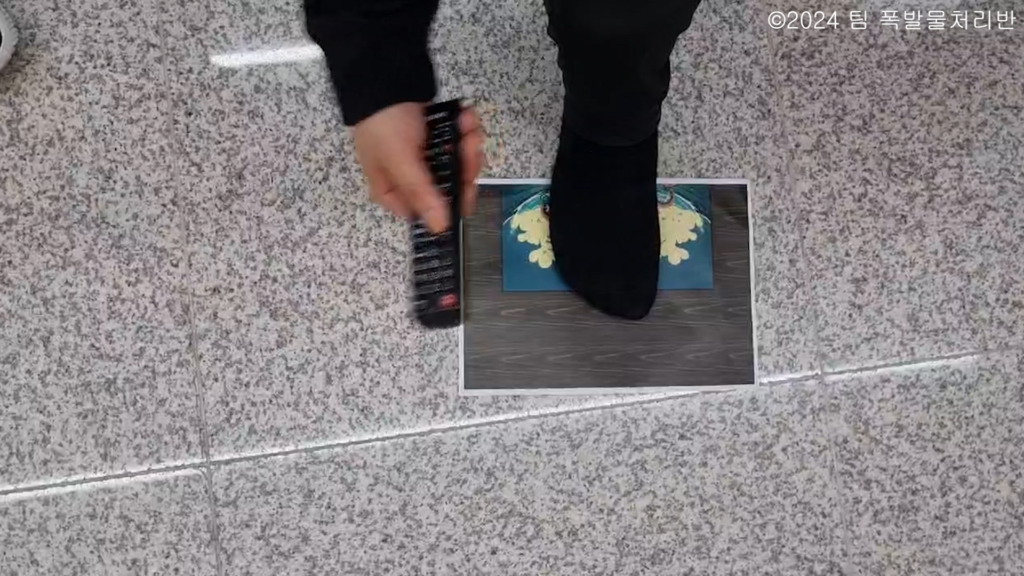
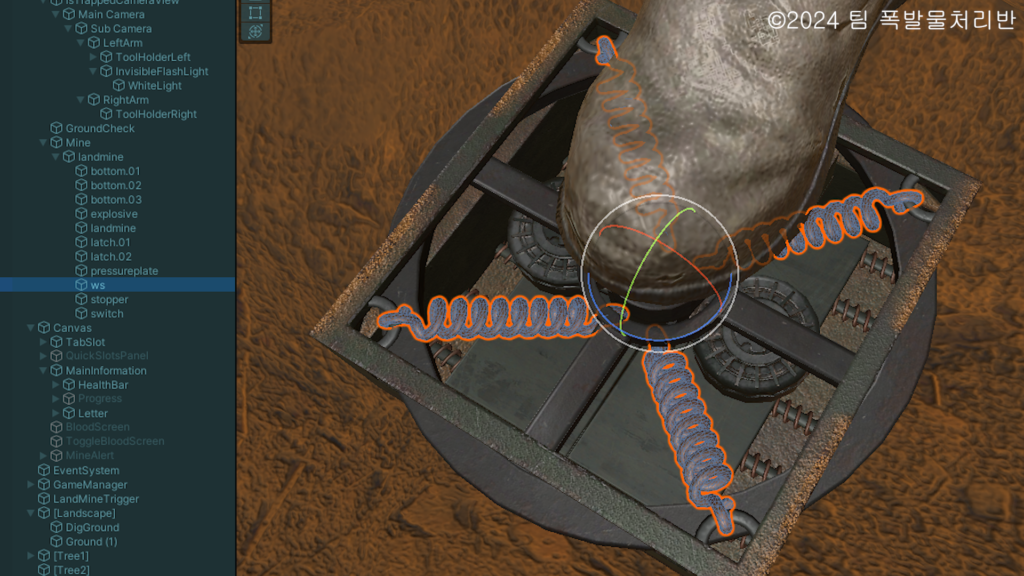
――I'm curious about how each team member maintained their motivation during the short three-week period. Can we start with Ms. Eunhee, who was in charge of art?
Park Eunhee: During those three weeks, I learned modeling for the first time at the Human Resources Institute, but I was a bit behind my friends. So, while I was thinking, "What should I do?" I had a lot to create, and at that time, Te-kun brought in the design for the landmine, which was very complex. Moreover, I was told that it wasn't based on an existing design. It was a fictional landmine that doesn't exist in the world. So, I wanted to do it, but I lacked confidence, and while thinking it would somehow work out, I ended up saying, "I'll do it."
――So you were balancing studying and working at the same time. How about you, Ms. Soeun?
Jang Soeun: We on the art side had not learned how to use Unity at all while learning how to use Unreal. However, when we entered the third quarter, we were told to use Unity. In fact, we learned things like modeling at the start of the first semester, so we could do that, but creating resources to be used in an actual game with a commercial engine was a first-time experience for us, and we were told to do it in Unity, which was a tool we hadn't learned yet... So, I was really fumbling around while watching YouTube and trying to figure it out. Those three weeks were not just about working but also involved a lot of studying.
――It sounds surprisingly not despairing, but more like a motivation of "I want to do this."
Jang Soeun: At first, I didn't even know how to open files and knew nothing, but as I started creating backgrounds for the first time while watching YouTube tutorials, I gained confidence. While laying out things like animations, I thought, "This is easier than I expected," but I also felt a desire to do it a little better. I think I tried to use these aspects as motivation.
――The sense of achievement gained from balancing study and work became a new motivation. I believe Eunhee, who accepted the complex landmine design at the beginning, had a similar experience.
Park Eunhee: Yes. In fact, when we told the planning side that we could only do 3D and had never touched tools like Unity, they said they would just give us the resources and we would place them ourselves. However, when I first placed the resources from the planning side, I thought, "Wow, this really doesn't look good" (laughs). If this were to be released as a game, it wouldn't be acceptable. I thought that if people saw this, they would immediately think, "This is a terrible game" and discard it the moment they pressed the keyboard, so I decided to learn more and worked harder.
――So you were awakened to save the team (laughs). Teuk, do you remember what kind of motivation you received at that time after hearing this story?
Kim Teuk: First, to explain the situation a bit more, Te-kun and I initially had an idea meeting where we discussed making a landmine game for this project. At that time, I had decided to participate as the team's programmer, so I was thinking about how to make it more interesting as a game based on Te-kun's idea. Then, another planning member joined, and the discussion about team members' families came up, and I felt, "This has become a bigger responsibility than I thought," and with only three weeks, I wondered if we could make it well. The mental burden became very heavy...
Also, when I looked at Te-kun at that time, he had very strong concepts and ideas, but I thought I was a bit better at making the game interesting, so I believed that if the two of us were on the same team, something great would come out. However, we couldn't be on the same team. Because of each other's strengths, we ended up with separate planning teams. In my case, I had 2 or 3 programmers, while Te-kun had 2 or 3 artists, and we couldn't form the same team for 1-2 semesters.
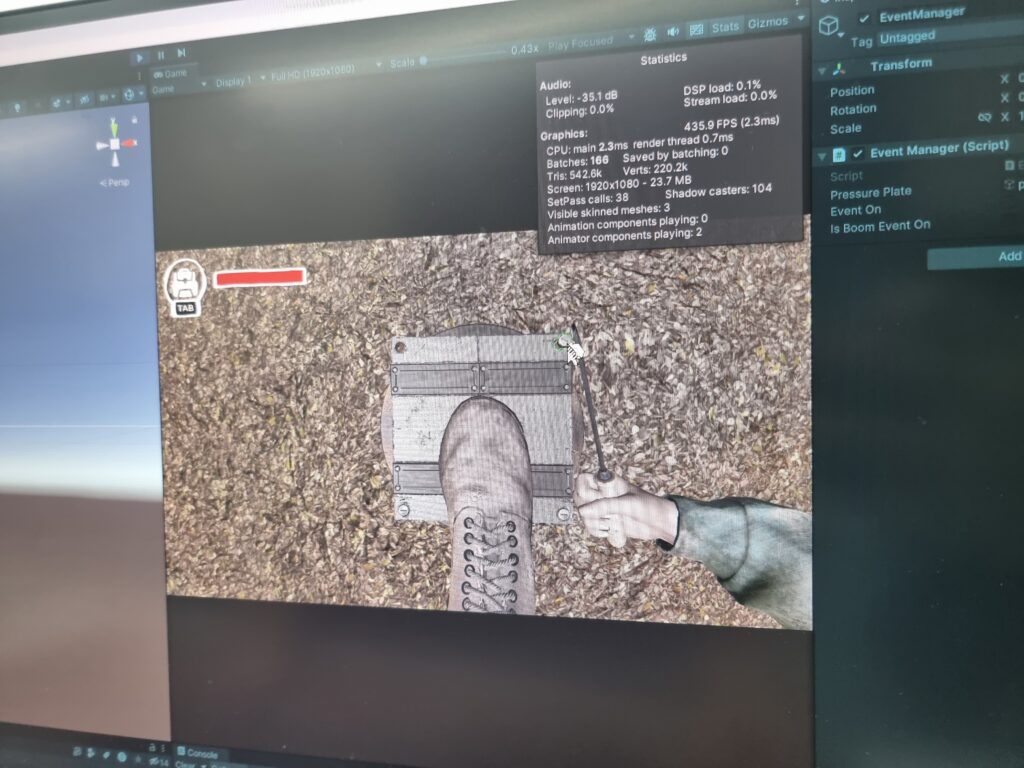
Kim Tae-wook: However, during the third quarter, the professor designated me as a programmer instead of a planner. So I couldn't present my project proposal, and thinking "this is my chance," I immediately reached out to Tekun and decided to participate together from the planning stage. Since I had been involved from the beginning, I had a strong sense of ownership over the game, and I worked extremely hard for three weeks. I don't think I slept more than 10 hours in those three weeks. I was working almost non-stop, including weekends.
――It must have been quite tough.
Kim Tae-wook: It was very challenging because my original position was as a planner. I had received training as a planner for nine months, and for the first six months, I was educated in 2D art and programming with Unity. During the third semester, I learned 3D modeling and animation with Blender for three months, once or twice a week, and I had only learned a little about making 3D Unity games, yet suddenly I had to complete a game in three weeks. So I thought, "This is really tough," and somehow managed to keep to the schedule using Google, YouTube, and ChatGPT.
Of course, my dual role as both programmer and planner also had an impact. I was taught the roles in advance for direction, and since I wanted to focus on balance, I adjusted parameters separately after extracting them without passing the numbers to the planner. I just had to check later if everything was okay... So despite the short timeframe, I think we were able to produce efficiently. I had a strong sense of ownership over my game, and I enjoyed seeing the game come together, so I think it worked out well.
――That's amazing passion. After hearing this, do you remember how Tekun, the team leader and planner, approached the production?
Kim Tekun: First of all, there were many motivations. It was a game I planned, and as the team leader, I developed the game with these excellent team members, so the game had to be released. The pressure to create an interesting game in such a short time of three weeks was, I believe, a strong motivator for me.
Behind the Scenes of Production: 'Are you really making this?'
――I would like to hear about the problems that arose during the short three-week development period and how you resolved them.
Kim Tekun: The biggest issue was that the three-week schedule was a bit tight, so I don't think there were any major troubles. Also, if any of us team members noticed something odd, we would immediately speak up, and if we reached an understanding, we would quickly make corrections, so... I don't remember any significant troubles.
――I would like to hear opinions from members other than the leader on this matter (laughs). Is there anyone who can share any episodes?
Kim Tekun: Rather than troubles... As I mentioned earlier, I am good at adjusting parts that seem interesting in the game and those that don't. That said, I am only slightly better at it than my peers. One day, there was something odd in the game that was visible, but Tekun kept saying it was fine. So I was surprised and asked the art team while they were creating that resource, "Are you really making this?" At that moment, I flipped everything upside down once. However, Tekun was very receptive to such opinions, so it didn't lead to any troubles.
――Now that I've heard from Tae-wook, what do the art team members think? Did you not feel any troubles, especially?
Jang So-eun: There wasn't any particular discord within the team, and we were all doing our assigned tasks well. However, since it was my first time directly placing 3D resources into the engine, there was a lot of trial and error. That caused a bit of personal stress.
And... on the last day of our three-week project, we were having a meal together as the art team. After everything was done, while we were eating and saying, "Finally, it's really over," suddenly we received a message from the planning side asking for more resources to be created. At that moment, while the atmosphere was festive and other team members were enjoying themselves, I was the only one with a gloomy expression, thinking, "Everyone, I have to go home and make this..." I was a bit dazed while going home to do additional work, but I thought everyone was working hard until late, so I felt I had to do my best too, but it was still a bit frustrating...
Park Eun-hee: Yes, I have had the same experience. Asking if they could create the resources a bit faster... (laughs)
――That indeed sounds more like a behind-the-scenes story than a trouble. Now, continuing from that, I would like to hear about each member's strengths. As you mentioned earlier, you structured the team with the desire to leverage each other's strengths, but I believe each member of the art team has different areas of expertise. Can you share your thoughts on that, So-eun?
Jang So-eun: (laughs) This is the time to praise each other. At that time, the art team consisted of four people, including two team members who are not here now. First, one friend wanted to work on characters, so I think I distributed the work according to each individual's tendencies. So I assigned the assets for hands, arms, and legs of Park Ha-sa to that friend. The other friend, who was a bit unsure about what they should specialize in, was quick with their hands, so I thought I would let them handle as much as they could, assigning them a bit more detailed and numerous tasks.
As for Eun-hee, this is not meant negatively, but she works a bit slower, yet she captures the finer details well. Since she is good at doing detailed work carefully, I thought she would be able to effectively utilize the complex design details of the landmine, so I mainly assigned her tasks that involved details.
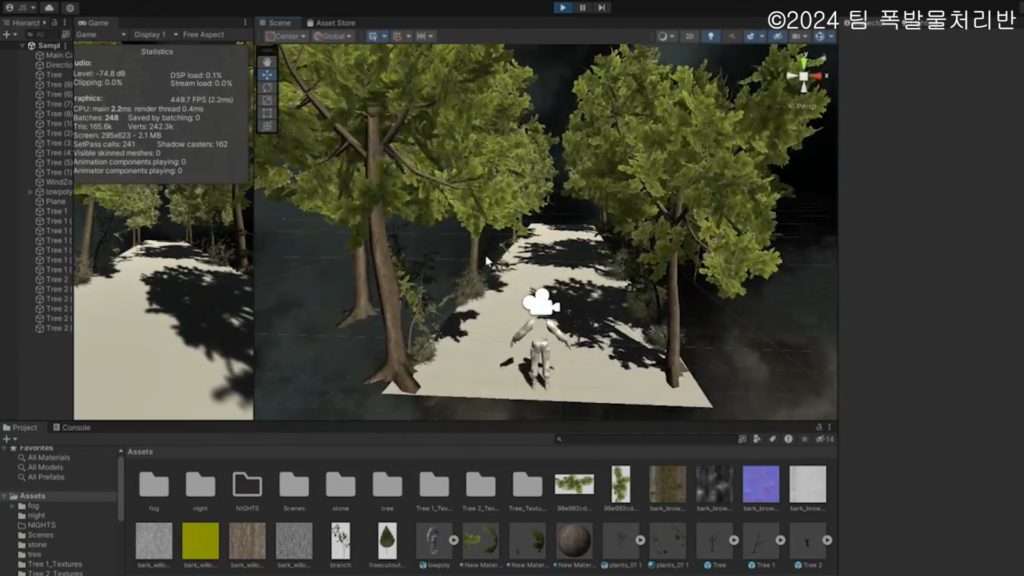
――From what I hear, it seems that Mr. Sooun was in charge of task assignments for the art team, overseeing the overall distribution of work.
Jang Sooun: Yes, I was responsible for that at the time, but now that the team has fewer members, we don't need to distribute tasks as much. However, back then, I was doing that kind of work.
――How did Ms. Eunhee view the strengths of the other team members?
Park Eunhee: First of all, since I tend to be a bit slower, I felt reassured knowing that the other team members were all quite fast. My friend who was in charge of characters was quick, and another friend who is currently working with us also had the advantage of processing things quickly. In Sooun's case, he learns very well by researching programs he is learning for the first time, so he was very reliable in that regard.
――As the team leader, how did Mr. Taekun recognize and utilize the strengths of the members?
Kim Taekun: First, Teuk... no, in Teuk's case, he has a style where he intuitively provides good feedback when he sees a problem, so if I had any shortcomings, I would ask Teuk. When I ask, he catches what is lacking very well. I received a lot of help in that regard, especially since the UI at first was quite... to soften the words of that time, I could say it was "extremely systematized," which was quite odd. After hearing that, I researched many of the latest games, and the current UI was born.
――What about Teuk?
Kim Teuk: Since Taekun is the team leader, I first try what he says, but when I create it, I can see the odd parts, right? Even while making it, I can see the odd parts. So when I talk about those parts to Taekun, they are accepted smoothly without any trouble. When I request the art team to redo something later, they don't take it badly, and when I request it again, it gets confirmed quickly, so I think that helped improve things. I believe that being able to leverage each other's strengths is why the project went well.
Future of PIA: 'The story mode will be free, and after that, we want to focus purely on fun'
――I'm curious about how the game, which was created with great effort in just three weeks, will come to us in the future. Can you share the team's development direction, new projects, or plans for how to evolve the current game?
Kim Taekun: We are working to improve the quality of the graphics in the currently released demo version, aiming to release it on Steam within December. Additionally, we are currently in the educational process of the Game Talent Institute, so we are working on our graduation project, but once that ends in November, we plan to form a commercialization team to continue additional development. Therefore, we plan to make the gameplay available for free in story mode. After that, we intend to develop DLC that focuses purely on fun and monetize it.
――Regarding the DLC, does that mean you will be releasing new content that is more entertaining while keeping the existing PIA IP and the basic structure and gameplay intact?
Kim Taekun: Yes, that's correct. We also plan to develop something like a hard mode and try various challenges.
――We have discussed the difficulties and weight of dealing with history, but making the previously released parts available for free is precisely because this is the message we want to convey to society, and we want to keep it free. Furthermore, it is understood that the project team aims to realize something that pursues basic entertainment and more enjoyment as a game. Is that correct?
Kim Taekun: Yes, that's right.
A very short development period of three weeks. Limited personnel and resources, and having to deal with a difficult historical theme. At first glance, these constraints could have acted as factors that lowered the quality of the work. However, the "Explosive Ordnance Disposal Team" from the fifth cohort of the Game Talent Institute instead utilized these constraints as a source of creativity.
By maximizing each team member's strengths while compensating for each other's shortcomings. And above all, the exquisite balance between the "message we want to convey" and "fun as a game," which can sometimes be conflicting elements. The game that was born from the combination of these two elements is the landmine disposal game "PIA," which captivated users worldwide, including us, at TGS2024.
From the plan to provide a story mode with a historical message for free and to develop DLC that pursues gameplay, we could feel how seriously they are approaching game development. I hope this new challenge born from the Korean indie game scene will show new possibilities for the gaming industry. Meanwhile, the detailed content that could not be covered in this article will be further explored in a follow-up opinion piece.
- Interviewer: Park Juhyun (SKOOTA Editorial Department)