

Hello! I am Lee Hana from the SKOOTA editorial team. Have you all read the reports "The Story of My Soul Being Stuck Between Thighs (G-EIGHT Report)" and "Favorite Game Introductions (TpGS Report)" delivered by Mob-kun?
While he was enjoying the excitement of Taiwan, I was actually sweating a little bit.
This is because I landed in Taiwan with absolutely no confidence in my Chinese, let alone my English, truly in a "language skills: survival level" state.
The mysterious confidence of "Well, it will work out somehow!" began to waver the moment I stepped into the airport. However, a miracle happened. Many gamers in Taiwan actually understood my clumsy Japanese! Perhaps due to the influence of anime and games, I was genuinely relieved to find an environment where I could communicate smoothly in simple Japanese.
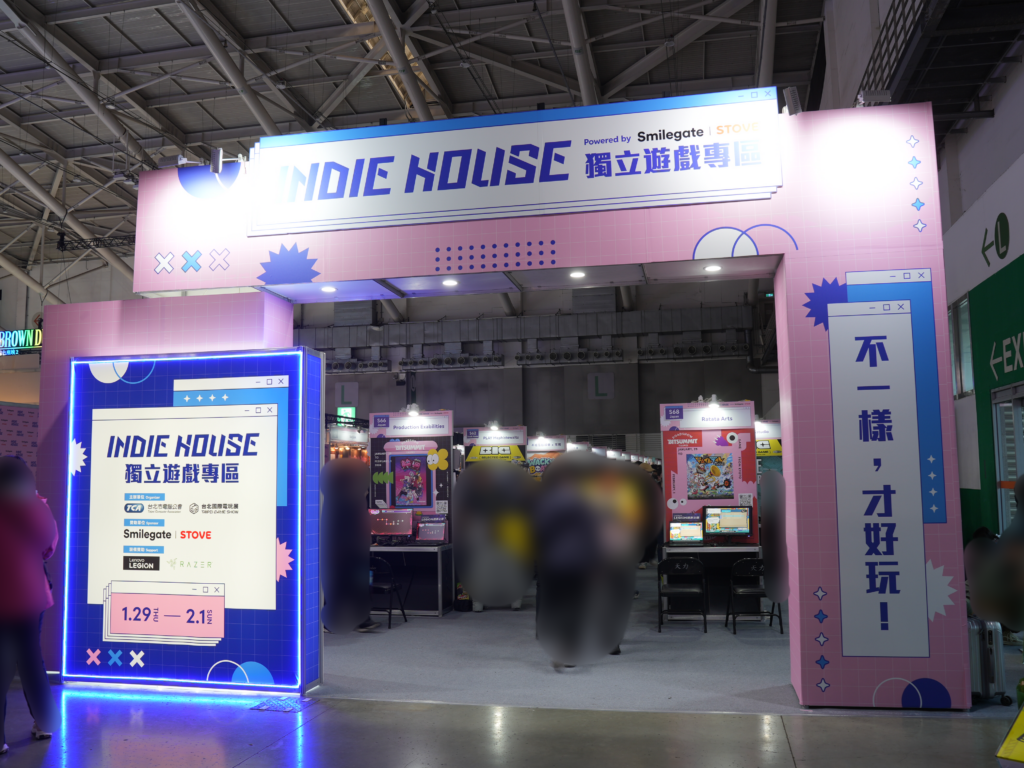
That said, it is still a fact that directly engaging in deep conversations with overseas creators is a high hurdle. Amidst this, the indie game area "Indie House" at this year's Taipei Game Show (hereafter, TpGS) showcased an astonishing number of Korean indie games.
These are games from my home country that I rarely get to encounter at Japanese events. For someone like me, who was a bit tired from the language barrier, it was one of the few precious places where I could have deep conversations directly with developers.
So, this time, let's set aside the highly anticipated title 'NAMMO' (which I will leave to Mob-kun's report) and focus on four works that can be said to represent the "yet unseen potential of Korean indie games." Now, let me introduce them to you.
🦀 Super King Crab Simulator: A Utopia of Destruction and Crabs for 235 Yen
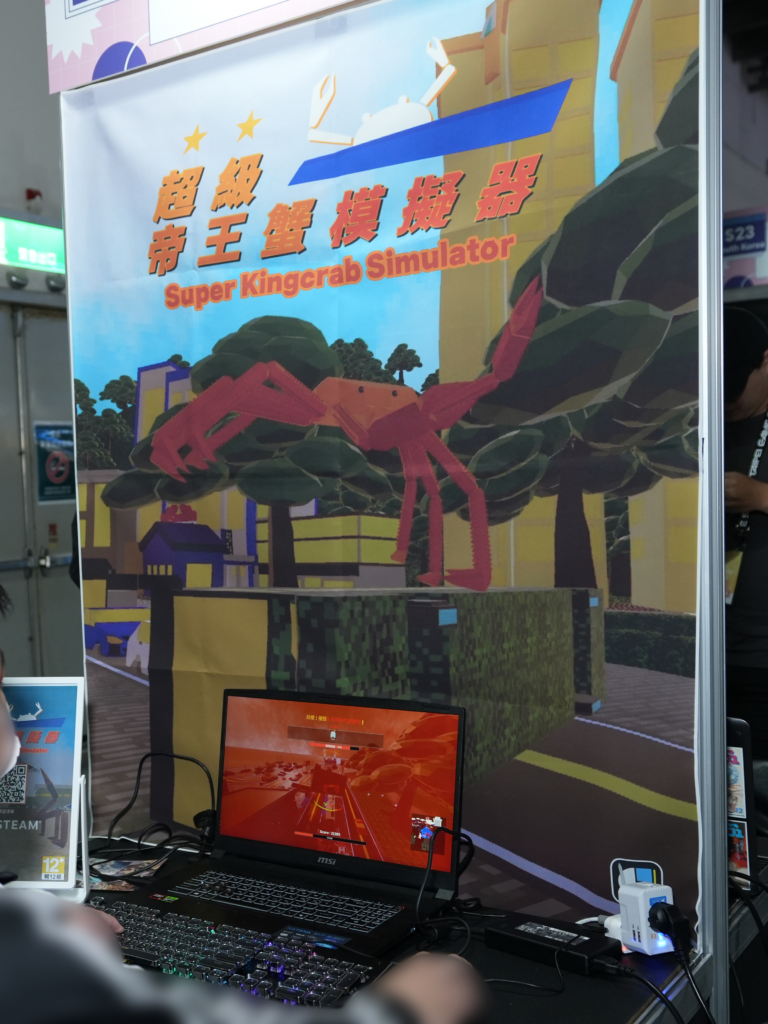
First up is 'Super King Crab Simulator' created by Skago Games.
From the title alone, something is already happening, but the content is even more intense. Players take on the role of a giant snow crab, mercilessly destroying a peaceful coastal city to rescue their captured brethren, in a truly outrageous concept for an action game.
At first glance, it may seem like a so-called "silly game" (in a complimentary way), and it indeed is, but once you grab the controller, you will be surprised by how good it feels to play.
Destroying a city as a crab is an experience that is hard to imagine just by saying it, but if I had to compare it, it reminds me of the play style of classic open-world games like the 'Prototype' series or the 'GTA' series.
In a sandbox-like space crowded with people and buildings, you dash around with the unique movements of a crab (which are surprisingly fast!) and crush every object in sight with your claws. Rather than being "new," there is a certain "comfort of home" in the primitive joy of destruction that I found there.

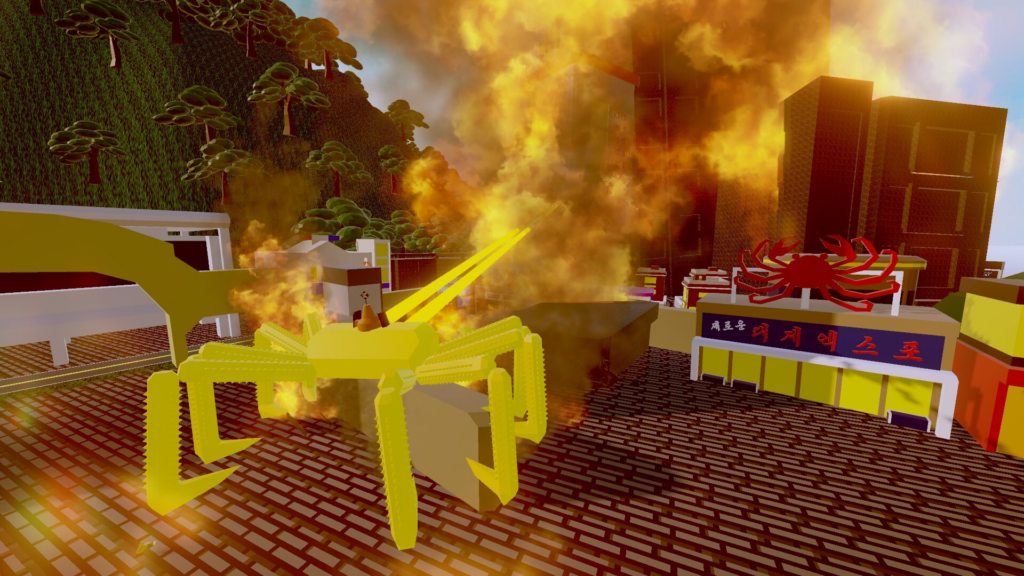
Quoted from the Steam page.
Another reason I wanted to report on this game is the remarkable attention to "detail" hidden within its simple low-polygon graphics.
This might be a point that only players from Korea, like myself, can appreciate... The design of the buildings and the text on the signs in the map are so "realistically Korean" that it makes you laugh.
It was intentionally left in Hangul without localization, but the menus of restaurants, the huge business names, and above all, the outdoor units haphazardly placed behind shops and houses, along with the texture of the surrounding block walls. The scenery, which is subtly different from that of Japan or Taiwan, is recreated in exquisite detail, evoking a sense of familiarity that any Korean would recognize as "that's so relatable!" The sense of guilt in destroying this "familiar town" as a crab was an experience that is hard to come by.
The developer's playful spirit shines through in various places. Catchphrases like "Destroy deliciously" and the level notation cleverly playing on "King Crab" as "Kevel" are filled with little jokes that make you chuckle. These small discoveries accumulate, fostering a sense of attachment that goes beyond just being an action game.
And above all, I want to emphasize its cost performance. The price on Steam is just 235 yen (by Japanese standards). A straightforward story about destroying a city to save your fellow crabs, intuitive controls that anyone can enjoy right away, and a plethora of well-crafted little jokes. The fact that all of this is offered at this price is, in a sense, miraculous. It's not a case of "you get what you pay for." It's the best entertainment that fully responds to the light-hearted thought of, "I'm bored, so why not become a crab and destroy a city?"
If you're feeling a bit bored right now, I highly recommend putting on this crab shell without hesitation.
🎒 Hagyo-gil: The Way Home - A Fear Named Nostalgia in a 2010s Classroom
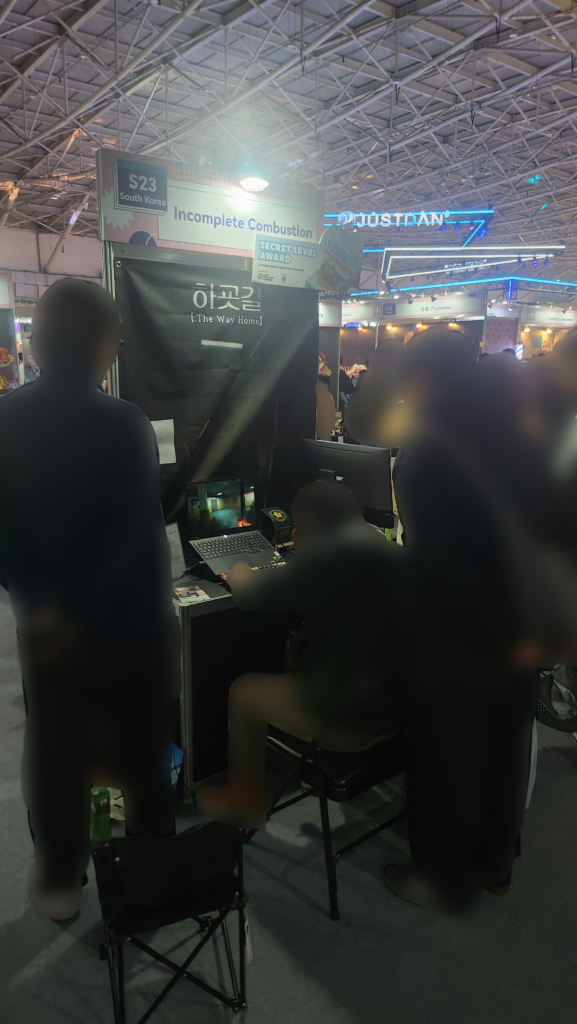
It seems to have also won an award from INDIE WAVERMAKERS.
Next, I would like to introduce a survival horror game that stands in stark contrast to the cheerful crab world we just saw, ‘Hagyo-gil: The Way Home’. Developed by "Studio Unfinished Burnout."
The demo version I played at the venue was a short 10-minute experience, but its density felt like finishing a short film.
The story is quite simple. One day, the protagonist wakes up alone in a classroom at school and attempts to escape by gathering clues to get outside. The abrupt introduction without any explanation can be disorienting, but as you progress through the exploration, you begin to notice unsettling discrepancies like old equipment and sealed exits, leading you to instinctively understand, "Something is off about this school."
And in the end, "something" that appears in the form of a schoolgirl in a uniform confronts you, and you find yourself desperately resisting with a mop in hand... Yes, I couldn't win. I met a tragic game over while still gripping the mop (tears).
The setting of being "trapped in an unfamiliar place" is not uncommon in horror games. However, if this work possesses an overwhelming charm that sets it apart from others, it lies in its "insanely high level of spatial reproduction."
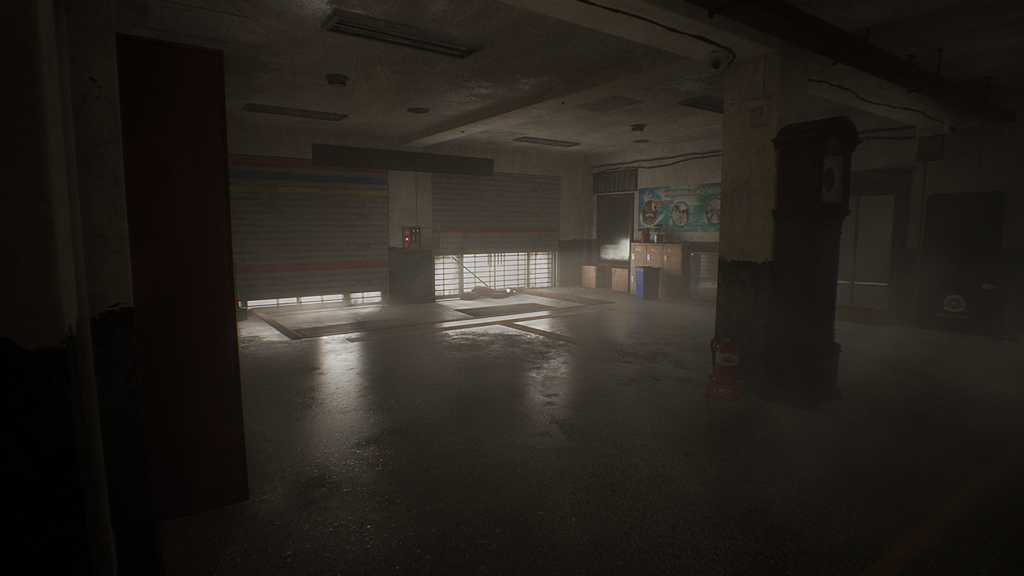
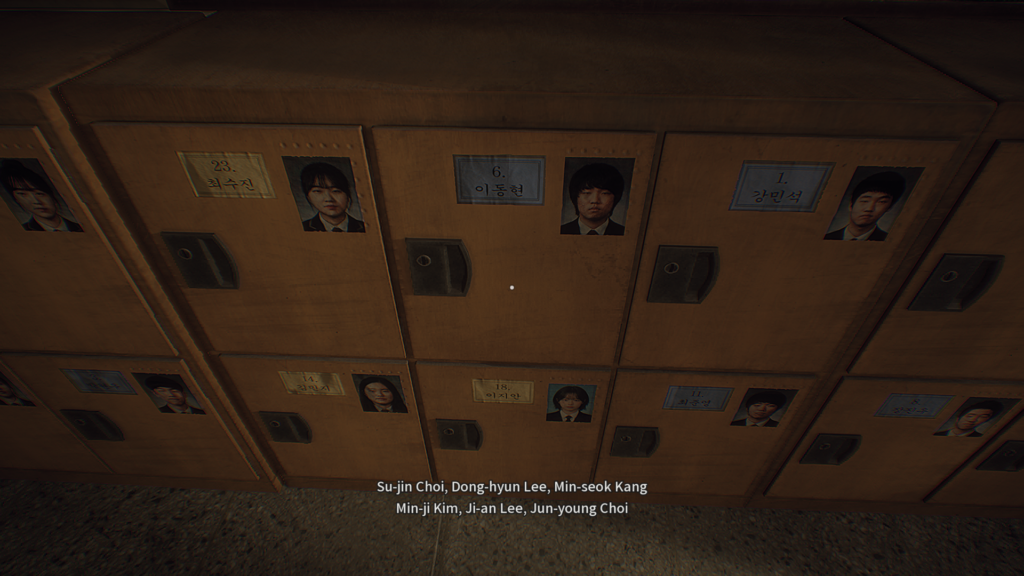
If the earlier mentioned Super King Club Simulator is a work that incorporates symbolic "Korean-ness" within its simple graphics, then School Path pursues an astonishing level of realism, seemingly capturing the air, humidity, and even the time of day within the game.
The setting is likely a middle school or high school in South Korea during the 2010s. The scenery overlaps perfectly with the time I spent as a student, and it is not just "real." The smell of the classroom air, the echo of footsteps in the hallway, the texture of the desks... despite being purely visual information, it evokes memories and creates an illusion that stimulates the senses. It is rare to encounter such graphic expression within the framework of indie games, regardless of nationality.
While nostalgia can be a pleasant memory, the true horror of this game lies in the gradual mixing of slightly alien noise into that "too familiar space." It feels as if you are walking through the introduction of a well-crafted horror film. Unfortunately, it seems that it is not yet available on online stores like Steam, but I sincerely hope that when it is released as a full version, everyone in Japan will have the opportunity to experience this "beautiful yet terrifying School Path."
🍽️ GLUTTONY: Appetite is Power! A Demonic "Full" Hack & Slash
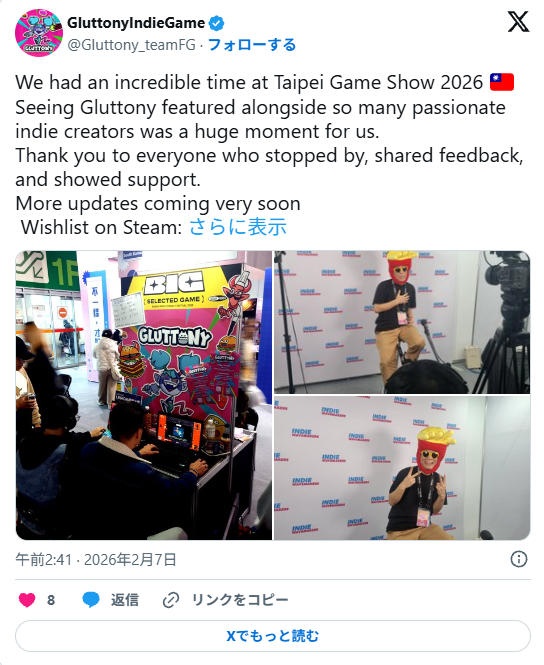
The third game I would like to introduce is GLUTTONY, a rogue-like action game currently in development by Team FG.
True to its title meaning "gluttony," the concept of this game is very unique and instinctual. Players become the "Demon of Gluttony," defeating the "Food Devils" that plague hell and literally "devouring" them to grow stronger. Isn't that a rather appetizing (?) setting?
The basic system of the game is reminiscent of titles like Vampire Survivors and The Binding of Isaac, featuring an overhead hack & slash style. Players scatter hordes of enemies coming from all directions, clear stages, and unlock new abilities and items. If you enjoy this genre, you'll find it to be a familiar style right away.
However, what sets this game apart from existing titles is its "eating" system. In a typical hack & slash, the goal is to defeat enemies, but in this game, "defeating enemies and eating them" is a complete set. When players eat a targeted enemy (which takes the form of a food monster) after their health drops, not only do they recover health, but their "fullness" also increases.
When this fullness reaches its maximum, a powerful special move called "Belly Burst" is activated! During this time, players gain overwhelming power and enter a state of invincibility, tearing enemies apart and throwing them around. However, the delicious time doesn't last long. After a while, fullness returns to zero, and players revert to a weak state... This cycle of "eating to grow stronger, rampaging, and then becoming hungry again" is designed to be very fast-paced and addictive.
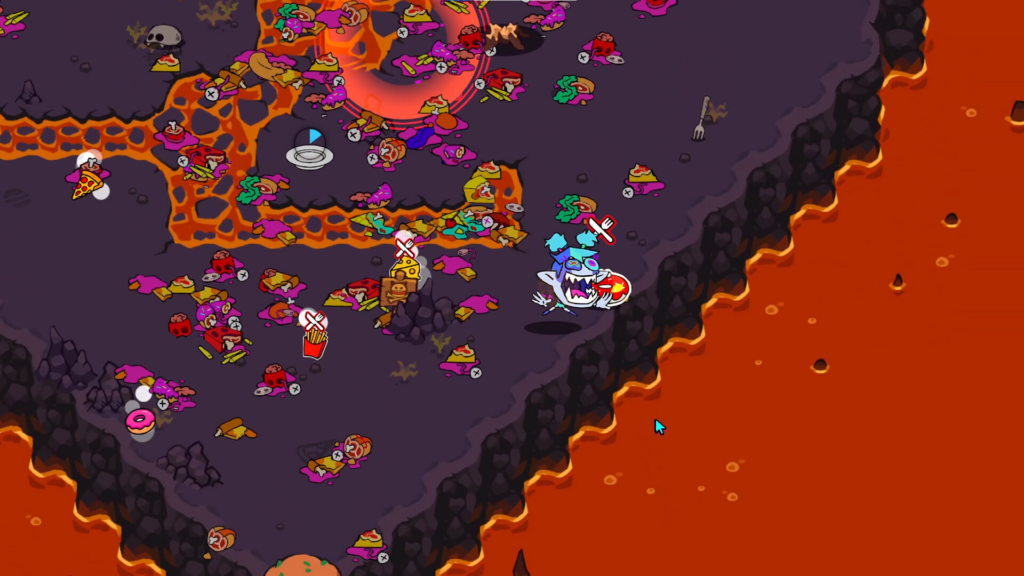
Quoted from the Steam page.
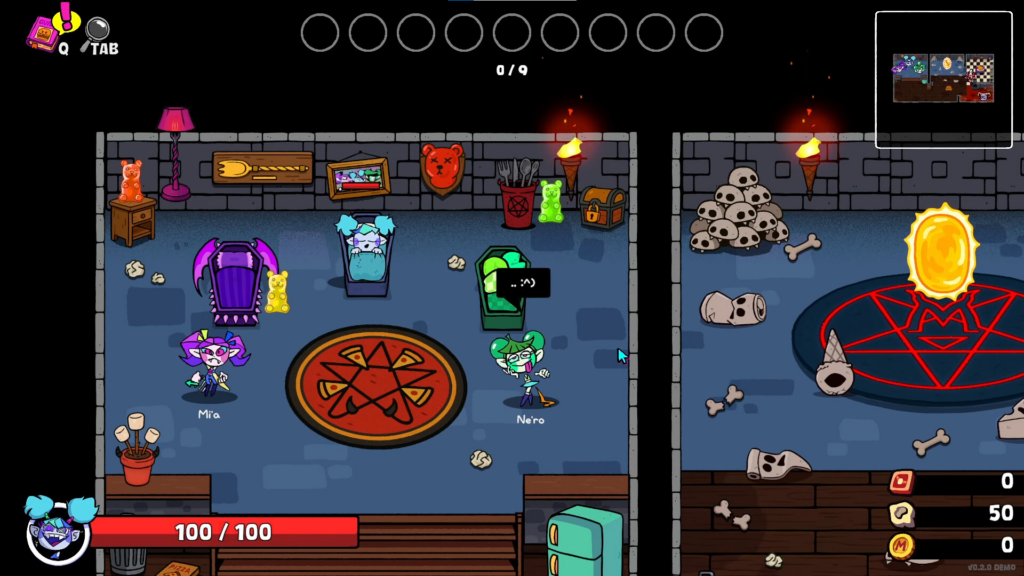
Quoted from the Steam page.
What surprised me at the venue was the volume of the demo. Despite being an event showcase, it was a generous offering to have three characters with different abilities available to play from the start. I found myself wondering, "Is it really okay to let us play this much in a demo?" Each character drastically changes the play style, so it will take quite a bit of time to experience everything, but at the venue, I saw many determined players lining up again and again, captivated by the high difficulty and depth of the game.
This could be interpreted as a reflection of the developers' confidence that "once you play it, you'll definitely get hooked." True to that confidence, the cartoonish and vibrant artwork, along with the refreshing and satisfying action, had a "taste" that made it addictive once experienced.
'GLUTTONY' is set to begin early access on Steam this year. The demo is currently available on the Steam store page, so if you want to feel the excitement of Taipei, be sure to download it and experience the world of "gluttony."
🍳 Lone Chef: Journeying Through the Pixelated Wilderness in Search of the Ultimate Flavor
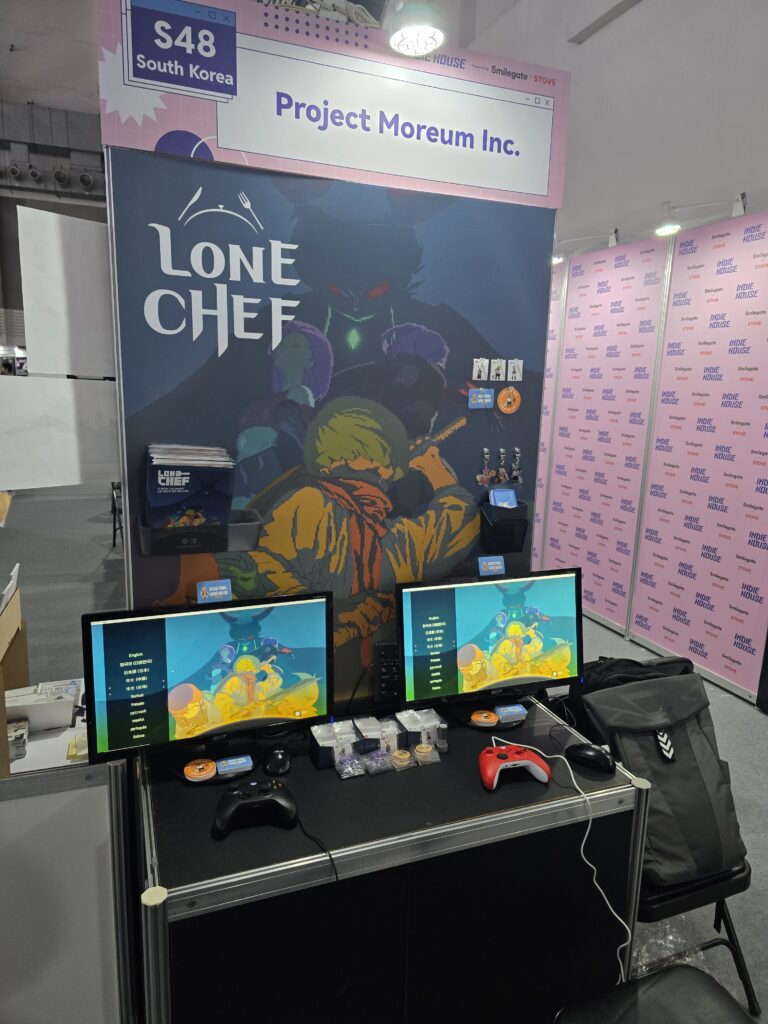
Lastly, let me introduce 'Lone Chef', a Metroidvania-style action-adventure game.
In fact, this title had been on my wishlist since before I participated in TpGS. The trigger was a glimpse of the game's development footage I saw on Steam. It showcased breathtakingly detailed and smooth pixel animations, along with a world that leaves a lasting impression at first glance. The romantic premise of "embarking on an adventure to find the most delicious dish in the world" caught my attention.
If the three games I've introduced so far are works that delve deeply into specific ideas or concepts, then 'Lone Chef' is an ambitious project that reflects the developers' "obsession" with not compromising on any element that makes up the game.
Particularly, the "Metroidvania" genre poses a significant challenge for indie game developers. Exploring vast maps, intricately designed levels, unlocking abilities through items, and expanding the range of actions... The emergence of masterpieces like 'Hollow Knight' has raised player expectations, making the challenge even steeper. It's not just about creating paths; embedding the "joy of exploration" into those paths requires an extraordinary amount of effort.
However, after playing the demo at the TpGS venue and later on Steam, I became convinced that this game has the potential to leap over that high hurdle.
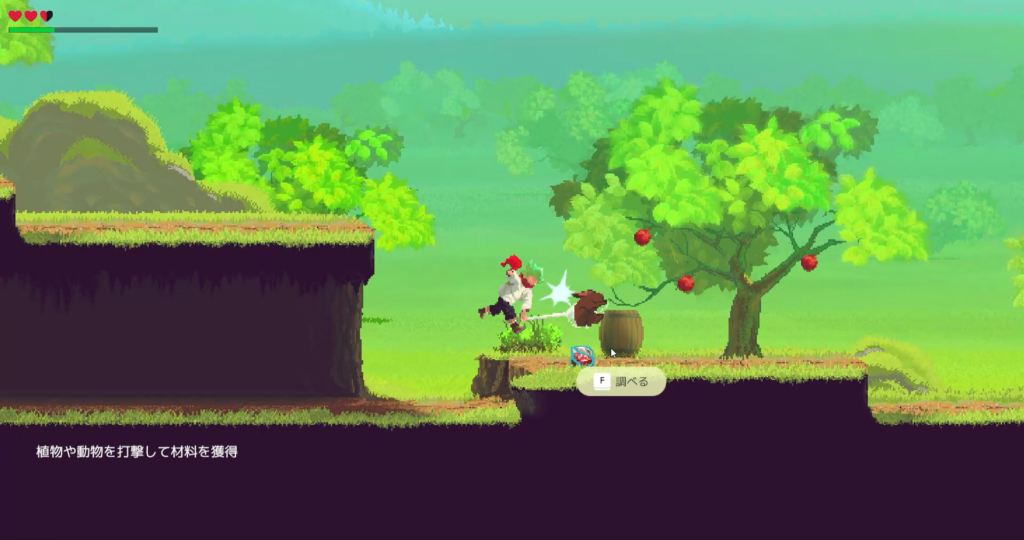
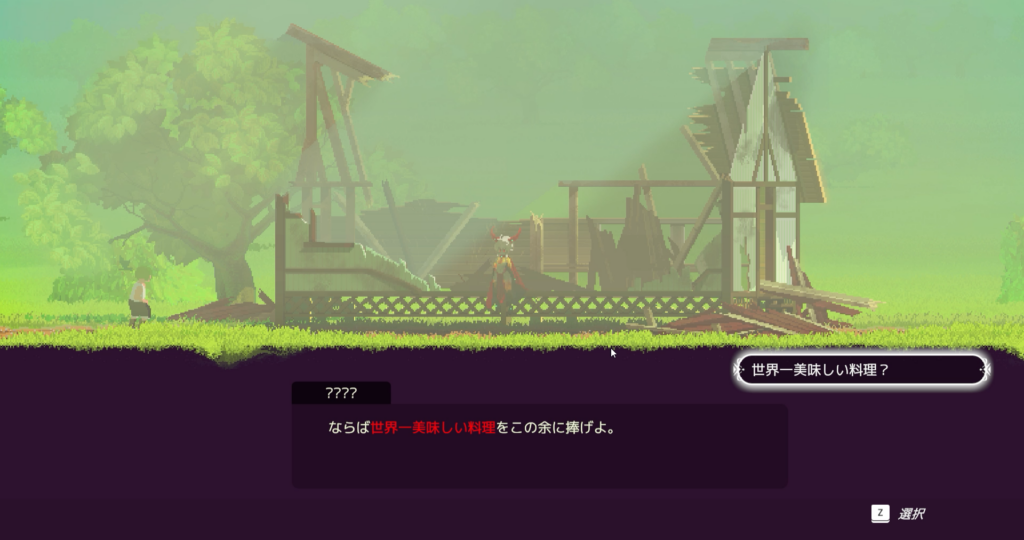
The story begins with the protagonist, who dreams of becoming the best chef, setting up their own restaurant to serve delicious dishes to people. However, just as they experience the joy of completion, their restaurant is brutally destroyed by a mysterious enemy. Leaving behind the words, "Offer the most delicious dish in the world," the enemy departs, prompting the protagonist to embark on a journey across vast grasslands in pursuit.
What stands out is undoubtedly the quality. The beautiful graphics seen in the videos do not fade even when experienced in motion. The intricate character animations, the detailed backgrounds, and the BGM that colors the world all contribute to an experience that makes you question, "Is this really an indie game?" even at the demo stage.
Of course, being a demo, there are still some rough edges in the UI, but the charm packed into this adventure more than compensates for it. In a landscape where many Metroidvania titles falter during development, the fact that this game has reached the point of a demo release with such quality deserves applause.
If Mob mentioned 'NAMMO' as a game to watch in a previous report, I, Lee Hana, would confidently recommend 'Lone Chef.' I feel that its current level of attention is far too low compared to its quality. If this article piques your interest even a little, I highly encourage you to try the demo available on Steam. It also supports Japanese, so you can dive into the world of gourmet food and adventure without worrying about language barriers.
"Good things are good!" A beloved straight talk from Taiwanese users
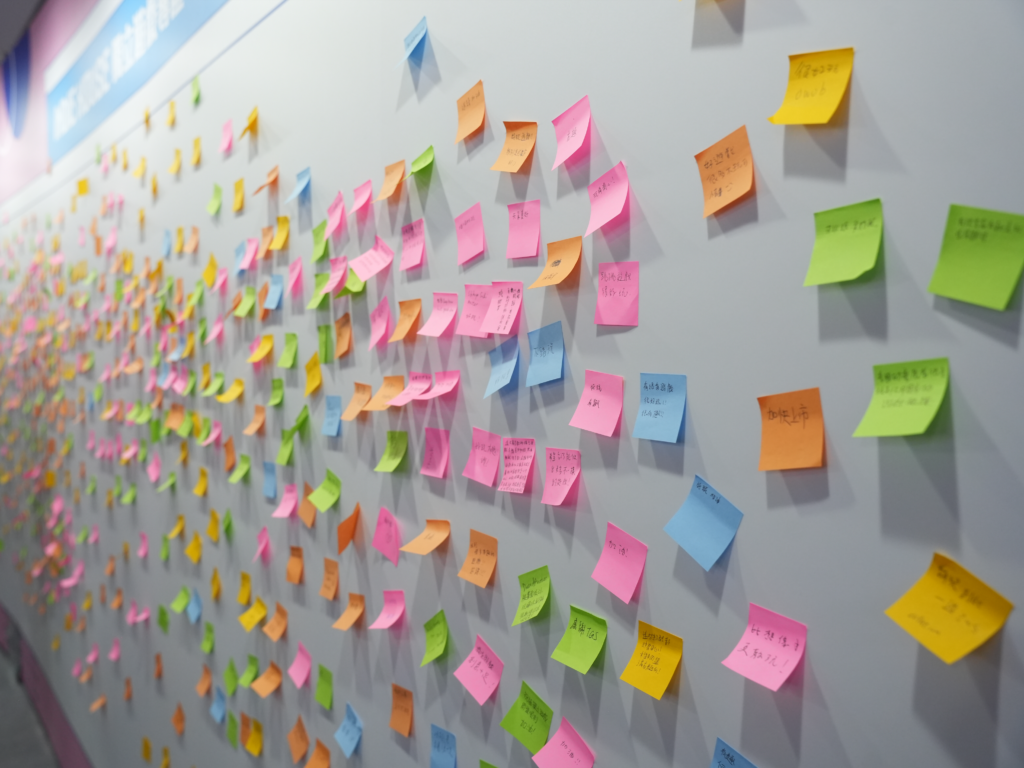
Having wrapped up the main game introduction, let me touch on the atmosphere of the venue one last time. What I found most interesting while visiting the Korean booths was the reactions of the Taiwanese users.
They are truly honest and passionate. Their interest in indie games is incredibly high, and they provide straightforward feedback on the games they play. If they think it's "good," they give a big thumbs up with a beaming smile, and if they feel it's "close but not quite," they express their opinions right on the spot. There’s no pretense or hesitation. What surprised me the most was their willingness to convey "their feelings" through gestures and expressions, even when there was a language barrier.
The Korean developers were not to be outdone either. Many booths had Chinese-speaking interpreters present, and the developers themselves were eager to convey the charm of their games. The enthusiasm of Taiwanese users wanting to "know more" and the eagerness of Korean developers wanting to "share more" seemed to create a wonderful synergy that filled the venue with energy.
Another strong impression I had during this coverage was the "global mindset" of Korean indie games.
Many of the games I encountered, despite being in pre-release or development stages, supported not only Korean, English, and Japanese but also Chinese, and even French and Spanish in some cases. While I believe the recent advancements in AI technology have lowered localization costs, I couldn't help but feel the determination of the developers who are "aiming for the world from the start."
The "heat" that transcends words felt in Taiwan. And the challenge of developers to deliver that heat to the world without losing any of it. TpGS was the perfect place to experience the current state and future of indie games firsthand.
I hope this report serves as a catalyst for you to discover your new "favorite game." Until we meet again at the next event! 再見 (Zàijiàn)!