

Hello, I'm Mob from the Negolabu team at SKOOTAGAMES.
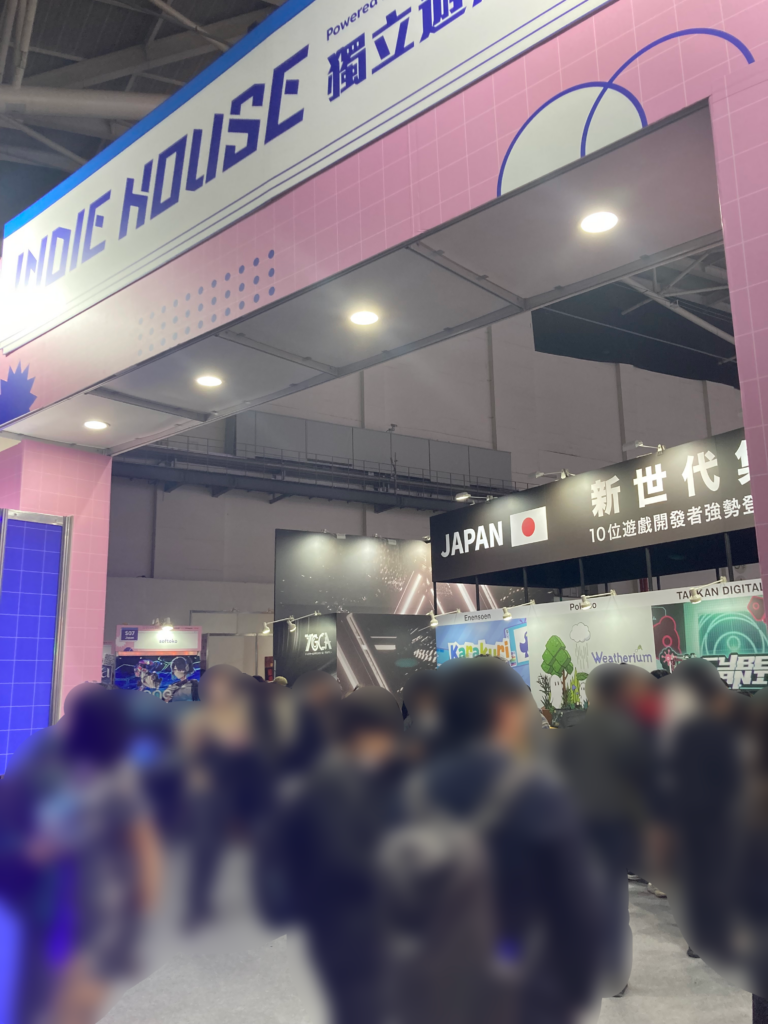
Still buzzing from the excitement of G-EIGHT in December, I crossed the ocean once again and landed in Taipei, Taiwan. I was there to participate in one of Asia's largest game shows, "Taipei Game Show 2026 (TpGS)", held from January 29 to February 1.
This time, my mission was to deliver our game 'MOMO Crash' from SKOOTA GAMES to Taiwanese gamers and to inspect the significantly expanded indie game area, "Indie House."
The venue was filled with a diverse array of indie games from around the world, including not only Taiwan but also Japan, South Korea, Southeast Asia, and Europe and the United States. The sight was truly a "mountain of treasures." With each booth I visited, new surprises and discoveries awaited me.
From the vast "Indie House," I would like to introduce three personal "recommended" titles that left a particularly strong impression on me, ones that I sincerely believe more people should know about!
Though they vary in genre and country of origin, each of these works possesses a certain charm that makes you think, "I'm glad I played this."
"SHIBUYA SUSHI MASTER": A Must-Try for Developers and Users Alike
First up is the highly talked-about title that has already garnered significant attention in the Japanese indie game scene, "SHIBUYA SUSHI MASTER."
Set in the year 2688, where advanced technology coexists with decline, the cyberpunk city of Shibuya is slowly sinking. Players take on the role of a sushi chef, serving sushi to a variety of customers who visit... It can be easily imagined as a "chill" adventure game in the lineage of "Coffee Talk" and "VA-11 Hall-A."
To be honest, many games in this genre have been released in recent years, making it difficult to find new surprises. Elements like "pixel art," "cyberpunk," and "bartender (or barista, sushi chef)" are becoming standardized symbols. Even if a game has an attractive world and characters, when asked, "So, would you actually buy and play it when it's released?" I often find myself unable to answer immediately.
However, the demo I experienced, lasting only about 5 to 10 minutes, vividly dispelled my concerns.
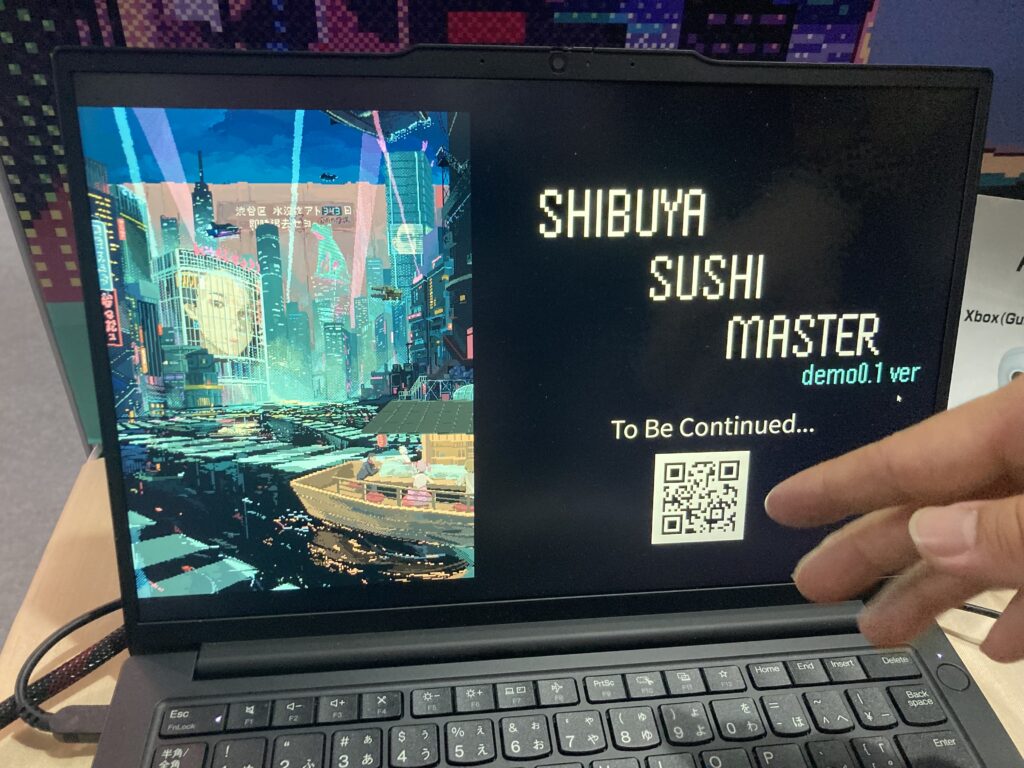
If you're curious, the screen is featured on the Steam page.
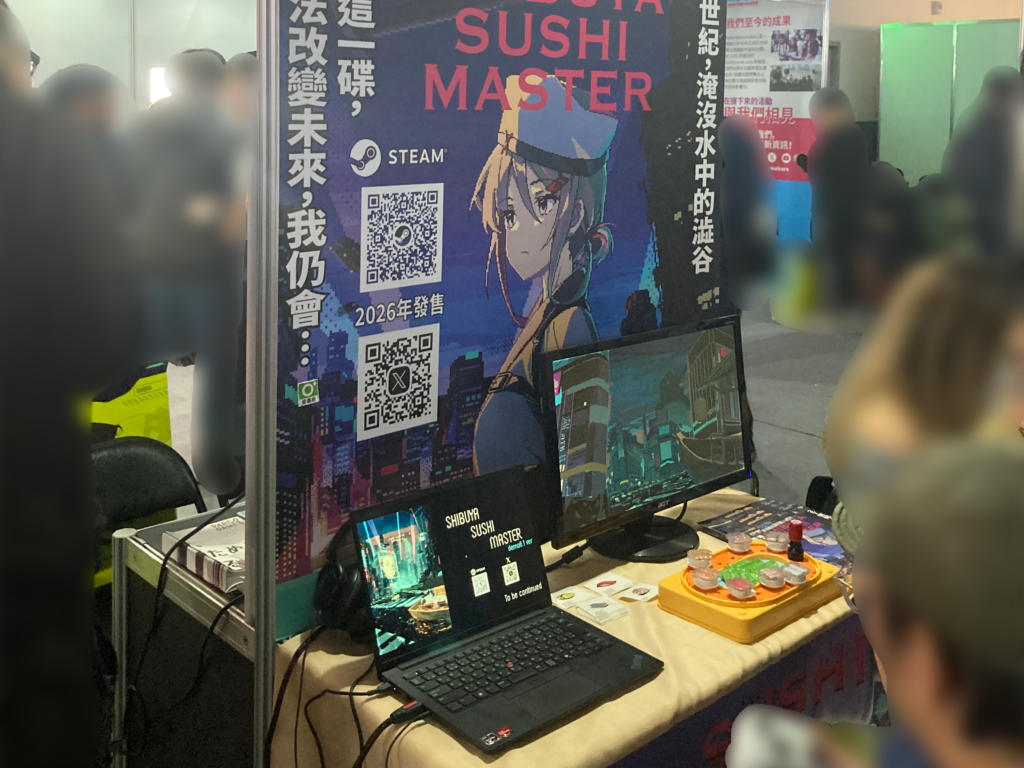
adding a subtle sense of humor.
The experience was a short segment where you simply make sushi for two customers. However, within that brief conversation, information about the world’s background, the protagonist's position, and the relationship with the customers was packed in surprisingly high density and felt completely natural. "What is happening in this world?" "What will happen to their relationship afterward?" — the moment I finished playing, I found myself desperate to know more.
This felt very much like the sensation of reading the "first chapter" of a serialized manga. In a sea of similar works, the first chapter is filled with the author's extraordinary determination and calculation to grab the reader's heart and make them resolve, "I will definitely read next week." This demo version embodies that strong will of the creators to "absolutely not let the user escape."
Even if you are somewhat fatigued by the flood of similar genre games, I hope you will definitely experience the "first episode" of SHIBUYA SUSHI MASTER. You will surely be amazed by the exquisite way the sushi is shaped (storytelling).
And as someone who also creates indie games, I feel like I've received a significant assignment on "how a demo should be."
'SUSHI BEN': A Beloved "Japanese Landscape" Reunited Beyond the VR Wall

I didn't feel any discomfort.
Coincidentally, I ended up introducing another game bearing the name "SUSHI." It's a narrative adventure game from America, 'SUSHI BEN'.
In fact, I had been somewhat aware of this game for a while. The Steam version was released on September 18 last year, which was the day before our own 'MOMO Crash' was released. As "peers released around the same time," I had developed a sense of familiarity and rivalry with it. (The original VR version seems to have come out much earlier, but that's beside the point.)
At that time, the main reason I didn't play it despite my interest was the perception that it was a "VR-only game." Sadly, for someone like me who doesn't own VR equipment, that barrier was too high, and I could only watch from the sidelines.
However, at this Taipei event, there was actually a demo available on the Steam Deck. My thoughts after eagerly trying it out were simply, "It's just plain fun." This is by no means a negative comment. For someone like me, who was bracing for the high hurdles typical of VR games, the fact that I could enjoy it on a handheld device without any discomfort and purely as a game held significant meaning.
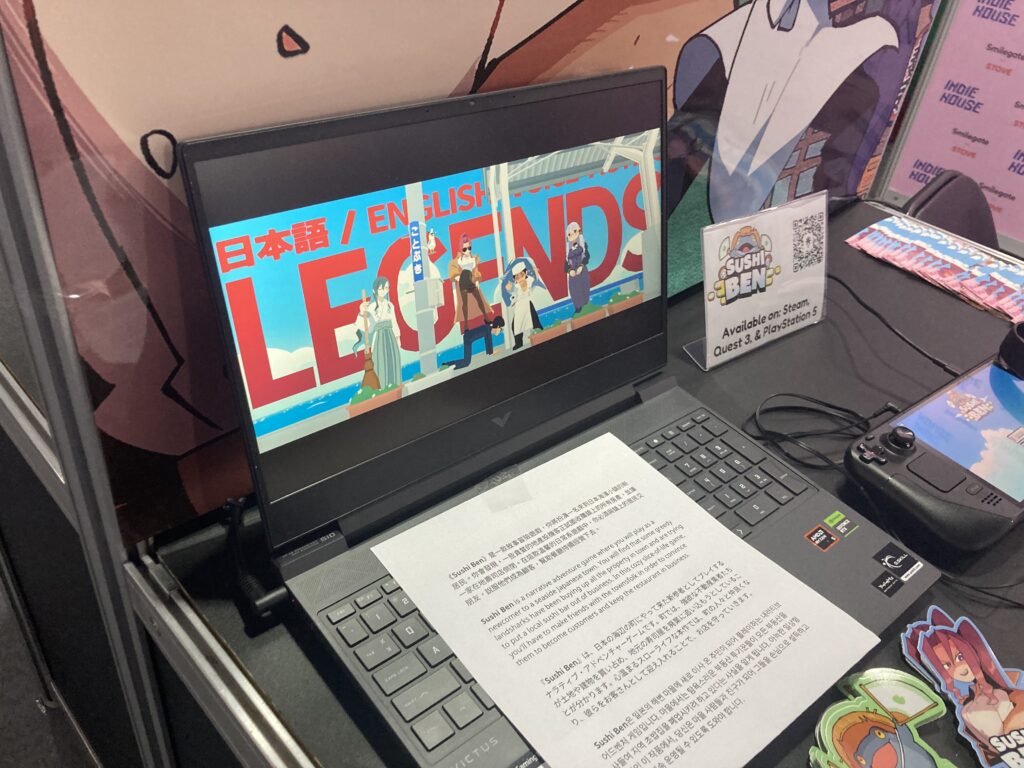
and the only gameplay was on the Steam Deck on the right.
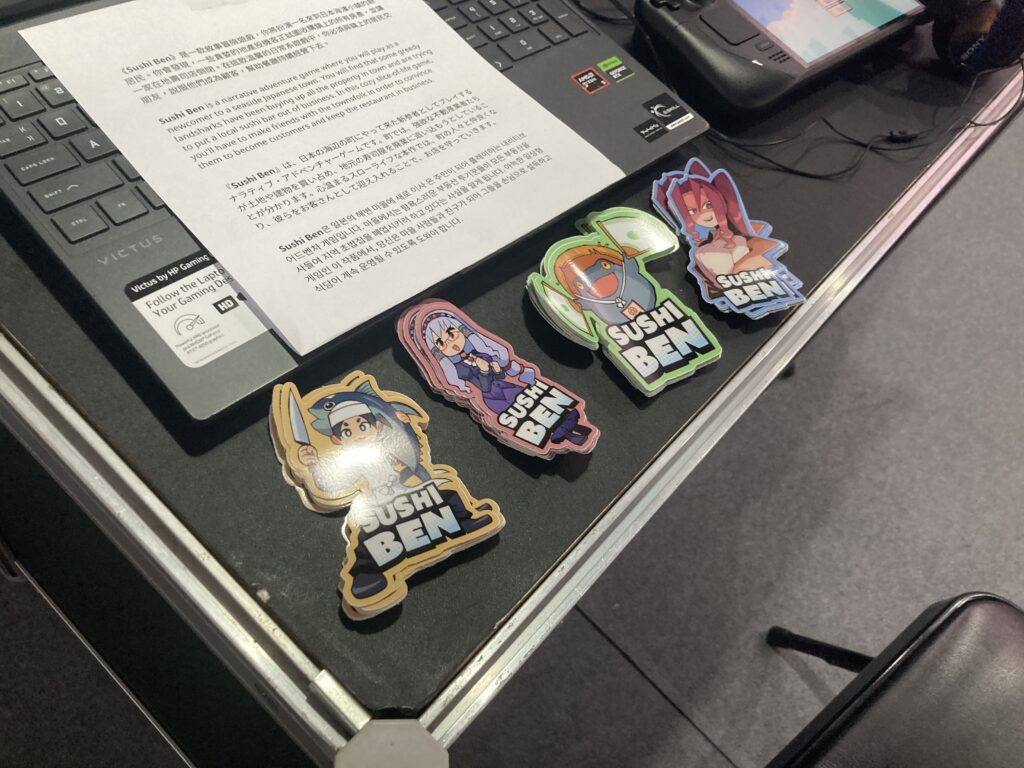
I couldn't meet the character in the demo, but
I chose the one on the far right.
The part you could play in the demo was mainly the "fishing" segment. It's a simple premise of catching fish to supply a sushi restaurant, but the interaction with the fish and the feel of the controls are exquisite, and before I knew it, I was completely absorbed in casting my line. The 3D cartoon-style graphics designed for VR are captivating even on the Steam Deck's screen, and the beauty of the fishing village landscape viewed from a high point and the blue sky is still etched in my memory.
What surprised me the most was the naturalness of the world. The story of protecting a beloved sushi restaurant from a corrupt land developer, along with the characters' actions and dialogue, felt almost devoid of the "strange depictions of Japan" often found in foreign works. Rather, it made me feel that they understood and loved the atmosphere and beauty of rural Japan even more deeply than we do. This quality is achieved not through superficial symbols, but by genuinely capturing the breath of that world.
For those who do not own VR equipment or have some resistance to VR, I highly recommend 'SUSHI BEN'. In fact, I might even consider buying VR equipment just to play this game... It was such a wonderful encounter that it even tempted me dangerously.
'NAMMO': The anticipated title that made me want to write this report
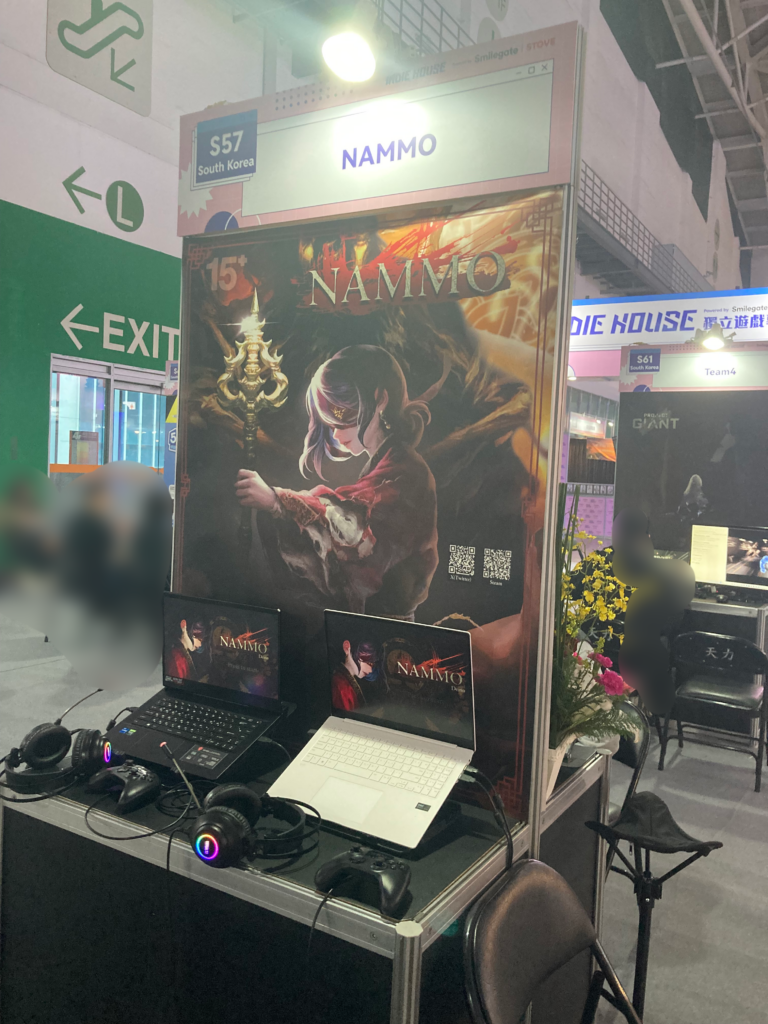
for now, I'll go with 'NAMMO'.
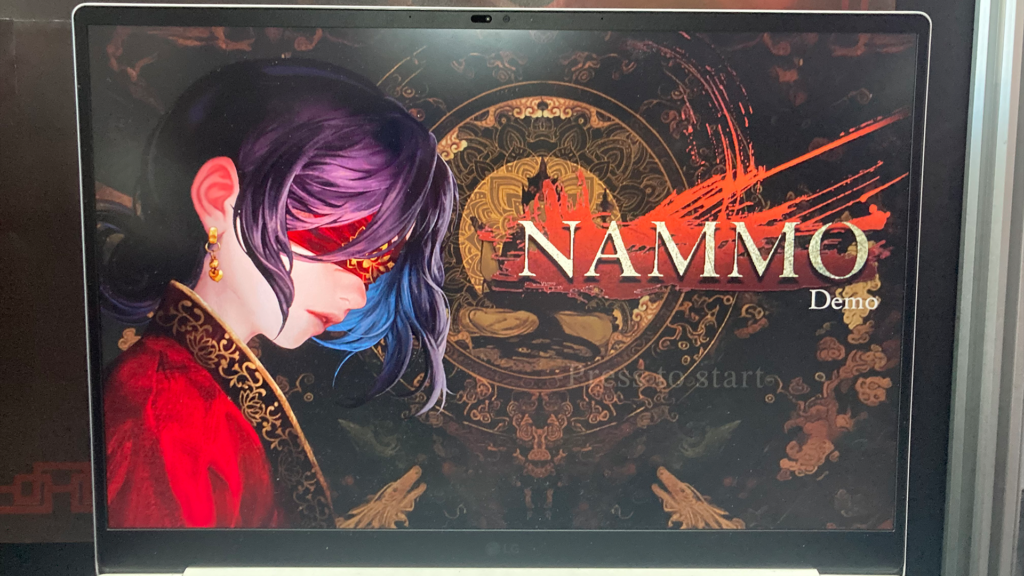
Lastly, I would like to introduce a 2D Souls-like action game 'NAMMO' from our neighboring country, South Korea.
To be honest, I want everyone in Japan to know about this game called 'NAMMO' through this opportunity. Its recognition in Japan is still not very high, but as a gamer and a fan, I feel a strong urge not to let this work slip by. There is a shocking impact in this game that compels that feeling.
This work is a dark fantasy inspired by ancient Korean folklore. Its unique, indigenous, and mystical artwork stands out distinctly from the Oriental designs seen in Japan and China. It seems to have already garnered enthusiastic attention even before its release in South Korea, and at the venue in Taiwan, there was a constant stream of visitors to its booth.
The protagonist, "NAMMO," is a being who, after being betrayed by someone they trusted and losing both eyes, awakens to a special ability called "spiritual eye." This "spiritual eye" is the core of the game's system and visuals.
Players can open the "spiritual eye" by consuming a specific gauge. When they do, a circular area expands around the protagonist, and the world inside that area transforms completely. Hidden paths that are usually invisible emerge, and the weaknesses of monsters become apparent. In other words, this game simultaneously depicts two different patterns: the "world visible to the naked eye" and the "world visible through the spiritual eye," all on one screen.
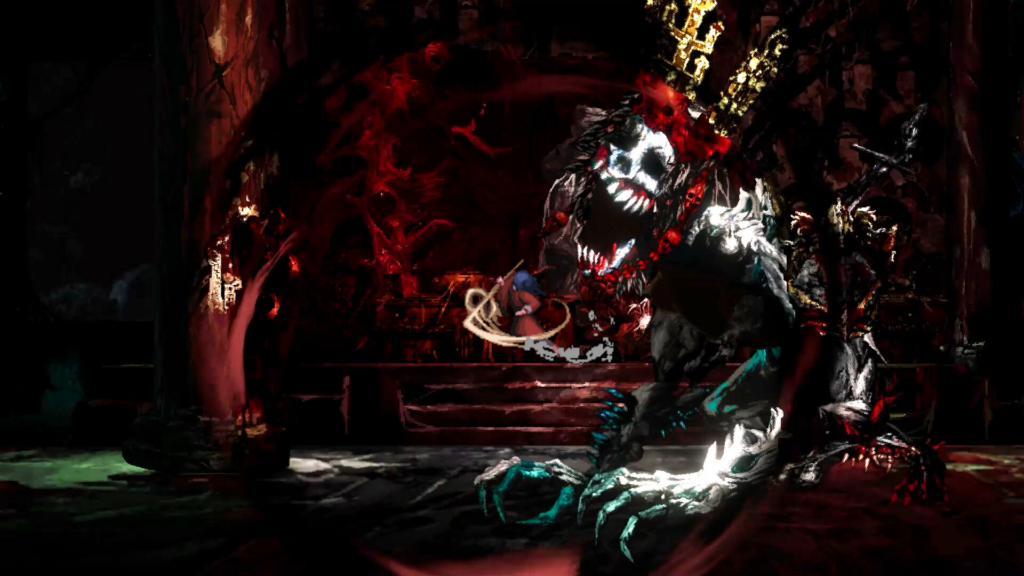
The circle in the middle represents the world seen through the spiritual eye.
It looks like a lot of work...
Despite being the same map and the same monsters, they present completely different appearances depending on the perspective. From a developer's point of view, this means an incredibly nightmarish workload and adjustments, as they must "design two worlds simultaneously and ensure they operate without contradictions." However, for players, it becomes a dreamlike experience, a beautifully terrifying visual journey unlike anything they've seen before.
The demo has a 10-minute limit. It consisted of a tutorial and a boss battle, and true to its claim of being a souls-like, the difficulty was quite high. According to the booth staff, the clear rate is about 20%. I also attempted it several times but ultimately found myself kneeling before the boss.
However, even that feeling of defeat was pleasantly overwhelming, as the art and action of this game were intense. Although the demo hasn't even been publicly released yet, judging by the excitement here in Taiwan, there's no doubt it will become a major topic worldwide, including in Japan, in the near future. If you're an indie game enthusiast searching for undiscovered gems, let me assure you now: remember the name 'NAMMO'. You won't regret it.
I hope that one day it can reach more Japanese users at events like Bitsummit or Tokyo Game Show. 'NAMMO' is definitely a title that will astonish the world.
Transcending Language Barriers with a Love for Games

Now, I've introduced you to three games that captivated my heart during my time in Taipei. What did you think?
Japan, the United States, South Korea. The genres and countries of origin are diverse, but each of these games possesses a certain charm that makes you feel, "I'm glad I played this."
What I felt most strongly at this Taipei Game Show was that even in such an internationally diverse venue, "words" are not that important in the communication we share. Even with my poor English and gestures, the passion of "I love this game" and "this part is interesting" is conveyed surprisingly accurately to others.
The "love" that creators put into their work and the "enthusiasm" that players return with. With those two elements, borders and language barriers can be easily overcome. The sight of Taiwanese users laughing together at the 'Momotoro Crash' booth and developers around the world with shining eyes for games speaks volumes about this.
The world is vast. But with interesting games, we can connect anywhere. With that conviction and a pleasant sense of fatigue, I would like to conclude this Taipei report.
Until next time, see you in the next report!