

In this interview, screenwriter Yuji Kobayashi shares in detail the journey leading up to his debut and the experiences he encountered along the way.
Mr. Kobayashi participated in the summer open course of the Scenario Writers Association during his university days, and through meeting people at the YMCA in Takadanobaba, he stepped into the professional world. He discusses his activities on "Scenario Land," which he launched using a homepage builder, and his first paid job in a radio drama channel, sharing real experiences leading up to his debut. His passionate feelings towards Ultraman and special effects, as well as his part-time job experience at Tsuburaya Productions, and the episode that led to his debut as a scriptwriter for Sazae-san, will be very informative for those aspiring to become screenwriters.
Additionally, Mr. Kobayashi's struggles and challenges in building his career as a professional screenwriter, along with comparisons to his brother, Eizo Kobayashi, are also interesting points. He touches on advice for succeeding as a screenwriter and the importance of networking in the industry.
Through this interview, we hope to convey Mr. Yuji Kobayashi's personality and sincere attitude towards his work, as well as the allure and reality of the profession of screenwriting. This is a must-read for those aiming for a debut.
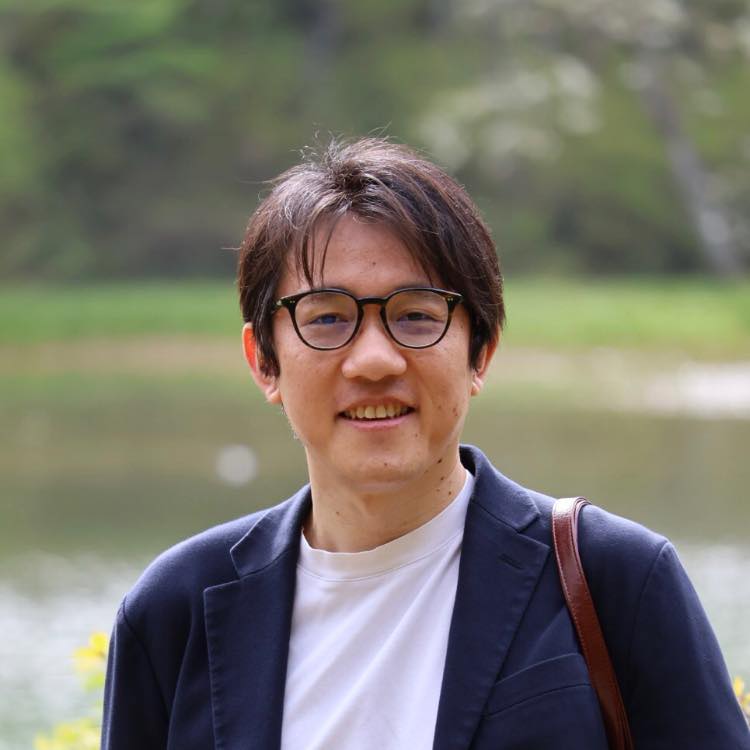
Interviewee: Yuji Kobayashi
Screenwriter, Novelist
Born in 1979, Nagano Prefecture.
Made his debut as a screenwriter in 2002 with the anime "Sazae-san," and has since focused on writing for anime, special effects, and novelizations, while also working on scripts for general dramas.
Part-time lecturer at Nihon University College of Art, Film Department. Lecturer at Tokyo Writer's University. He is also active as a playwright, event organizer, and instructor for various courses.
Notable Works:
Anime: "Fushigi Dagashiya: Zeni-tendo," "Pretty Soldier Sailor Moon Crystal," "Star☆Twinkle Pretty Cure," "Smile Precure!," "Sweet Precure♪," "Mahou no Lumitia: Luminary Tears," "Inazuma Eleven: Orion no Kokuin," "Saint Seiya Omega," "Secret: The Revelation," "Sazae-san"
Special Effects: "Ultraman Z," "Ultraman R/B," "Ultraman Orb," "Ultraman X," "Ultraman Ginga S," "Ultraman Mebius," "Ultraman Max," "ULTRASEVEN X," "Juken Sentai Gekiranger," "GARO," "Ultraman X: The Movie," "Ultraman Ginga S: The Final Battle! Ultra 10 Warriors!!," "Space Sheriff Gavan: THE MOVIE"
TV Dramas: "Baby Steps," "Orothros no Inu," "Audit Corporation," "Chugakusei Nikki," "Tales of the Unusual," "Welcome Back to Butler Cafe," "Shiori and Shimikko's Strange Case Files"
Variety: "Genius TV-kun YOU"
Publications: "The Place Where Mori Is," "Kiseki - The Story of That Day," "Novel: Smile Precure!," "Ultraman Sisters," "How to Create Special Effects Hero Programs," "Living as a Screenwriter"
...and many more
http://ameblo.jp/kyakuhonka/
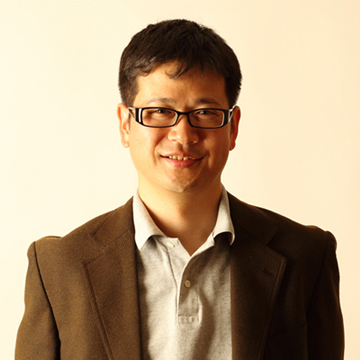
Interviewer: Toshiyuki Kodate
President of Kodate Co., Ltd.
Born in 1973, Saitama Prefecture.
After spending four years in the printing industry working in DTP, he transitioned to TMS Entertainment, where he produced anime works such as "Anpanman," "Lupin III," and "Detective Conan." During his 16 years there, he held various positions in planning, production, and sales. He was also responsible for the literary adaptations of original anime by creators like Monkey Punch, Takehiko Inoue, and Natsuhiko Kyogoku.
In April 2017, he established a corporation to value connections among creators and build a foundation for entertainment. He is involved in content planning, production, and consulting related to anime and video.
-- I would like to ask Mr. Yuji Kobayashi about his debut experience as a screenwriter.
Mr. Kobayashi and I (Kodate) have known each other for quite a long time; I believe we met when he was in his second year of university.
That's right. The first person I properly got to know after moving to Tokyo was Mr. Kodate.
-- The first time Mr. Kobayashi and I met was at the summer open course of the Scenario Writers Association.
At that time, we didn't meet during the course itself, but later on, we got to know each other online and realized we had both taken the same course.
I remember that there were more participants in the course back then. The venue was not the Scenario Writers Association's Scenario Hall, but rather the YMCA in Takadanobaba. After becoming a professional, I had the opportunity to be a guest lecturer at the summer open course, and compared to that, I remember the number of participants back then being significantly higher.
-- I wonder why that is?
There are various ways to learn screenwriting now, but back then, it might have been because there was only face-to-face format available. Also, as a main guest, there was a well-known figure like Yoshikazu Kuwata. It was just after the huge hit of "Bayside Shakedown," so many people might have been there for him. I was partly there for Kuwata-san too. Anyway, I remember it being very lively and having a lot of people.
-- I find it surprising that there were more participants back then, considering that nowadays, various forms of screenwriting, like game scripts, are in demand.
The reason there were more participants back then might be that the "places" to study were limited. I remember one participant from that time who came all the way from Kyushu, despite being ill and having a tube in his nose, which surprised me.
-- You started the early version of Scenario Land around that time, right?
I was using software called Home Page Builder to create a personal homepage called Scenario Land. I also wrote about my experiences participating in summer public lectures. Additionally, I set up a bulletin board (BBS) for those who wanted to become screenwriters, allowing for interaction, and one of the members was Mr. Takadachi.
――I remember that well too. The university lecture notes were published there, right? Studying things like 'Oedipus Rex' was quite enlightening.
Mr. Kazuto Kawabe, who came from Shochiku, was in charge of a lecture on screenwriting theory, and I posted the lecture notes on Scenario Land. Of course, I had obtained the teacher's permission first.
■Scenario Land
Currently, it is being developed as an "online salon" where creators, aspiring creators, and industry supporters gather, focusing on screenwriting. https://lounge.dmm.com/detail/445/
About Student Life at Nihon University Arts and Job Hunting
――How was student life at Nihon University Arts?
Originally, I wanted to become a screenwriter, so I moved to Tokyo from my hometown of Nagano to attend Nihon University Arts. I majored in film screenwriting, but I quickly realized that only a small number of people were seriously interested in pursuing a career in screenwriting. I was surprised, but I think many others felt the same way. For example, even in the directing course at Nihon University, not everyone is genuinely committed to becoming a film director. In fact, I think it's quite rare. In the literature department, I suspect that only a portion of students want to become novelists. Many students come to the arts department with the mindset of wanting to take a different path because they like film, rather than a serious desire to work in the industry. Of course, compared to other general university students, the proportion of those who like film is higher, but whether they want to make it a job is a different matter. I moved to Tokyo wanting to make it my job, but looking around, I found that very few people were genuinely committed. Maybe there were a few? It felt like that. So, I realized that I couldn't become a professional screenwriter just by being here. The university doesn't take care of you after graduation either. You can't just automatically get a job at a film company, animation studio, or TV production company after graduating. I quickly understood that waiting around wouldn't work, and I needed to take action myself.
Therefore, I was primarily using the internet to engage in activities to become a screenwriter while still in school. Creating Scenario Land was part of that effort. I was thinking about how to raise the visibility of my work and how to pitch it to the industry. At that time, the internet wasn't as widespread as it is now, so it might have been a new activity.
While I was in school, I was also doing various other things. There was a cable radio drama channel that was looking for screenwriters, so I applied, and my work was broadcasted, earning me a small fee. This was the first job where I received payment in my career. This particular work is no longer available to listen to, but the director of the program was Mr. Kenji Hata, who later became famous as a screenwriter. Mr. Hata went on to write numerous hit dramas such as 'Unfair,' 'Dragon Sakura,' and 'Celestial Observation.' He was recruiting scripts online, and when I sent a few, some were accepted.
However, that alone didn't provide enough income to live on. Since I wasn't actively job hunting, I was wondering what to do after graduation in my fourth year. I started sending out emails to production companies I was interested in, expressing my desire to write scripts. One of those was Tsuburaya Productions. I had always loved Ultraman and special effects, so when I contacted Tsuburaya Productions through their website to express my desire to become a screenwriter, they mentioned they were hiring part-time workers. So, I went for an interview saying, "I want to work in any capacity," and I was hired in the media department, which handled books and DVDs. I remember it was just before my graduation in my fourth year of university.
――Was there a recruitment drive at Tsuburaya Productions at that time?
I don't think there was one publicly.
However, it wasn't that I had no connection to Tsuburaya Productions at all. In fact, during high school, I had come to Tokyo for university information sessions. At that time, I called Tsuburaya Productions out of the blue and asked, "Can I come for a tour?" I wanted to see the company and the monster warehouse. I was around 16 or 17 years old. I think it would be impossible to do that now. Back then, the Tsuburaya Productions headquarters had a monster warehouse where they stored monster costumes. It was a very homey, old-fashioned place located in Seijo, Kinuta. Now, the headquarters has moved to Shibuya, and that location has become an apartment building.
Well, I had a strong attachment to Tsuburaya Productions, Ultraman, and the monster costumes. So, among the companies I emailed expressing my desire to write scripts, I probably had the strongest feelings for Tsuburaya. That's why I might have received the best response from them.
――While working part-time at Tsuburaya Productions, did you also engage in other job hunting activities? Did you consider entering media companies or trying to apply to other companies looking for screenwriters?
Indeed, I was thinking about and working on various things simultaneously. I received responses from other companies through the internet as well. Several companies replied to my emails.
By the way, Nihon University Arts tends to attract students with quite unique backgrounds. One of my classmates was the daughter of screenwriter Shoichiro Okubo. Mr. Okubo is a master known for two-hour dramas and live-action adaptations of 'Manga Michi.' When I told her that I seriously wanted to become a screenwriter, she introduced me to her father, Shoichiro. I was able to have my scripts read and, through these connections, I was doing various things simultaneously to enter the professional world.
I did a little bit of job hunting for general companies, but just writing entry sheets was exhausting. I thought that maybe I wasn't suited for general companies.
I didn't buy a recruitment suit, but I did attend a presentation by Toho. There were a lot of people there, and I was told that if I submitted an entry sheet, everyone would be able to take the first interview. In the end, I was rejected at the entry sheet stage. A few others from Nihon University also applied, but everyone was rejected. We joked among ourselves that it was probably because we were from Nihon University... Well, the truth is, I think the competition was just very high.
Additionally, I also wrote an entry sheet for NHK. Being NHK, it was obviously not easy to get in. Looking back now, I realize that it was unreasonable to only apply to large companies like NHK and Toho. Normally, everyone applies to dozens of companies.
――Do you remember which position you applied for at NHK?
Hmm, I don't recall. I didn't really research job hunting methods or attend school information sessions; I was doing it all on my own. I hardly used any support from the school.
I think Nihon University Arts had weaker job support compared to other faculties. The proportion of students getting jobs in general companies was lower than in other faculties, so I was doing it without really understanding that aspect. I got tired after just applying to two companies and thought, "I'm done." I often questioned myself about what I was doing. However, because of that, I also realized that I was internally thinking, "Is it okay to get a job like this?" and "I'm writing entry sheets, but I really want to write scripts." Honestly, I had doubts about becoming a company employee.
――For example, nowadays, game companies are recruiting scenario writers and developing projects to train them. If you were a university student now, would you have considered not only Tsuburaya Productions but also game companies?
Yes, that's right. I was searching for information online, so I was looking up various search terms like "screenwriter recruitment." I think I was looking for places I could get into or companies that would hire me. If it were now, I might have found job postings for scenario writers at game companies and applied to several. However, since I'm not very knowledgeable about games, I might not have actively applied to game companies. But I think it was a possibility. In fact, one of my students is someone who really wants to write dramas and films but is currently working at a game company while writing scenarios.
――Many people aim to become screenwriters while working. Some choose related professions instead of directly writing scripts to pursue a career in screenwriting.
That's true. I think there are generally two main patterns to becoming a screenwriter: either entering a production company or doing completely different part-time jobs while aiming for screenplay competitions in your spare time. However, I felt that I wasn't really suited for competitions. I was interested in special effects, so I thought my field was different from general competitions.
While considering various options, I ended up working part-time at Tsuburaya Productions, as I mentioned earlier. From the outside, it seemed like a tough job, but looking back now, it wasn't that hard. I could go home at night, and I had weekends and holidays off. The pay was low, but it wasn't a department where I had to be on set every day, so it wasn't physically demanding. However, at that time, it felt like a lot of hard work to me. I wasn't looking for that kind of job, and I wasn't used to doing menial tasks. I lacked social skills, so I often got scolded while working, and after about two weeks, I was exhausted and thought this environment wasn't for me. Of course, compared to being on set every day, it might have been easier, but it was still a significant burden for me at that time. So, I started to feel that I needed to look for another path. I didn't know how long it would take to become a successful screenwriter if I stayed there.
Communication in the Smoking Room at Tsuburaya Productions' Media Department
――Some production companies solicit ideas and scripts from their employees, but how was it at Tsuburaya Productions back then?
The departments were different. The media department I was in was not the main department (the production department) that created Ultraman, so I didn't have the opportunity to contribute ideas. I felt it was a bit presumptuous to think about becoming a screenwriter in this position. However, looking back now, those 3 to 4 months I spent working part-time were very important. The media department was the only place in the company where smoking was allowed. People from the production department and higher-ups came in every day to smoke. My first job was to serve tea to those people. By serving tea, I was able to build connections and simultaneously develop my communication skills as a working adult. This has also been beneficial for my career later on.
Among those who came to smoke was the then-president of Tsuburaya, Kazuo Tsuburaya (the grandson of director Eiji Tsuburaya), and Hiroshi Takano, the special effects director of the original Ultraman. Takano was in the highest position as the head of the production department, but every time he came to smoke, I would serve him tea and engage in small talk. He was the kindest person. He passed away in 2008, but I still remember him. One day, he suddenly said to me, "If you have something you want to do, just let me know." That one line still makes me happy to remember. At that time, I was just a simple tea server, but he treated me without regard to our positional differences. That was the kind of person Takano was.
Additionally, among the people I met at that time was Tsuyoshi Yagi, who would later become a staff director I worked with. He was still a young man in his 30s back then. There was also Yukiko Omote, a producer in her 20s, who I would soon work with as well. If both of them hadn't been smokers, I might not have had any connection to Ultraman.
――But, Mr. Kobayashi, you don't smoke, do you?
Not at all.
I've often heard that important decisions are made in the smoking room, and the media department was such a place. The president would come in to talk, or Takano would ask, "We have this project coming in, what do you think?" Looking back now, it was a very fortunate environment. The connections I made with the people I met there later led to opportunities to write for Ultraman.
――It seems like your work at Tsuburaya Productions was very fulfilling, but I imagine your desire to become a screenwriter was just as strong.
That's right. I couldn't drink alcohol, so I didn't fit in well at drinking parties back then. As a result, I often felt unwell and mentally stressed, thinking, "I can't take this anymore." I spent a lot of time in deep thought. While I was exhausted from my part-time job, I kept thinking about how to pursue a career as a screenwriter.
――But in the end, you left Tsuburaya Productions, didn't you?
It was sudden. The trigger was "Sazae-san." Someone who knew I was familiar with "Sazae-san" introduced me to Aiken, the production company behind it. It's worth noting that "Sazae-san" doesn't necessarily open its doors to newcomers; they welcome both veterans and newcomers if they can write.
As a result, "Sazae-san" became a significant turning point for me.
In my case, I had all the volumes of the "Sazae-san" manga at my grandparents' house, and I had been reading it since I was a child. The world and characters were ingrained in me from a young age, so I thought it would be the easiest to write among the anime. While working part-time at Tsuburaya Productions, I went to meet someone from the anime company I was introduced to. They had never read my script before, so they didn't know my abilities, but they said, "Well, give it a try," and asked me to write 10 plots for "Sazae-san" with a one-week deadline.
Days When Even in My Dreams, Sazae-san Appeared
――Ten plots! That sounds tough.
But I thought it was a great opportunity, and I was happy to have the chance to challenge myself. As a result, one of those plots was accepted, and I moved forward with the script. However, I felt it was impossible to continue working part-time at Tsuburaya Productions every day. I didn't want to miss this opportunity, so the next day, I honestly spoke to my boss, the head of the media department. I said, "I have a chance, and I need to write 10 plots by next week. I think I need to focus to write, so please let me quit my part-time job."
――What was the reaction?
The department head didn't stop me at all; rather, he encouraged me. It seemed he had sensed my desire to leave for some time and supported me. Thanks to that, I was able to take the plunge and challenge myself. However, I thought he would interpret it as "I'll quit for now and come back when I have the time." But it seemed he took it as "You won't be coming back to the part-time job." Therefore, there was no discussion about how long I would be taking off, and he simply said, "Well, good luck." Perhaps my determination was conveyed. Hearing those words almost made me cry.
So, I decided to focus for just one week. It wouldn't bring in money right away, but I planned to live off my savings and concentrate on this opportunity. I aimed to finalize a script as quickly as possible and make my debut while using the money I saved from my part-time job for living expenses.
That was in May of the year I graduated from university. It was quite chaotic. Ultimately, I quickly had one script accepted, which became the final draft and aired in September of the same year.
――That was quite speedy.
I'm truly grateful to those who supported me. Many people challenge themselves but aren't accepted, and even if they are, it can take about a year to reach the final draft. In my case, it was very quick. However, if it had taken a year, I would have run out of the savings I had accumulated from my part-time job. So, I was also looking for other jobs or part-time work. That year, I also started writing for the special effects magazine "Uchusen." But I must say, writing 10 plots in one week was tough. "Sazae-san" even appeared in my dreams.
――By the way, was it in 2D or 3D in your dreams?
It was 2D. It felt like I was watching the anime world in my dream. I pictured a scene where Sazae-san was walking down the street. Writing 10 plots in one week was challenging, but I needed time to review them, so I proceeded with the premise of writing two a day. Each plot ended up being quite long and specific. Therefore, I think they could see whether I had grasped the world and characters to some extent.
Among the 10 plots, the one related to a typhoon received the highest praise. It was a story about the Sazae-san family’s commotion on the night a typhoon hit, where Tama goes missing, and as everyone goes to look for him, one by one, the people searching also disappear, creating a chaotic story. After going through about 3 to 4 rounds of revisions, it successfully became the final draft, leading to my debut.
――Did you feel confident about the typhoon plot yourself?
No, I didn't have that much confidence yet. I was working on it with anxiety, wondering which of the 10 would be accepted or if none would be.
Also, the original "Sazae-san" scripts have a set pattern for requests. For example, if it's a story airing during the Tanabata season, they would request that I use several of the original four-panel comics related to Tanabata to write the plot. However, in my case, since I hadn't debuted in any visual work yet, I was allowed to write freely.
Behind the Scenes of Sazae-san
――Your debut work in visual media was "Sazae-san," right? Did you discover anything?
Rather than a discovery, I have a strong impression that it was "fun." Enjoyment is something I still value in my work today.
Also, I later realized that the script production for "Sazae-san" was quite unusual. The number of people in the meetings was very small. Typically, you only interact with the literary staff, and while sometimes higher-ups might show up, they are not always present. Since we had small meetings, I later learned that in other jobs, many more stakeholders are usually involved. It's common for a director to be present or for many other staff members to attend, but "Sazae-san" was an exception.
――Is it because "Sazae-san" doesn't have a series director throughout?
Yes, I think so. After the final draft, each episode's director proceeds with it individually. The TV station must also check the script, but the producer did not come to the meetings to give direct opinions.
By the way, back then, I was sending scripts via fax. It quickly switched to email, but for a while, I was printing out the scripts and sending them via fax myself. There were times when I accidentally sent two pages at once or had to resend them, which was a hassle, but it was a hands-on experience that you can't have nowadays.
――When I joined the anime company, we were also using fax. There were times I had to send large batches of 60 pages. Sometimes it would get jammed, and I was anxious about whether it actually went through.
Looking back now, it's quite nostalgic.
Also, one memorable event from that time was when I went to observe the dubbing session because an episode of 'Sazae-san' that I wrote was going to be recorded. It was the first time I met the director and greeted them, but I ended up getting some criticism about the script we were about to record. They said, "The character's movements are strange," and "If you move the character according to your script, they will warp from here to there inside the house."
-- When you receive a script order, are setting documents like the layout of the house provided to you?
I believe I received the blueprints for the Isono family. However, to be honest, I was inexperienced at the time and couldn't think that far ahead. Writing a script should ideally involve considering every detail to avoid contradictions. Even in animation, it should be crafted in a way that prevents unnatural movements, like characters warping from one place to another.
The knowledge and experience of the veterans were truly amazing; they could notice even the slightest sense of incongruity and think, "Huh? That's strange." The actual recording was impressive because the voice actors were veterans and were so accustomed to it, I was surprised to see how quickly they recorded. It was almost one take okay. After a brief rehearsal, they would say, "Okay, let's record," and just keep moving forward. It was really refreshing.
Recent anime can often be flashy depending on the direction. While I think there are parts that are overly directed, the direction of 'Sazae-san' follows a set pattern. It's like the format is predetermined, and they don't do anything different from the usual. This is the same for the script. The script becomes crucial in figuring out how to create a new episode of 'Sazae-san' that feels just like the usual 'Sazae-san.' The literary staff responsible for script direction holds a significant position within 'Sazae-san.'
-- For you, Mr. Kobayashi, your debut work 'Sazae-san' was full of discoveries. How was it for your subsequent works?
Even though I debuted, it was really difficult to keep writing. At first, I thought I was lucky to debut with such a long-running anime, but I quickly found it hard to continue. After that, two scripts were finalized, and a total of three aired, but the more I wrote, the more confused I became. I still can't explain why. I don't understand why the first one flowed easily, the second became difficult, and the third was even harder; it was really beyond reason and quite challenging. I didn't even know how to get better at writing. I felt like there was an answer somewhere, but I just couldn't get closer to it.
So, in the end, when I completed the third script, I said, "Please let me take a little break," and I took a break. Although I said "a little," it's been over 20 years since then.
-- 'Sazae-san' has aspects that resemble traditional performing arts, so I think there are parts that are hard to find answers for.
That's right. It's challenging to throw a ball that fits the characters and world that everyone knows. Those who can do it well can keep throwing, but at that time, I was still in a transitional phase as a scriptwriter. As I grew, I wanted to write various types of scripts. Perhaps the feeling of only being able to move within a certain framework was the reason I struggled. Once I started writing scripts for other works, my style expanded rapidly, but I still don't know if I can write 'Sazae-san' well even now. Of course, I have more experience now, so when I can't write, I think I can find a way to do it, but back then, it was truly a difficult work for me.
By the way, my younger brother, Eizō Kobayashi, is also a scriptwriter and has written many scripts for 'Sazae-san,' with dozens already aired.
-- Why can your brother continue writing?
Actually, my brother was more knowledgeable about 'Sazae-san' and had a stronger attachment to it, so I think he had a better ability to depict the world of 'Sazae-san.' He debuted with a script for 'Doraemon' while still in college, so he started his career as a scriptwriter earlier than I did. Additionally, he had been exposed to more manga, novels, and movies than I had even before his debut, and at least in terms of the craftsman-like quality of consistently writing in the same style, I feel he was more adept than I was.
There are indeed scriptwriters who excel at continuing to write in a world and with characters that don't change, like in 'Sazae-san.' I hope my brother's ability to continue writing both 'Doraemon' and 'Sazae-san,' which are two beloved long-running anime, gets more recognition in the anime industry. On the other hand, I have been more interested in challenging myself with new works and styles, perhaps because I was more inclined to do different things. I felt that way when I worked on the Ultraman series. Even though Ultraman is Ultraman, each series and each episode requires different themes, and that demands a unique authorial voice.
-- As you continue working, it seems you've gradually come to understand your own authorial voice. Now, could you share a message for those aiming to debut?
It's quite difficult to sum it up in one sentence. The times are different from when I started, and honestly, there isn't any quick advice I can give.
Many people ask, "How can I seize the opportunity for my debut?" but the answer varies for each individual. There are as many patterns as there are writers, so the way to find that first chance is something you have to discover for yourself. It might sound harsh, but it may be important to meet someone who will "use you" in a good way and to be utilized effectively.
Getting hired for the first time without any track record is extremely difficult, but the struggle actually continues even after debuting. It would be ideal if you were told, "Please work hard at this company for your whole life," like a company employee, but for scriptwriters, there is an end to the shows. Each time a show ends, you face the risk of being out of work. Therefore, I believe it's essential for professionals to be able to work with multiple works, multiple production companies, and multiple producers and directors. For those about to debut, I hope you are prepared for even greater challenges ahead and that you take on the challenge with the mindset of continuously debuting.
The end