

Now, as the excitement from the 【first part】 has not yet cooled down, the report continues into the 【second part】. I, Mob, will continue to share about three shining gems I discovered amidst the hustle and bustle of Makuhari Messe.
In the 【first part】, we introduced games that present the absurdities of modern society from China, a Russian game that transcends language barriers with its intense atmosphere, and a German game that delivers an overwhelming "experience" that goes beyond logic, each showcasing different philosophies. In such a massive festival, the individuality encountered in its corners stands out even more.
In the 【second part】, we will introduce games from other countries that are equally filled with intense energy. What was present there was a pure "heat" akin to the creators' initial impulses, which cannot be explained by logic or sophistication. It also evoked a pleasant "nostalgia" that brings back memories of past obsessions. And it was a timeless "joy of reunion" that can only be experienced by continuously chasing indie games.
So, let's dive right in and take a look at a game that brings the vibrant winds of South America.
Lucha Masters: Mighty Lucha: Unfathomable, yet palpable "heat"
Now, the first game I would like to introduce in the 【second part】 is 'Lucha Masters: Mighty Lucha', which hails from Mexico. My encounter with this game began with a strange introduction video. A man happily munching on tacos, while an axolotl sneaks up from behind to snatch the tacos and escape... Honestly, I couldn't glean anything about the game's content from that video, but it had more than enough impact to spark a strong curiosity of "What on earth is this?"
After actually playing it at the booth, that feeling of "What on earth is this?" deepened even further. This game is an action-adventure featuring nostalgic 8-bit style graphics, allowing up to four players. In today's indie game scene, where many titles boast unique ideas and innovative systems, a game like this, which embodies the spirit of classic arcade games and is, in a sense, very "straightforward," felt fresh and caught my attention strongly.
However, despite its nostalgic appearance, the difficulty was quite high. Enemies appeared one after another, and the gimmicks were not easy to handle... I found myself defeated in the same spot multiple times, and ultimately, after my third attempt, I had to reluctantly put down the controller in tears.
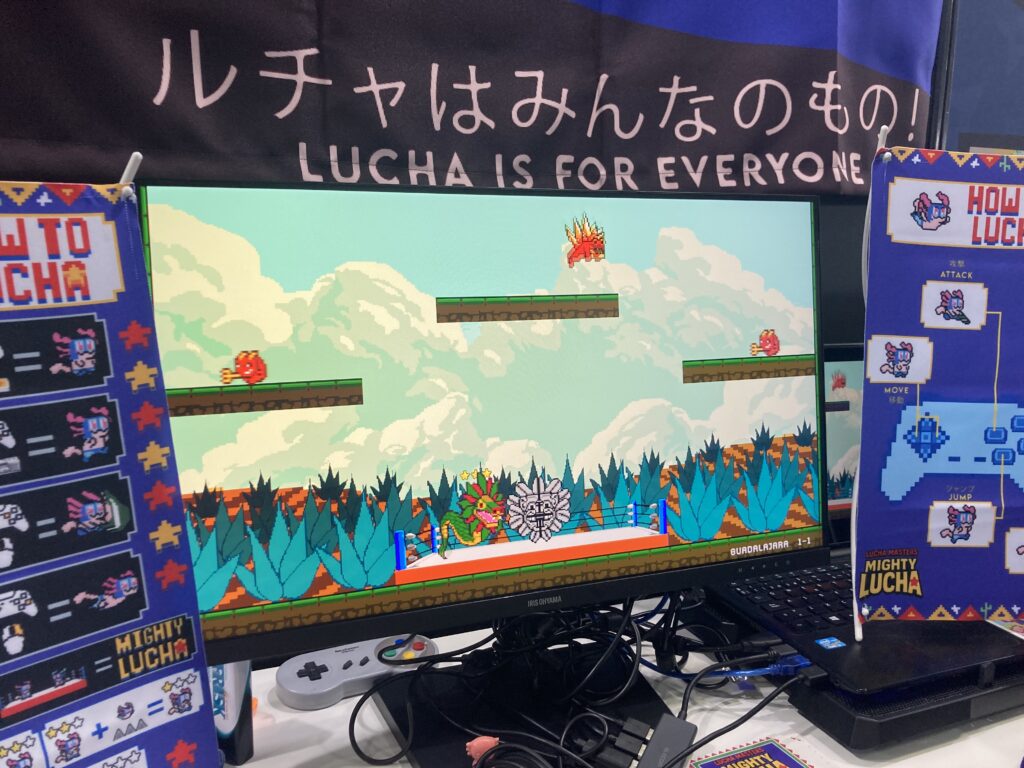
Normally, I might have ended it there with, "This game just wasn't for me." However, this game possessed a mysterious "heat" that transcended such reasoning, drawing players in and making them want to uncover its true nature. After looking into it later, I felt I could understand a bit of the source of that heat. This game tells the story of "Lucho," an axolotl who fights to defeat the god of death "Mictlantecuhtli" from traditional Mexican legends and myths, particularly Aztec mythology.
I see, I thought, as I nodded. The seemingly unfathomable energy I felt from this game might be a pure crystallization of the developers' deep love and respect for their own culture (lucha libre, Aztec mythology) mixed with a strong ego akin to an initial impulse of "Let's pack everything we think is fun into this." It is a shine that can only be produced by indie games, which cannot be created solely through sophistication or calculation.
By the way, despite all the game overs I experienced, I was able to receive a small character figure from the gacha box set up at the booth. This small act of kindness slightly lifted my spirits, but that's a secret.
Deep Four's Eye -Miko of Yin and Yang-: A mysterious dungeon where nostalgia and "Japanese" horror intertwine
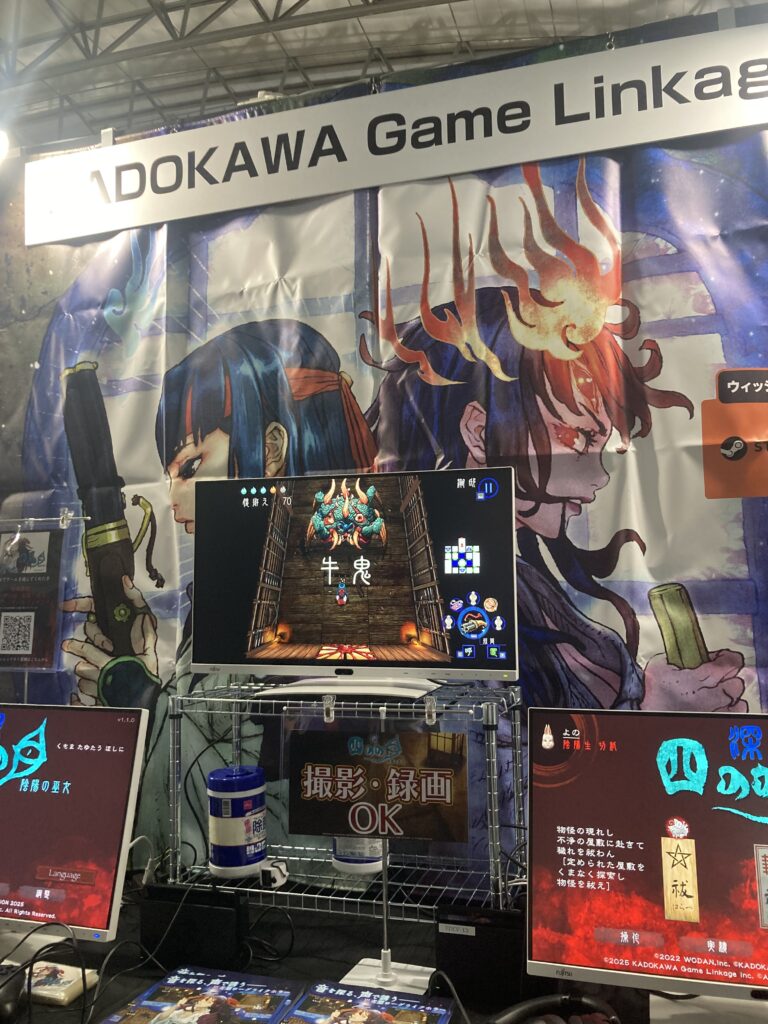
Next, we introduce the only title from Japan in this report, 'Shin Yono no Me - Onmyou no Miko -'. This Japanese-style roguelike dungeon exploration game was showcased at the KADOKAWA Game Linkage booth, and those in their 20s and older might recall the "Mystery Dungeon" series created by Chunsoft. As someone from the generation that experienced this genre through the Pokémon series, I was able to play it with a sense of nostalgia.
The story begins with the protagonist, a shrine maiden named "Yono," stepping into a mansion infested with spirits in search of her missing brother. Inside the eerie mansion, which changes its structure every time you enter, players control Yono, escaping or confronting the attacking yokai as they aim deeper into the mansion.
What makes this game interesting is that the protagonist, Yono, is essentially a weak character with no means of attack. Therefore, instead of simply defeating enemies to progress, players must constantly use their heads to set traps with items or navigate past enemies by understanding their positions. This "fragility" combined with the Japanese horror atmosphere creates a unique tension.
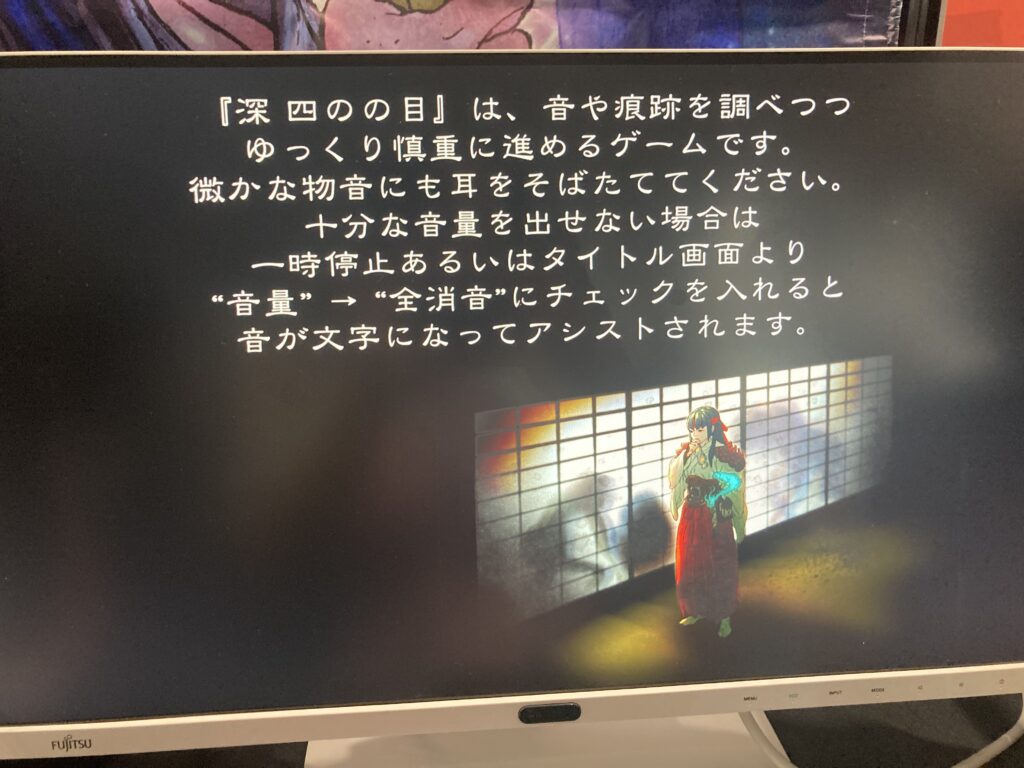
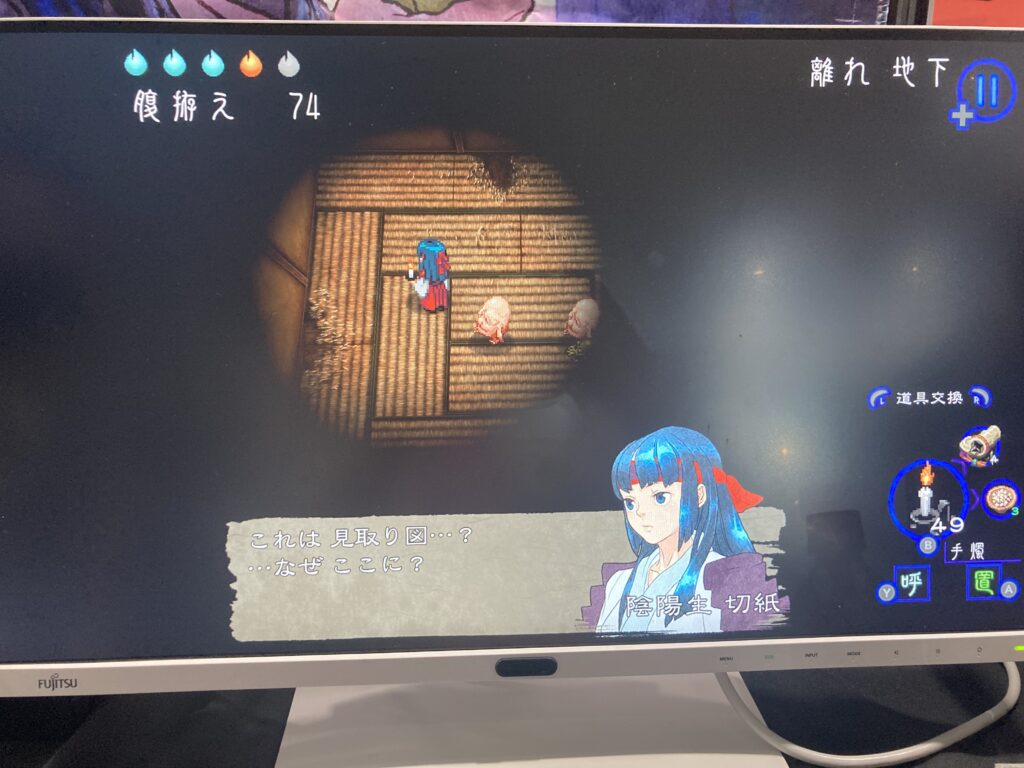
What surprised me the most was the high quality of the sound. Even though it was a demo version, I was amazed that the character dialogues were fully voiced. More than that, the balance of environmental sounds and voice volume was very well adjusted, creating a subtle sense of quiet horror. By the way, Yono's voice saying "Moshi moshi" to check if a yokai is behind the door was particularly cute and left a lasting impression on me.
Of course, the systems for setting traps or attacking specific areas are not uncommon in this genre of games. However, seeing them reinterpreted as objects and settings that are not typically encountered in games within the "Japanese" worldview was a delightful experience.
Unfortunately, in this demo version, I couldn't experience the core aspects of the story, such as the diverse enemies and gimmicks seen in the preview video, or Yono's other personality that appears in dire situations. However, this also means that my anticipation for the full version has increased. I look forward to the day when the full picture of this nostalgic yet new "Mystery Dungeon" is revealed.
Reverie: A Puzzle that Inverts Space and Memory for Reunion
Now, concluding this Tokyo Game Show visit report is the puzzle adventure game 'Reverie', which hails from South Korea. This title, standing in the Selected Indie area, caught my attention with its innovative system.
The core of this game lies in a truly unique rule that inverts "buried spaces" and "open spaces." Players can swap the properties of black block spaces where they can stand and empty spaces where they can move freely through specific actions. Places that were once walls become paths, and paths that were once walls become barriers. This simple rule transformation creates surprisingly deep puzzles.
Every time I encounter many puzzle games, I feel a simple surprise and respect, wondering, "How on earth did they come up with such an idea?" This is the first step for me, who is not particularly good at puzzle games, to understand and enjoy the game. 'Reverie' also posed that question to me.
However, what made my encounter with this game even more special was that it wasn't our first meeting. In fact, I had previously experienced what seemed to be an early version of this 'Reverie' at another event. If I remember correctly, it was at last year's "Burning Beaver" with Hana-senpai. From what I recall, the game was a more stoic, pure puzzle game back then. While I was drawn to its original art and world, I also remember feeling a bit frustrated by its high difficulty.
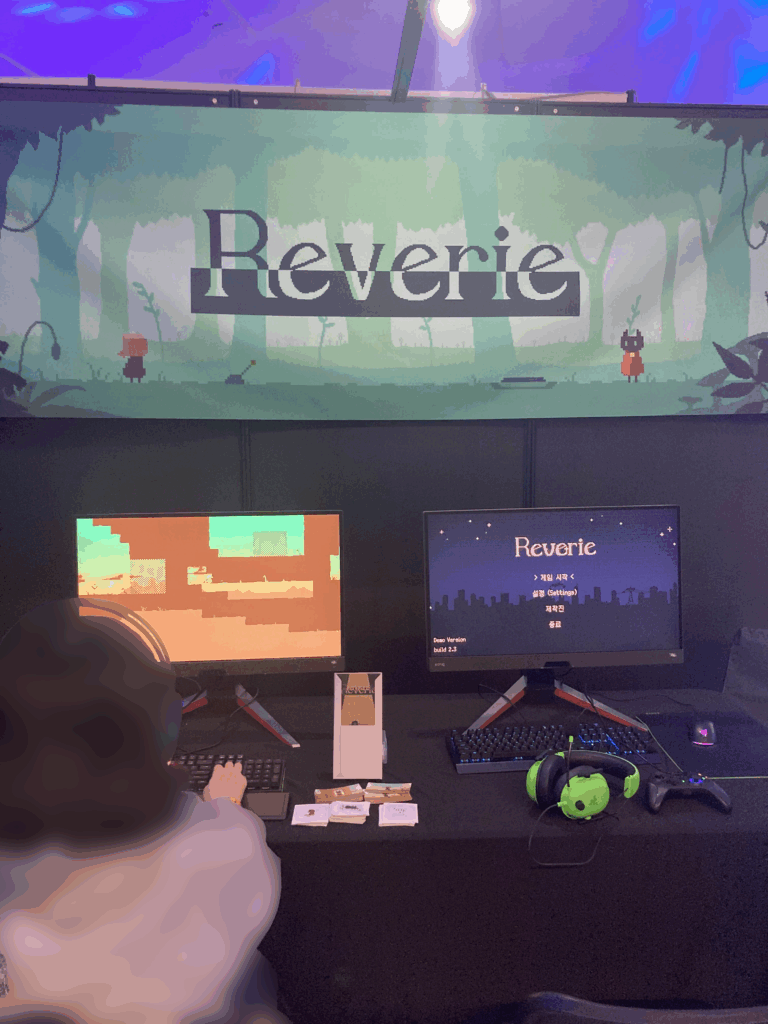
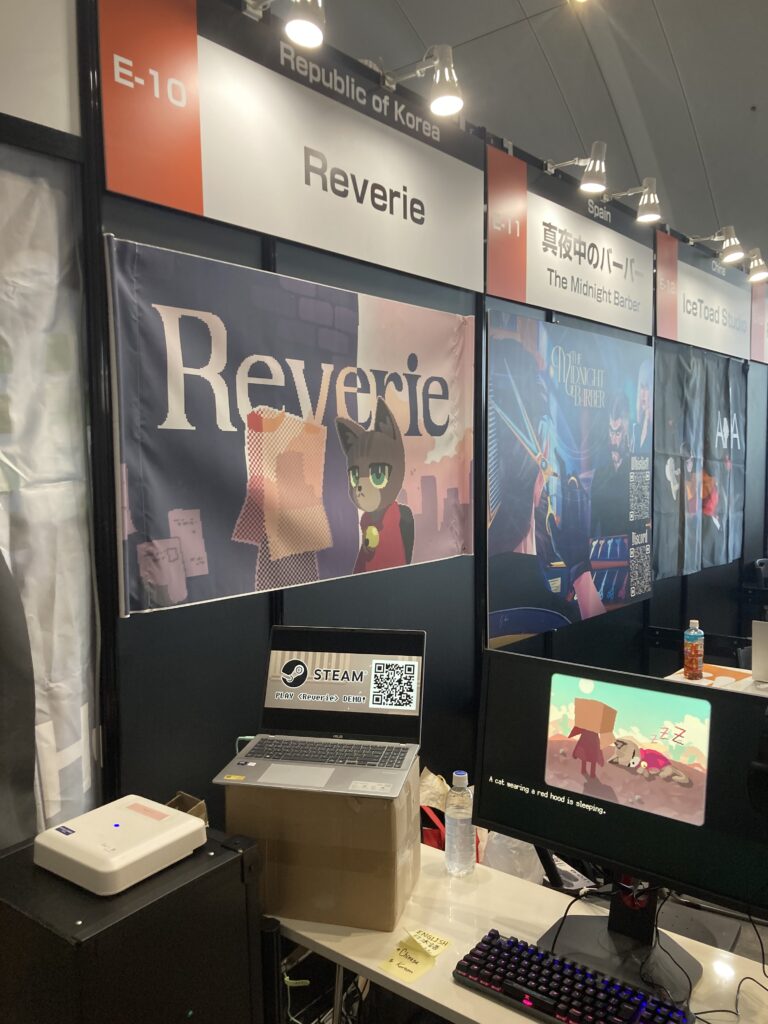
About 10 months later, I unexpectedly reunited with 'Reverie' at this massive gaming festival, and it had certainly evolved from the version in my memory. This time, the demo was shorter in playtime than before, but it included more detailed introductions to the story, characters, and world.
When following indie games, there are times when you are blessed with such delightful reunions. Parts that I previously felt were a bit lacking or secretly wished could be improved have been beautifully complemented over time, presenting themselves in a way that reaches a wider audience. This is one of the irreplaceable joys for indie game fans.
What was once a work that resonated purely with puzzle enthusiasts has grown into a deep and welcoming experience that embraces players drawn in by its unique atmosphere. It is precisely because I was able to witness this wonderful transformation that I wanted to choose this game to conclude this lengthy report.
At the End of the Report
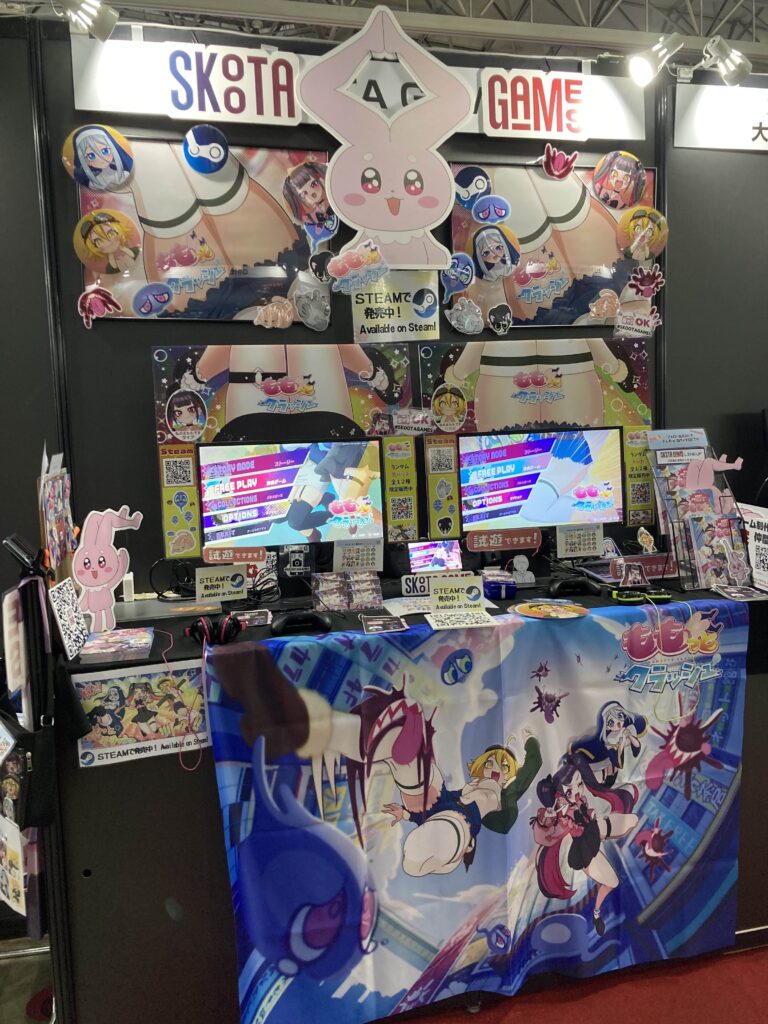
Now, we have introduced six unique indie games from six different countries in the 【Part 1】 and 【Part 2】. What did you think?
China's 'Thank You for Your Application' confronted the absurdities of modern society. Russia's 'SOBAKISTAN' depicted an atmosphere that transcended language barriers. Germany's 'PVKK' showcased the power of experiences beyond logic. Mexico's 'Lucha Masters' radiated an incomprehensible intensity. Japan's 'Shin Yonnonome - Onmyoji -' awakened nostalgia and new fears. And Korea's 'Reverie' presented a story of joyful reunion and undeniable growth.
What these six works had in common was that, even amidst the hustle and bustle of the massive TGS festival, there was a solid "soul" of the creators that could never be buried, residing at their core.
The glamour of major titles is indeed wonderful. However, being able to touch the diverse, sometimes distorted, yet endearing brilliance that emerges from creators in different countries and cultures, who diligently pursue their own belief of what is "fun," may be the greatest pleasure of walking through the indie game area at Tokyo Game Show, as I have come to feel once again.
The six different "questions" they posed have once again provided me with much stimulation and a few assignments. Now, what form will my "answers" take? That is another story.
Well then, see you in the next report!