

Hello, this is Mob. I'm here to bring you the third and final installment of the Game Pavilion JP 2025 report. So far, we've introduced various works under the themes of "minimal indie games that exude a unique atmosphere" and "indie games armed with unique concepts that also evoke a sense of darkness." This time, we will focus on "indie games that pour their heart and soul into design and gameplay."
Some may have the image of "indie games = rough and small-scale," but the three titles I'm introducing today beautifully break that stereotype. I was honestly the most surprised by how small development teams, sometimes just a single developer, can achieve polished designs and enjoyable gameplay that rival major studios.
The games I encountered in this new place called Osaka will surely make our readers feel the underlying strength and potential of the indie scene once again. Now, let's dive right into these three masterpieces.
Tournamentris: An Innovative Fusion of Tournament Brackets and Falling Blocks
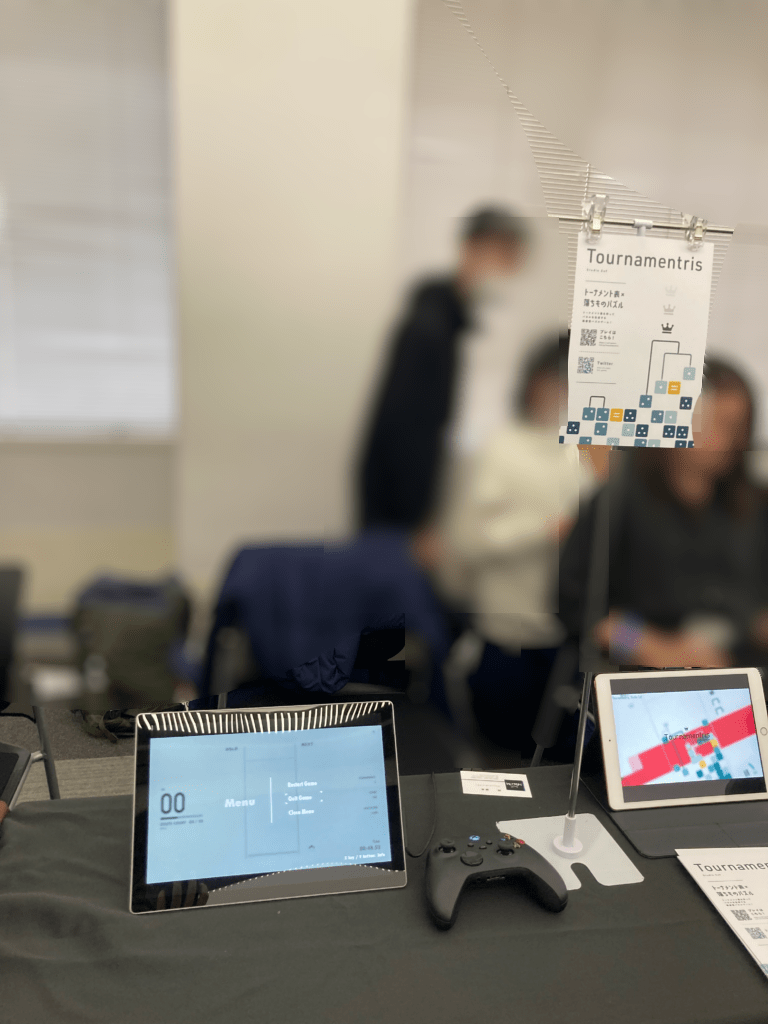
the booth had a simple feel.
Next up is 'Tournamentris'. This is a fresh puzzle game that combines the unique elements of tournament brackets and falling blocks. It's hard to explain in words, but once you play it, you'll immediately understand how innovative and unique the system is.
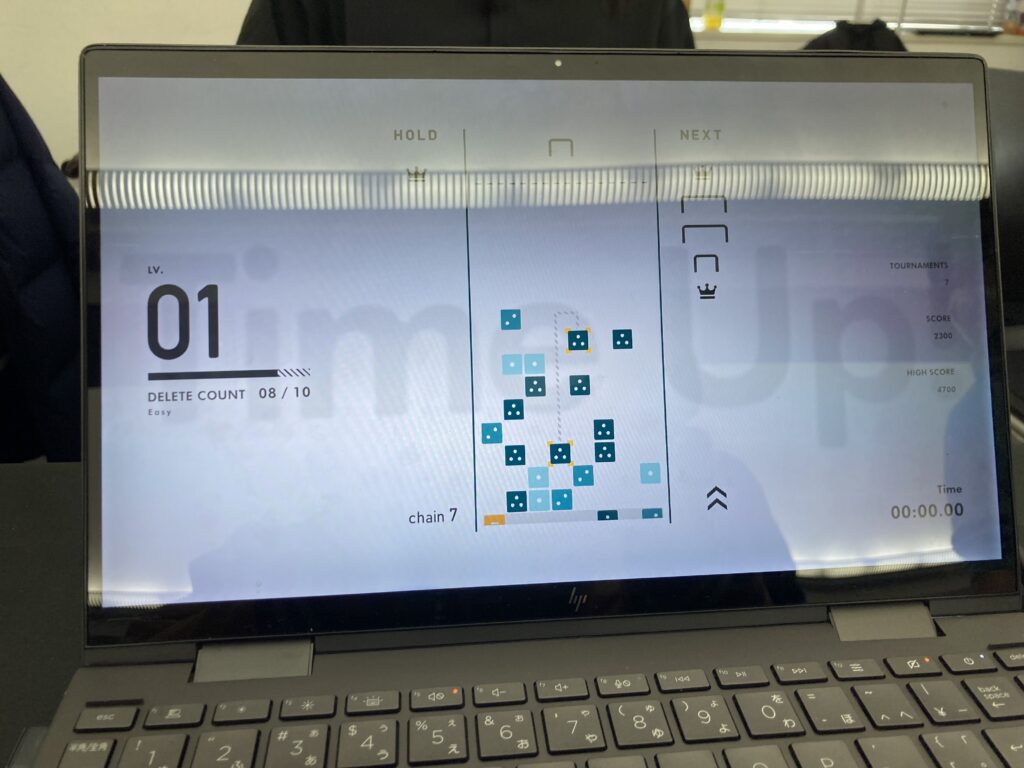
To the best of my ability to explain, it has a structure similar to Tetris, with blocks of varying point values randomly arranged at the bottom like dice. Players can drop something on top, similar to Tetris, but there are mainly two types of objects that can be dropped.
The first is the "Piece." At first glance, it looks like a fence, and it serves to connect blocks on the floor. The key point here is that you can only connect blocks with the same point value. In other words, a block with one point can only connect to another block with one point, and a block with three points can only connect to another block with three points.
Once connected, you can place another object called the "Crown" on top of the Piece. The Piece with the Crown and the blocks connected to it will transform into a single block with a larger point value.
For reference, if you combine two blocks with one point, they become one block with two points, and if you combine two blocks with three points, they revert to one block with one point, which adds a more complex structure. Additionally, if you place a Piece of the same size on top of another Piece, it will disappear, making it a game with surprisingly many elements to consider.
It looked quite challenging from the start, so I intentionally chose easy mode, but I still struggled quite a bit. It may seem deceptively simple at first glance, but there were countless factors to consider, such as the size of the numbers, changing sizes, and the size of the Pieces. Nevertheless, I felt a certain addictive quality that suggested I could get lost in it once I became more accustomed to the system. For those who couldn't play it at the event, you can currently play it on Unityroom, so it might be worth checking out.
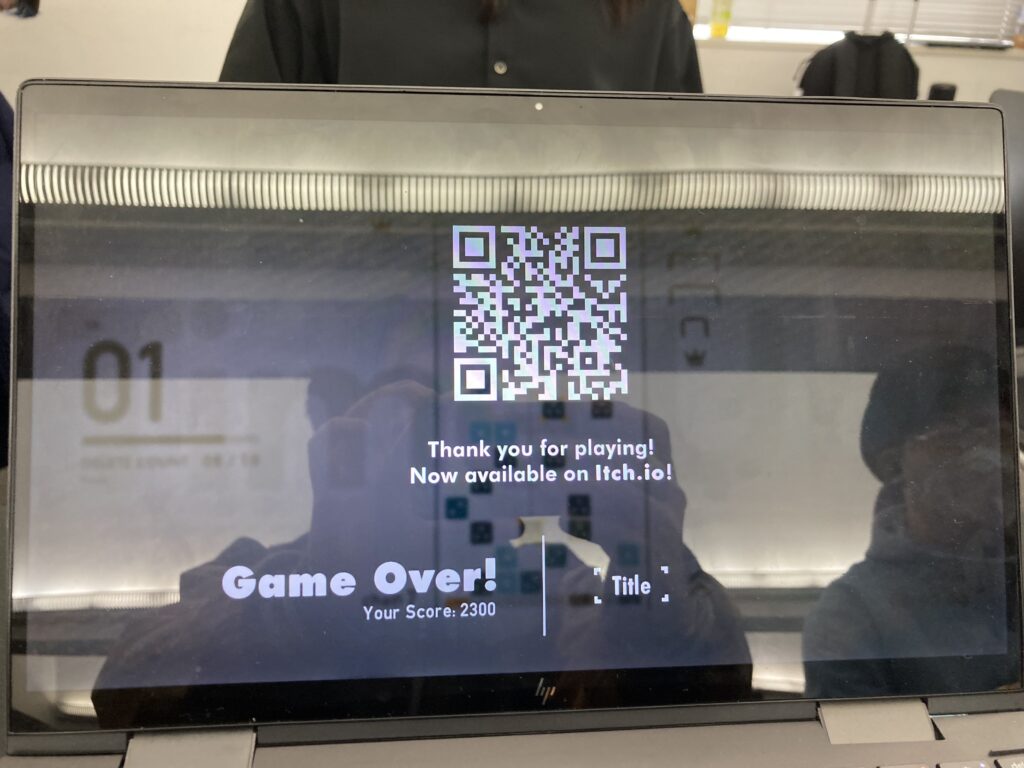
As mentioned earlier, the game stood out for its gameplay, but personally, what impressed me the most was the overall design. From the UI design to the tutorial guidance, the sophistication in the details was remarkable. Especially since puzzle games often present the biggest hurdle in understanding the game system, the tutorial guidance was impressively kind and smart, making it hard to believe it was a web game.
Because it is a puzzle game that requires users to understand certain rules, conveying information clearly was not just an option but a necessity. In that sense, I felt that the creators' consideration and care for ensuring as many users as possible could enjoy the game comfortably was reflected in this design.
The game was developed by Studio ZeF, a team of three centered around an indie game creator named ZeF. While I have seen many indie development teams creating puzzle games in a short span while attending various game events, it is rare to find an example that has crafted such a well-thought-out system and refined UI as a web game. I can confidently say that this game made me realize just how vast the world of indie games is.
Thunder of the DEMONKING: The Refined Thunder of the Demon
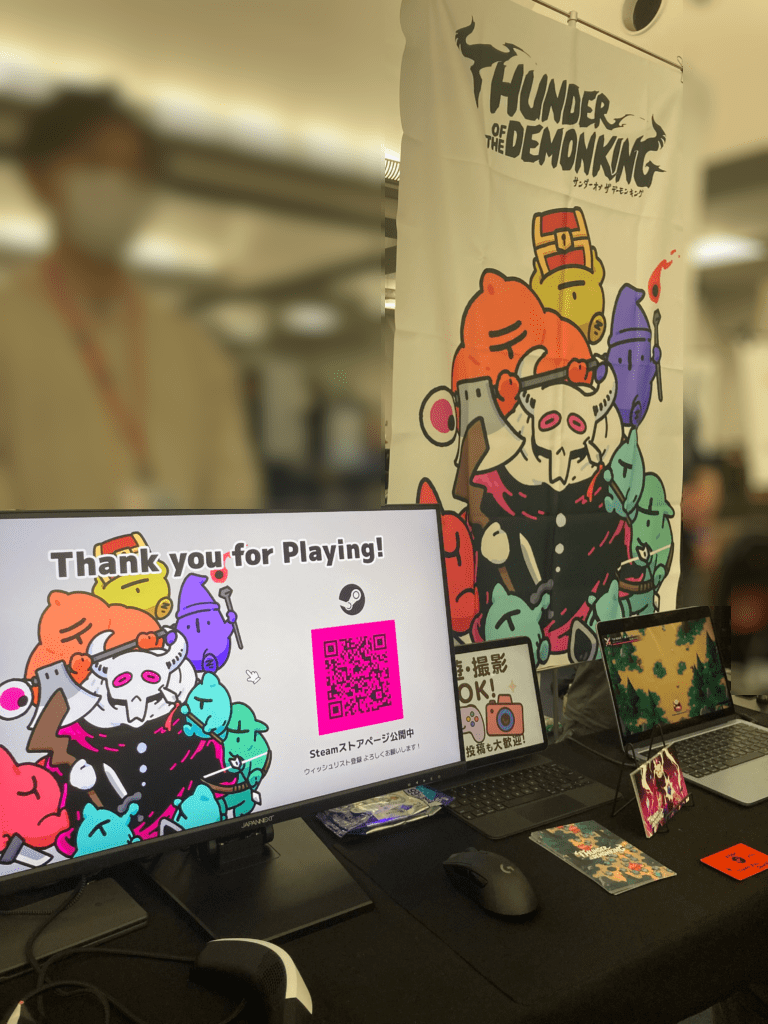
Among the games I played this time, the one I felt was the most polished was Thunder of the DEMONKING. It was so well-made that I thought, "Isn't it ready to be sold already?" The genre is action tower defense, characterized by its simplicity, allowing you to control it easily with just a mouse.
To explain the world view, the protagonist, who is the resurrected demon king, fights against the kingdom's army that comes to defeat him by dropping lightning, which is quite a simple premise. However, since the protagonist has just been revived, he is weak, so he will gradually defeat stronger enemies while powering up along the way. The controls are simple, and the explanations are straightforward. It truly embodies the idea of "simple is the best" as a casual game.
When actually playing, there is a significant gap between the explanation and the experience. In a sense, it can be said that it concludes with just the explanation; it is a game that anyone can enjoy without needing additional words to understand.
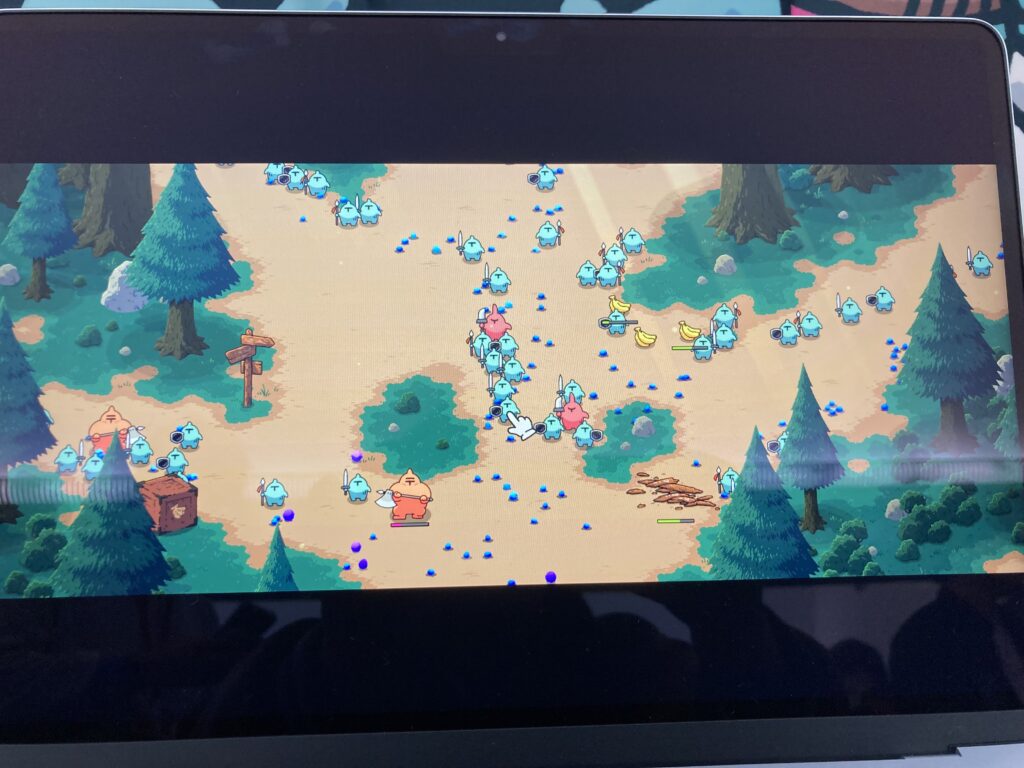
Various enemies appear, including mint-colored soldiers rushing in large numbers, red elite soldiers charging in at a slightly faster speed, and orange soldiers boasting large bodies and health. Players can quickly drop small lightning strikes with simple clicks, but they can also charge up to drop larger lightning, requiring flexible responses to the surrounding situation.
As time passes, the number and health of the enemies increase. In the case of elite soldiers, they may not take damage from small lightning, so situational judgment becomes crucial. Moreover, the ability enhancement options that appear as rewards for leveling up provide choices for attack power, charge speed, and the number of special moves, further expanding the options. Providing a game system refined with simple elements makes it feel like this game is already "complete."
However, what shocked me even more about this game was its attention to detail. From the movements of the rushing soldiers to the sound and effects, this game demonstrated a perfect balance that was neither overflowing nor lacking.
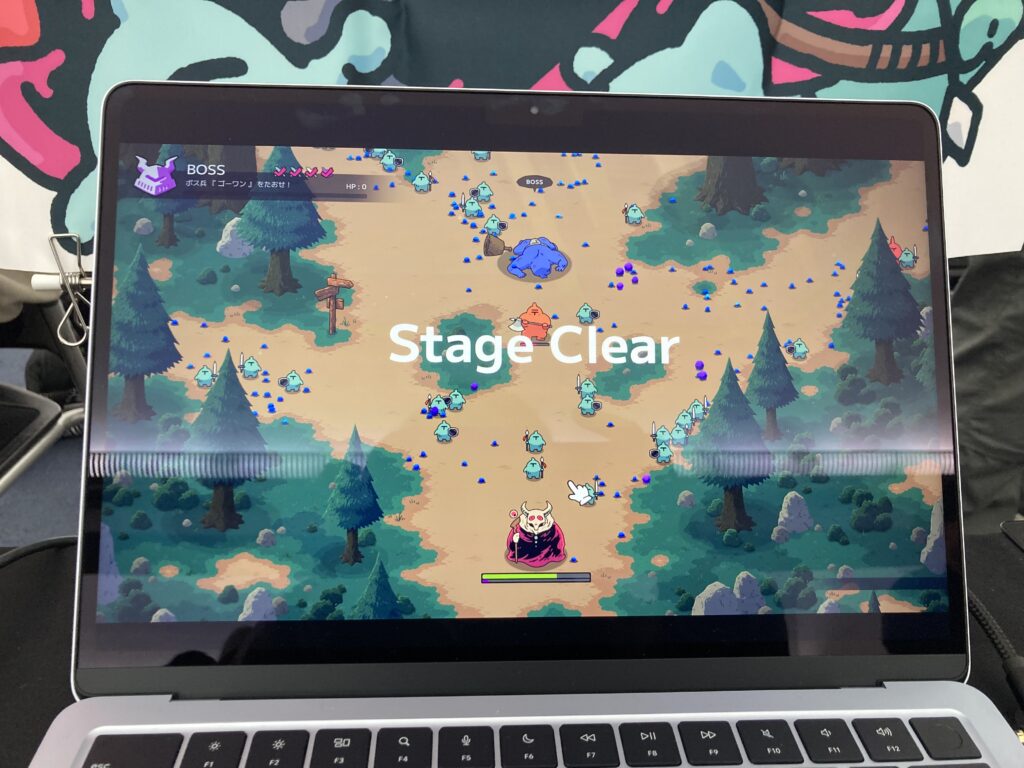
Personally, I found the difficulty just right.
First, talking about the soldiers, they have a small and simple design, but they are clearly distinguished by their individual characteristics in terms of shape and design. There was no confusion or difficulty in identifying them as they swarm towards you. Above all, I absolutely loved the gimmick where breaking boxes in the game releases bananas, which the characters joyfully munch on with both hands. Additionally, breaking signs transforms them into obstacles that can temporarily block the soldiers' advance, and I felt that the small animation of stepping on them to get past was also well done.
Moreover, the sound design is excellent. At the booth, they were using neck speakers (a circular speaker worn around the neck), and the adorable battle cries of the soldiers coming from all directions created a great synergy with the tower defense genre. The balance between the in-game BGM and sound effects was also exquisite. (Is that too much to say?) It was a well-made casual game with no flaws to point out.
Personally, I think the most outstanding aspect of this game is how it expresses the swarming enemies in a rhythmic and satisfying manner. Achieving this balance is really difficult, and it could easily become annoying or unpleasant. In that sense, I felt there is much to learn from how they achieved such comfort and satisfaction. I am also very happy that I could convey this directly to the creators. This was, without a doubt, the most anticipated release, 'Thunder of the DEMONKING'.
Let’s Go!! Onoka-chan: A One-Person Development Masterpiece with the Potential to Become the Future "Cuphead"
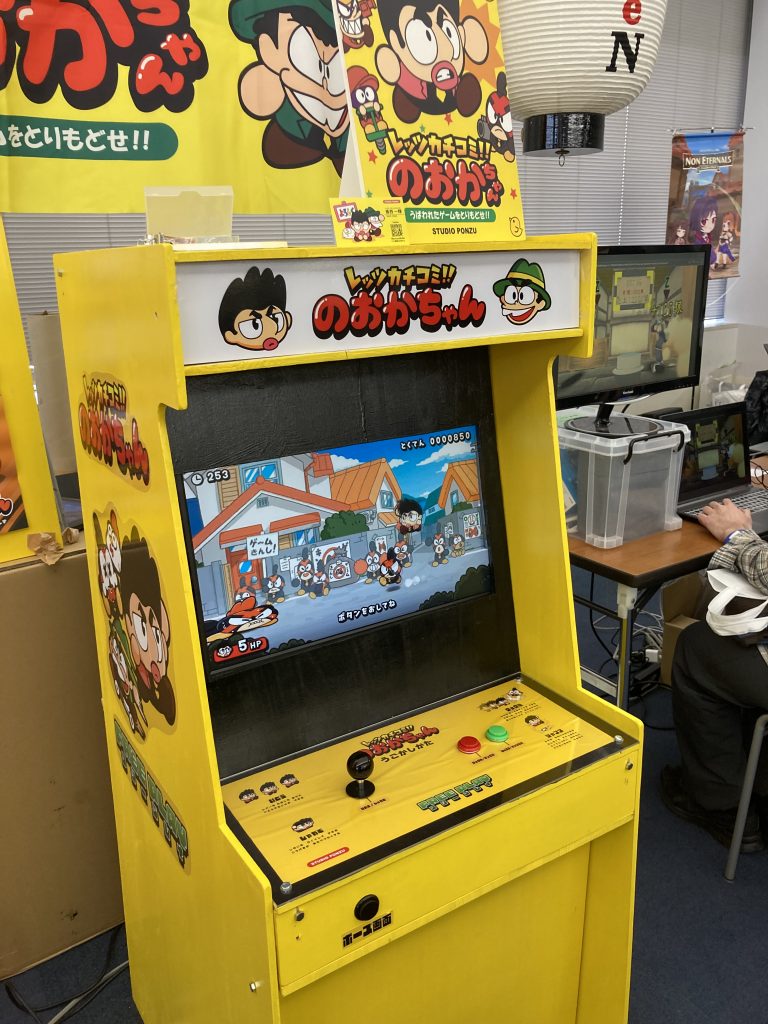
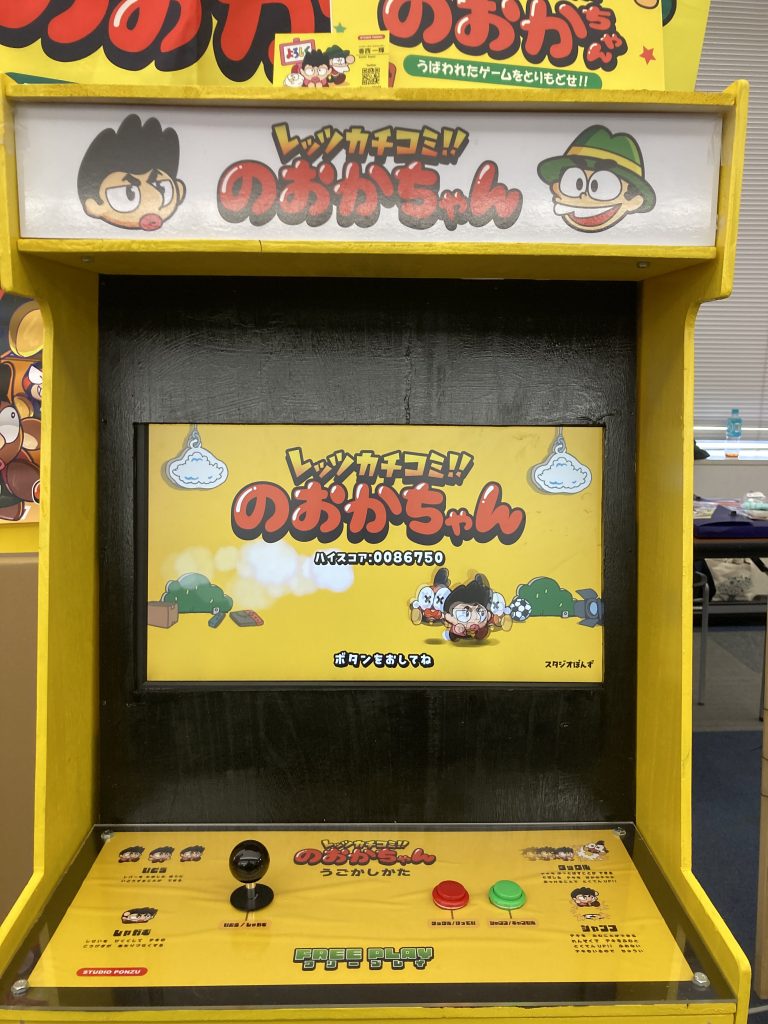
You can definitely look forward to this game. I believe it has the potential to become Japan's future "Cuphead." It’s ironic to mention the legendary game "Cuphead," which took five years to develop and garnered a lot of attention for its unique graphics, at an indie game event. However, I want to emphasize that this game is a 2D action game armed with delicate animations and comfortable controls that are on a different level.
I probably played this game for less than five minutes. I was drawn to the wooden arcade game box set up at the event. After going through a simple tutorial explaining the controls for about a minute, I got to experience a stage that seemed to be created for the event.
The controls are simple. You move to avoid enemy attacks while stepping on enemies or tackling them to attack. I often saw many children playing, making it a widely enjoyable experience for everyone. After playing once, my impression was, "What kind of indie game development company can produce a game at this level?" But listen to this: it turns out this game was created by just one indie game developer.
2D action games are, in a way, the most common genre seen at game events and online stores like Steam. In that sense, it’s a genre that faces the most competition, and thus users tend to seek something more special from the games.
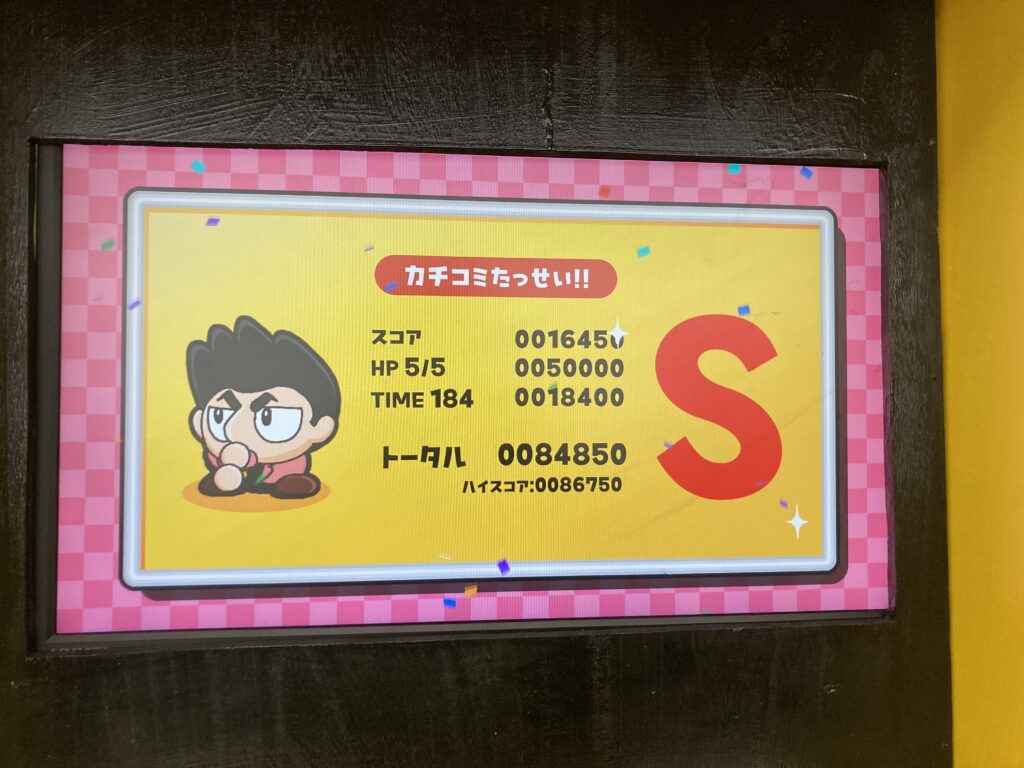
Even though it's rated S rank, it wasn't that hard.
In that regard, this game was a "well-made game" without any particularly standout features, and it didn't evoke any sense of discomfort. However, the fact that it was created by just one person made the overall gameplay experience feel remarkably high-level.
First, talking about the controls, it was clear that they aimed for a very smooth and pleasant feel. The way enemies flew off when stomped or tackled reminded me of the unique presentation style of Super Smash Bros. While it might not resonate much with general users who have played many major games, those with experience in game development or who have engaged with indie games will understand just how impressive this is. Or maybe I'm just exaggerating.
However, it cannot be denied that the animations in this game were indeed far beyond the level of a single creator. The earlier mention of "Cuphead" was based on this level of animation.
Coincidentally, since I encountered this game in an area filled with game development companies, I naturally assumed it was a work from some studio, but surprisingly, the creator is a single individual. I couldn't believe it, so I asked multiple times, and I learned that they started developing this game three years ago and plan to officially release it in five years. Of course, I should also mention that they will be releasing a demo on Steam this year.
From my experience with numerous indie games both personally and professionally since last year, I believe that feeling "naturalness" in indie games is the most important aspect. While the quirks and rough edges can sometimes add charm, the extent to which perfection can be pursued is also a significant factor in how indie games are evaluated.
In that sense, the fact that Let's Kachikomi!! Okachan achieved this level of quality with just one creator suggests a lot about the potential future of indie games, but am I the only one who thinks this way? In any case, it's undoubtedly an indie game title that makes me look forward to five years from now.
The Potential of Indie Games is Infinite
The three games introduced this time, Tournamentris, Thunder of the DEMONKING, and Let's Kachikomi!! Okachan, share a commonality in their astonishing level of completion and refined design. The quality of each, developed by a small team or even a single developer, made me feel once again the potential of indie game development.
Creating new puzzle mechanics and conveying them through intuitive UI design. Providing a comfortable demon lord experience with simple controls and exquisite game balance. The beauty of animations crafted over several years by a single developer. These works eloquently demonstrate that these are not privileges exclusive to AAA games.
In particular, I want to express my deep respect for the creator of Let's Kachikomi!! Okachan, who is quietly continuing development alone with the goal of a "formal release in five years." Such passion is surely a significant force supporting the indie game scene.
Looking back on the three-part report of the Game Pavilion JP 2025, it becomes clear that this journey was more than just the initial theme of "the world of indie games is still vast"; it was a journey that made me feel its depth and diversity. From minimal games with unique worldviews to works that surprise with innovative concepts, and masterpieces boasting refined design and controls, I encountered a truly diverse array of experiences.
And let's not forget that behind these games are many developers with their own passion and creativity. The insights and inspiration gained from conversations with them have greatly influenced my own game development.
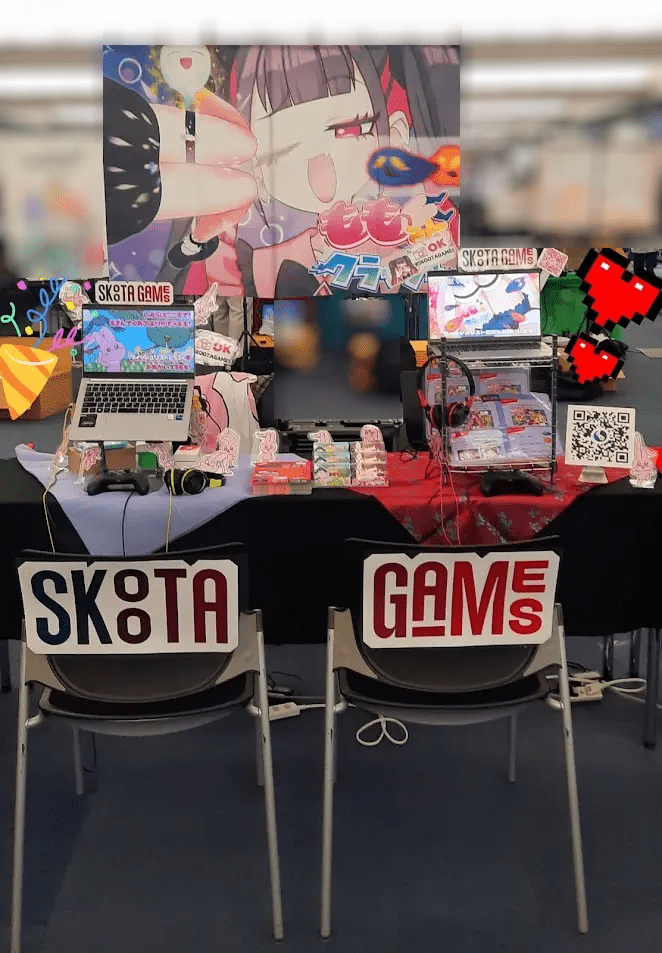
If there are those who are looking forward to the progress of our SKOOTAGAMES' Negolove, I apologize, but that will be discussed on another occasion. With the new atmosphere of Osaka and savoring the encounter with wonderful games, it's about time to wrap up this report series.
The world of indie games will continue to expand. I can't wait to see what surprises await us next.