

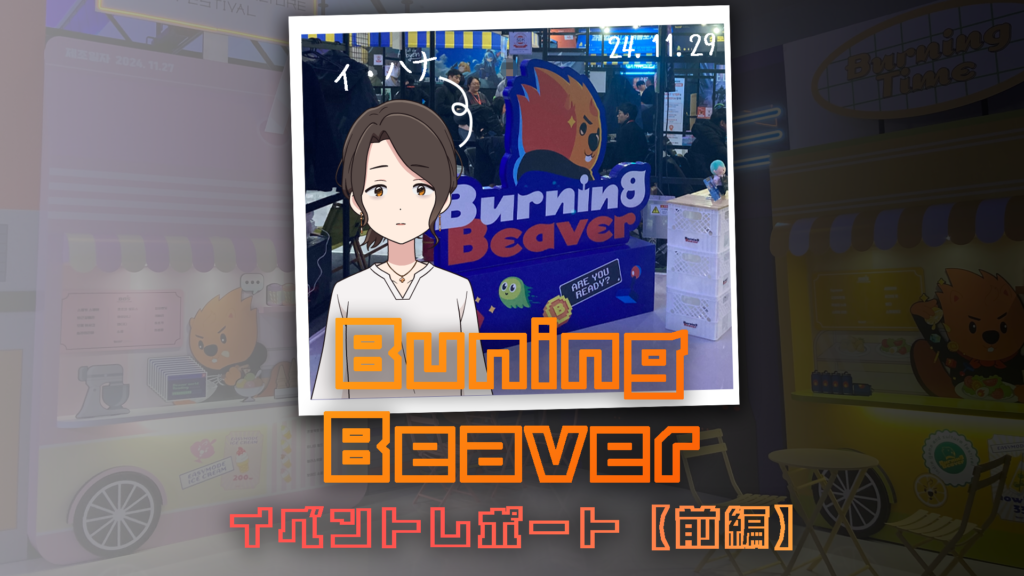
Hello, my name is Lee Hana. I usually work at a Japanese animation studio while also being involved in the industry through indie game development and participating in events.
As a result, I have had many opportunities to engage with the indie game scene in Japan, gaining various experiences in development and exhibitions. However, strangely enough, I realized that I had no connection to indie game events in my home country of South Korea until now.
In this context, I heard that the indie game platform "STOVE" and its parent company "SmileGate" are hosting a large-scale indie game event called "Burning Beaver 2024" in Seoul, and I immediately decided to cover it.
Unlike other game events, this one is being held at the DDP (Dongdaemun Design Plaza) in the heart of Seoul, which I thought would be a perfect opportunity to experience the current state of the Korean indie game scene firsthand.
This time, I would like to share some impressive works I encountered at the event held from November 29 to 31, along with the characteristics of the Korean indie game scene behind them.
A Venue with a Street Stall Atmosphere
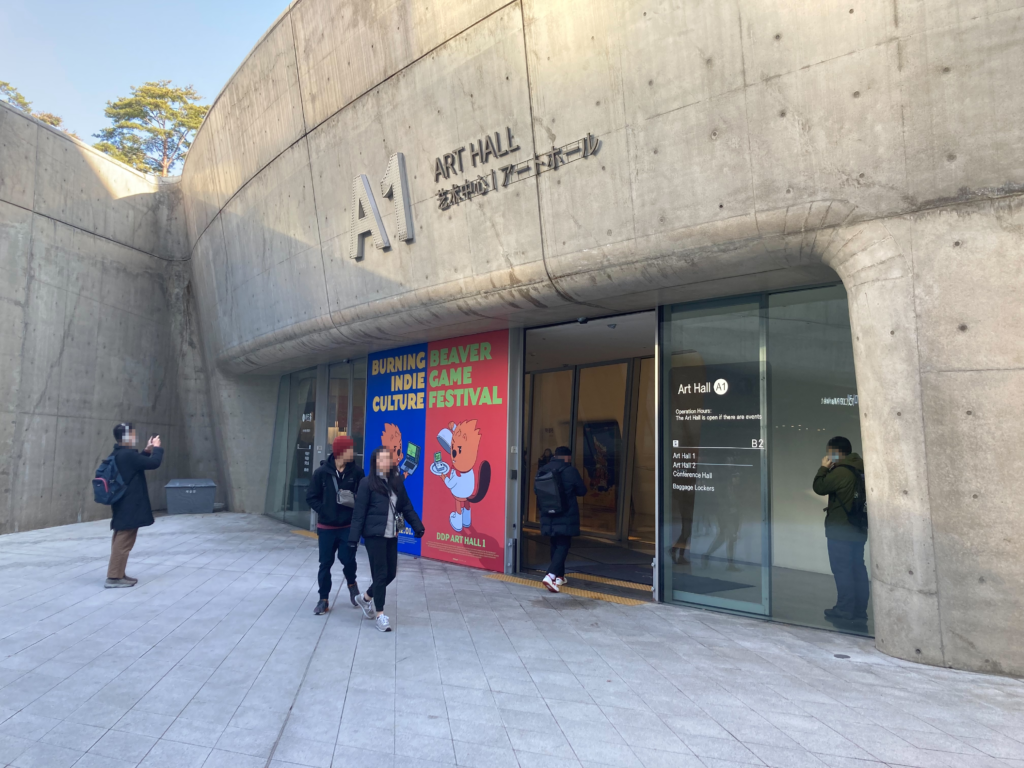
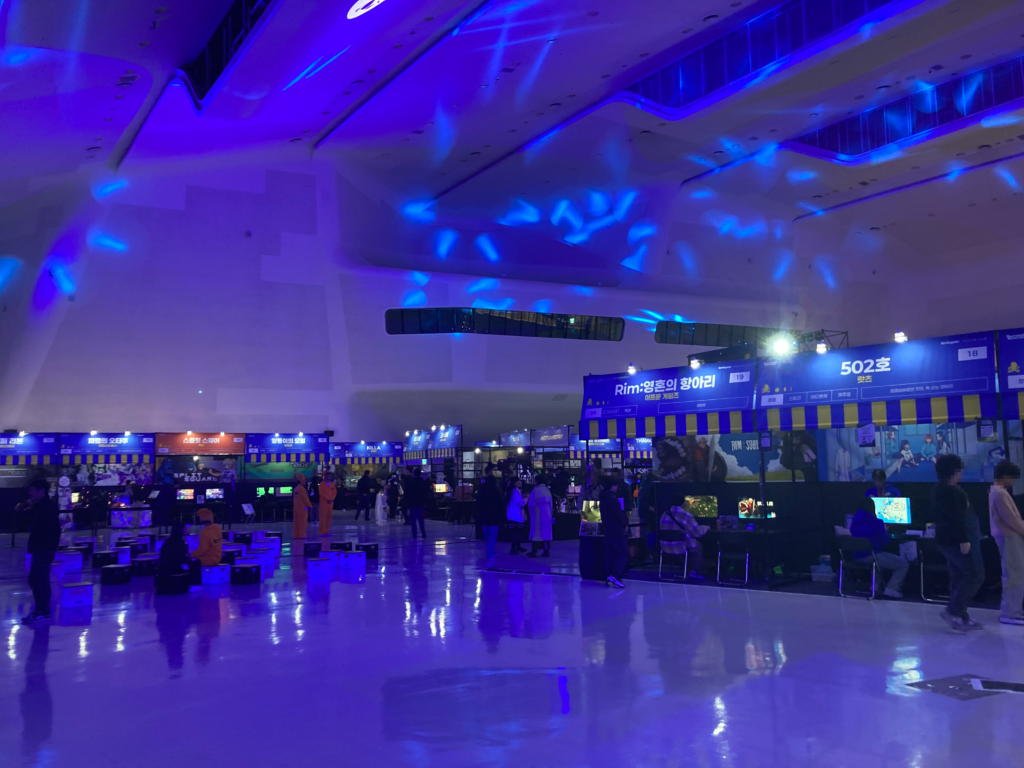
As soon as I stepped into the art hall at DDP, I was greeted by a stadium-like openness. With high ceilings, 83 booths were neatly arranged in a spacious area, and there were ample walkways between each booth.
This year's Burning Beaver is themed around "Cooking and Chefs," and each booth was designed to resemble a street stall. Signs displaying each title were hung above the booths, creating an atmosphere reminiscent of street stall roofs. The booth spaces, separated by iron frames, were transparent at the top and sides, making them feel spacious and not cramped.
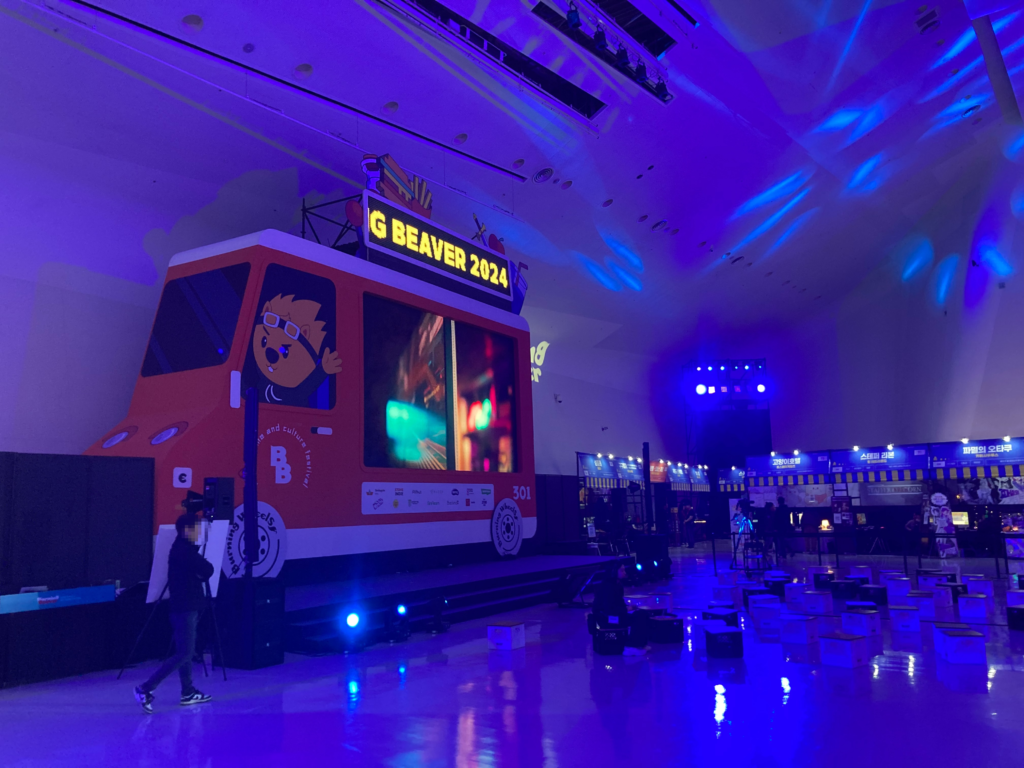
Events were held here.
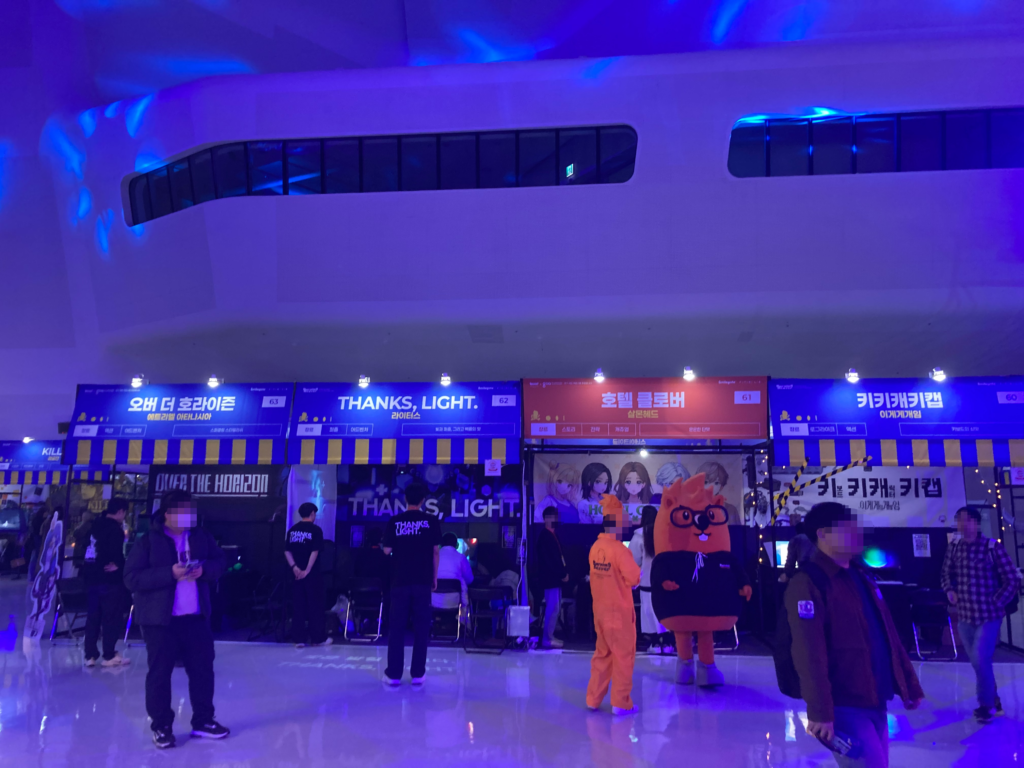
in line with the concept.
While the theme was unified, the decoration of the booths was left to each exhibitor, resulting in a coexistence of individuality within the overall sense of unity, which gave the entire venue a unique charm.
On the 29th, which was a weekday, the atmosphere in the morning was relatively relaxed. I could see young gamers in their teens and twenties carefully exploring each booth and experiencing the games. Despite the lively design inspired by a food stall village, the actual venue was wrapped in a calm ambiance, which I found to be an interesting contrast.
Exploring New Possibilities in Gaming
Inside the venue, there was a special exhibition space titled "Games Outside of Games", which was different from the usual game displays. Here, works such as 'IMAGE ALCHAEOLOGY' and 'BARC', which will be introduced later in the second part, were showcased. This ambitious attempt was based on the fundamental question of "What exactly is a video game?" Moving away from traditional controllers and keyboard operations, experimental works that blurred the boundaries between the real world and games were lined up, suggesting new possibilities for gaming.
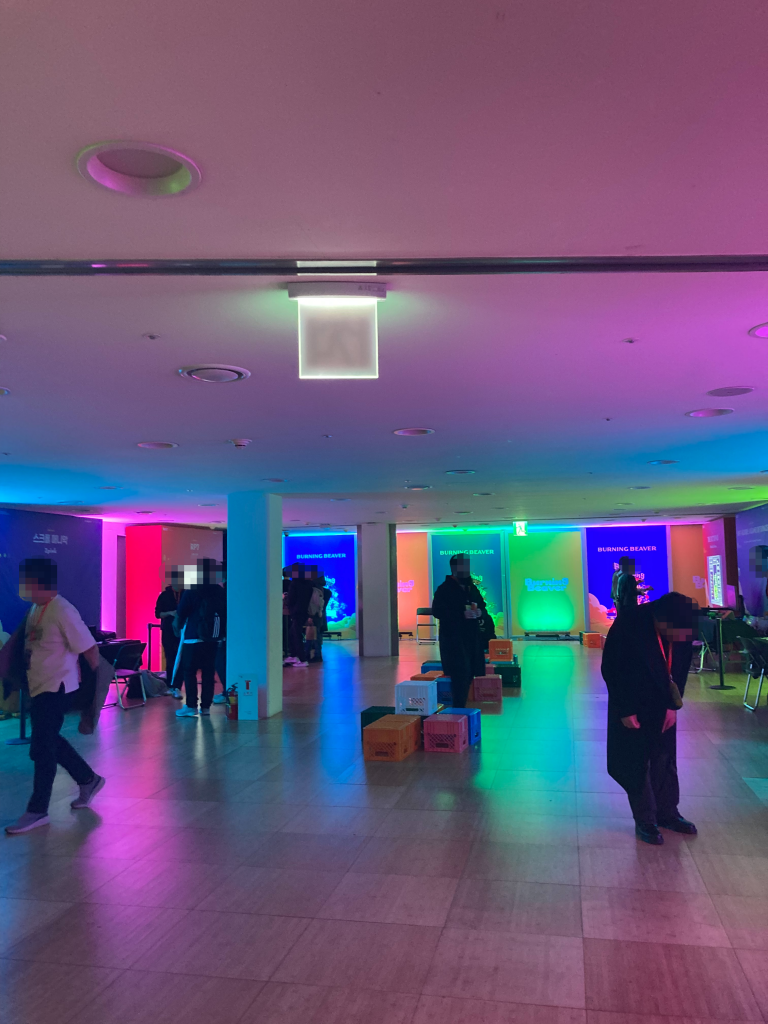
"Games Outside of Games."
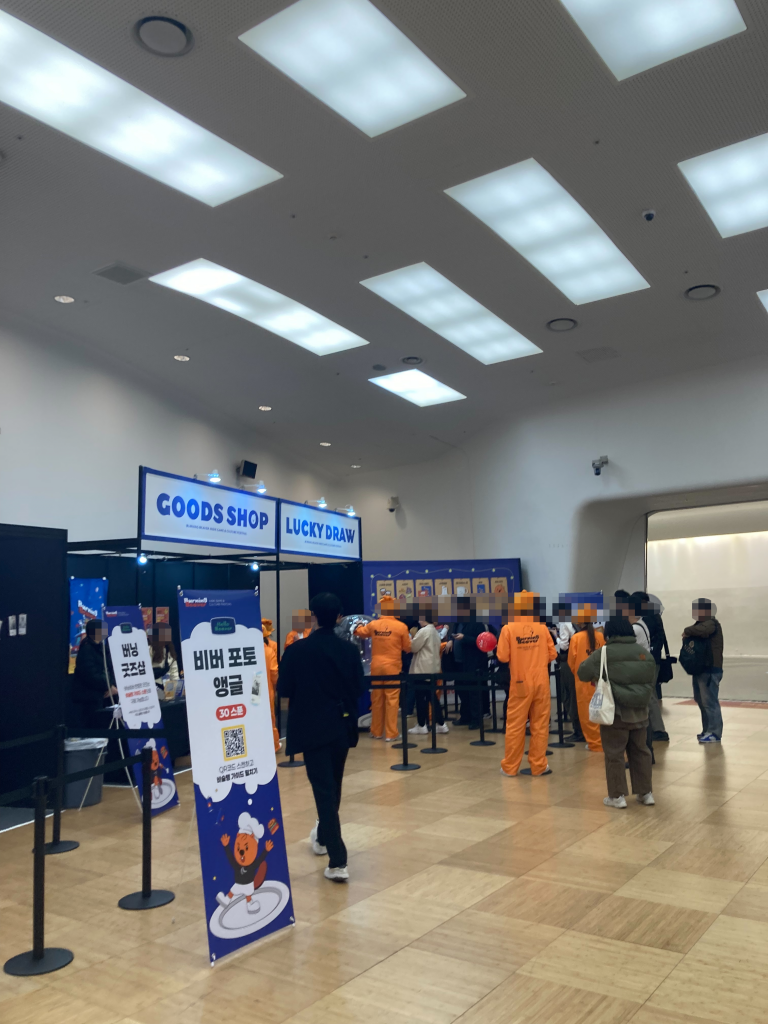
the "spoons" earned through gameplay.
Additionally, near the exit of the venue, there was a space where points called "spoons" could be utilized. By experiencing games at each booth, visitors could earn points through QR codes, which could then be used to participate in events like merchandise lotteries and fortune-telling. This system was a very interesting way to encourage active participation from attendees.
Now, I would like to introduce some impressive works that I encountered in this unique space, one by one.
A 30-Day Story Woven in a 16-Color World - 'Time To Live'
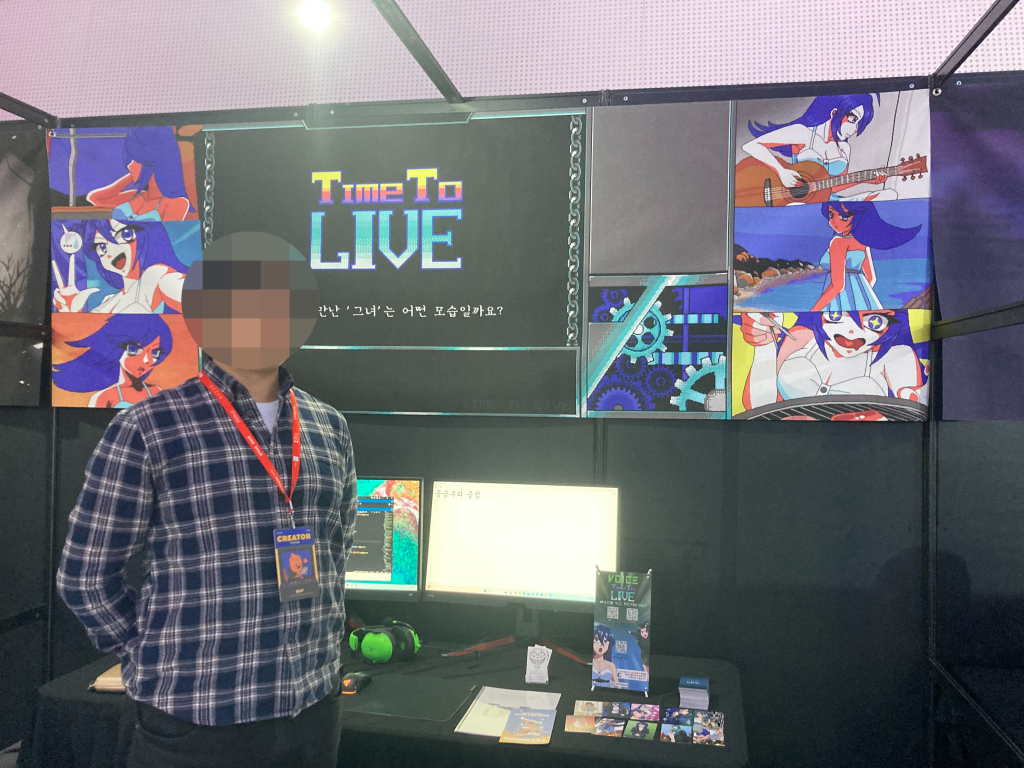
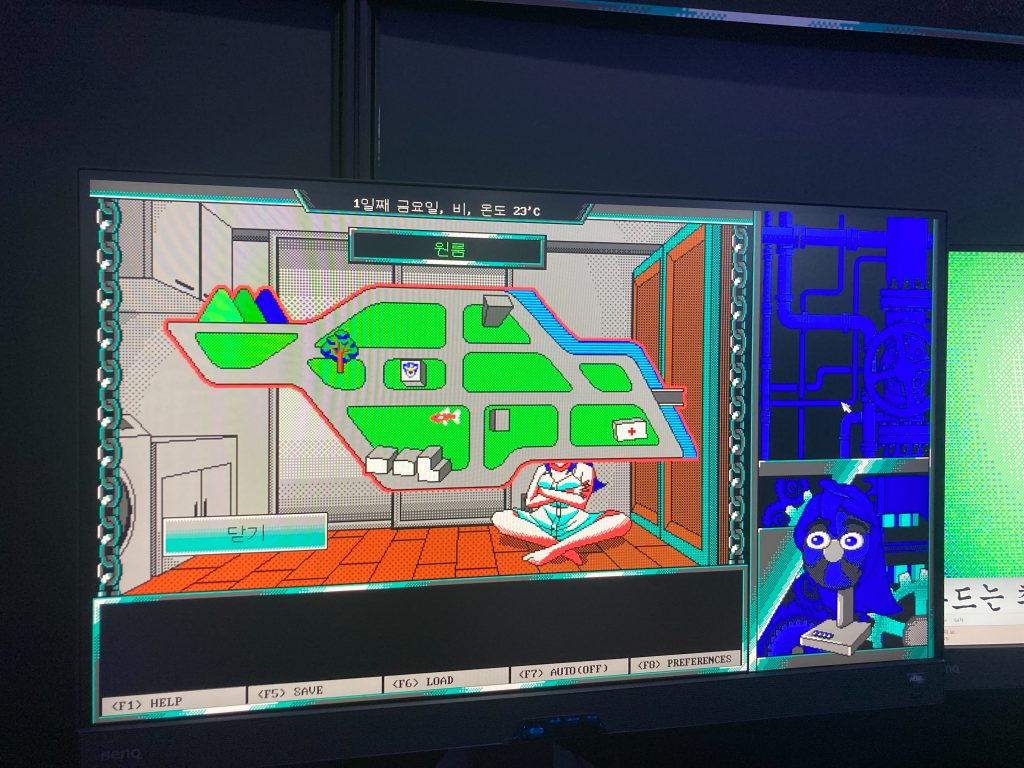
truly retro catches the eye.
The first thing that caught my eye upon entering the venue was the vibrant 16-color graphics of 'Time To Live', displayed at booth number 2. Developed by the solo creator WTFMAN, this work exuded a presence reminiscent of classic masterpieces, standing out the most in the venue.
From UI design to mini-games, nostalgic elements were sprinkled throughout, evoking a sense of surprise, as if to say, "In this day and age, how could such a game exist!" This game, currently in development for Steam, has a demo version available now.
A Unique Worldview and Gameplay
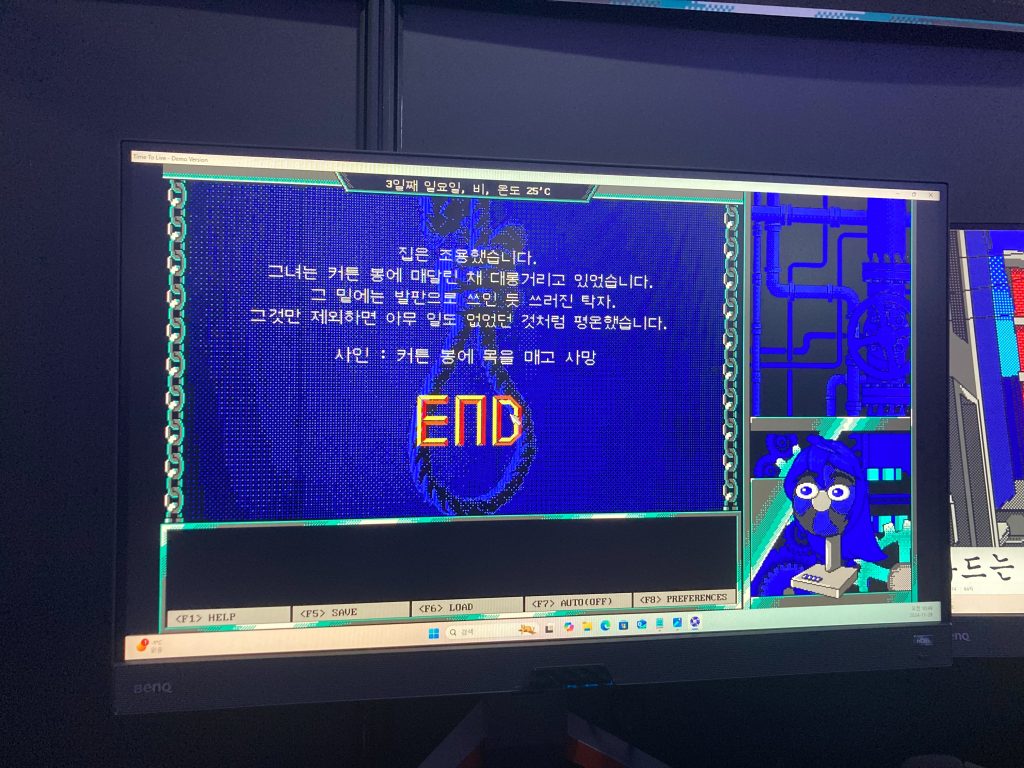
The display of the cause of death and the illustration of the rope in the background are vivid and frightening.
Not only the visuals but also the game's concept was very impressive. The story revolves around saving a girl who wants to commit suicide on a rooftop one day and spending the next 30 days together. Players will find themselves scrambling to manage her stress, which often leads her to attempt to end her life, all within a limited budget.
There are also育成 elements, such as giving her books to enhance her intelligence, but it is by no means an easy task. I played on the second of the four difficulty levels, but I quickly found myself facing a game over.
A Book Filled with the Developer's Thoughts
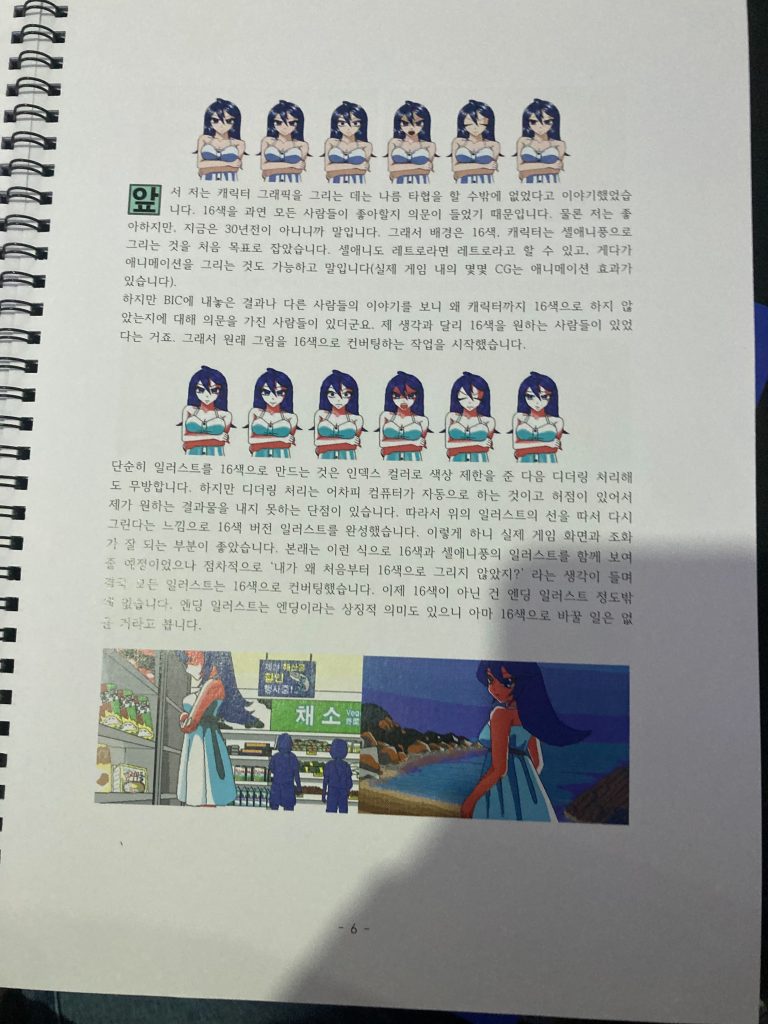
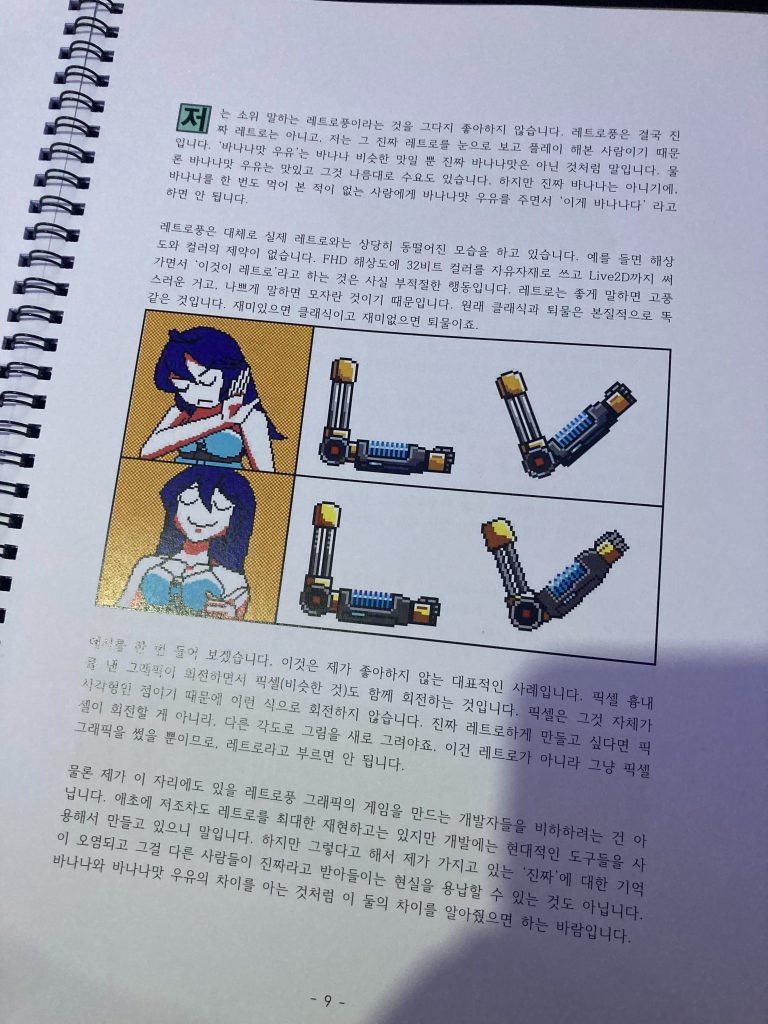
After playing, I had a brief conversation with the developer. During that time, a booklet placed at the booth left a particularly strong impression. This booklet, prepared for reading during waiting times, detailed the developer's thoughts on the game, respect for classic masterpieces that influenced them, and what kind of game they wanted to create.
From the passionate writing, I could feel the developer's strong will and passion to "create the game they want to make above all else."
Expectations for Localization
While the graphics and illustrations strongly reflect influences from Japanese subculture, the game content prominently showcases Korean characteristics. In particular, the regional and meme-like elements found in item descriptions seem to encapsulate the developer's "likes" with a remarkable density.
It is said that support for Japanese and English is planned, but I am very curious about how these cultural elements will be conveyed across language barriers. Given that this work is created with the indie game spirit of "making what you want to make without compromise," I have high hopes for the official release.
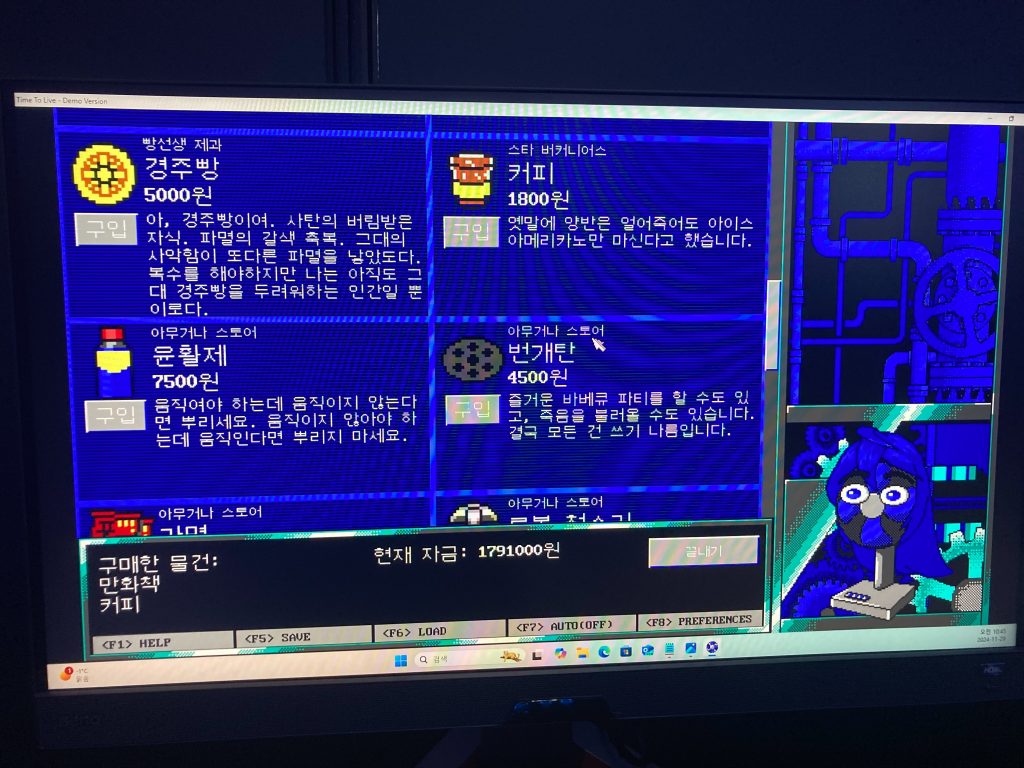
How will this be localized, I wonder...
High Difficulty Hidden in Cuteness - 'Hello Wonder Band'
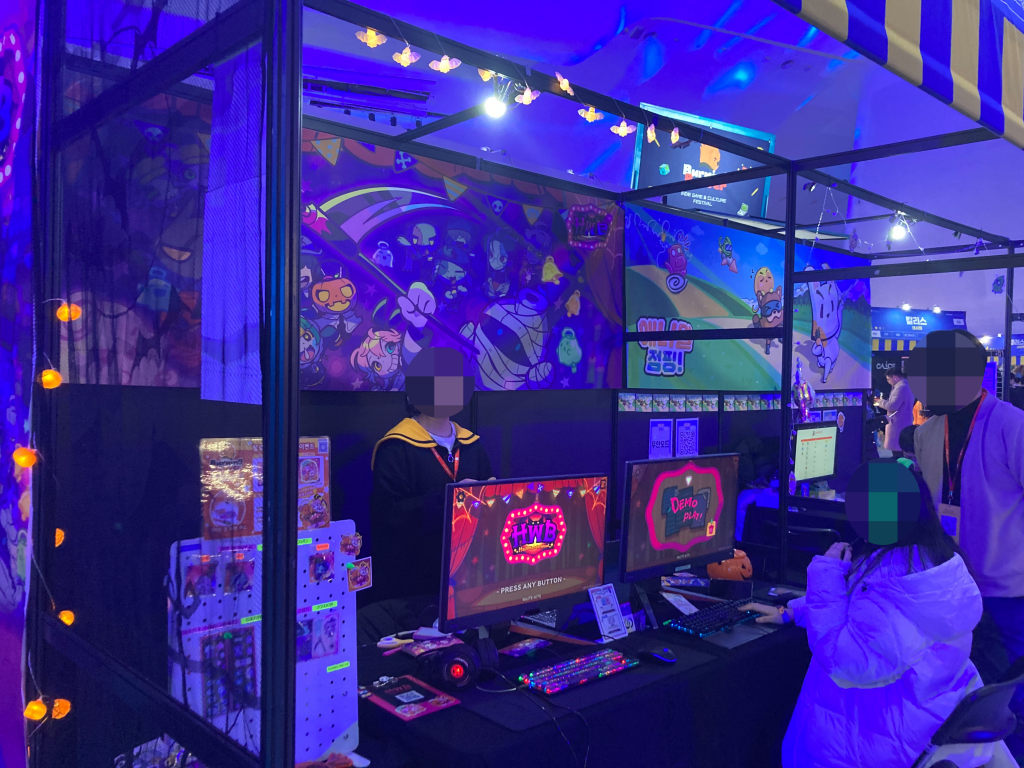
With a Halloween concept, it leaves a strong impression of individuality.
Booth 41 showcased 'Hallowanderband', a Halloween-themed rhythm game developed by the trio developer team "WhiteKite." Currently in development with a target release in 2025, a new episode was playable for the first time at this event.
A Unique Title Gaining Attention on Social Media
In fact, I had been paying attention to this title through social media for some time. Its uniquely cute design has garnered attention not only in South Korea but also in Japan, leading to the decision to include Japanese language support, which was not part of the initial plan.
Within the basic system of a rhythm game that incorporates storytelling, each episode features its own unique story, animation, and music. Additionally, spontaneous events called "TA-DA!! events" occur, ensuring that players remain engaged throughout.
The control system using a keyboard is also distinctive, with notes on the left side using the ASD keys and notes on the right side using the JKL keys, setting it apart from traditional rhythm games.
Surprisingly High Difficulty and Attractive Visuals
However, what surprised me when I actually played was the high level of difficulty. The animations playing in the background were so cute that I often found myself distracted and missing notes. I believe this was a deliberate choice by the developers to pursue both the character's charm and the fun of the rhythm game simultaneously.
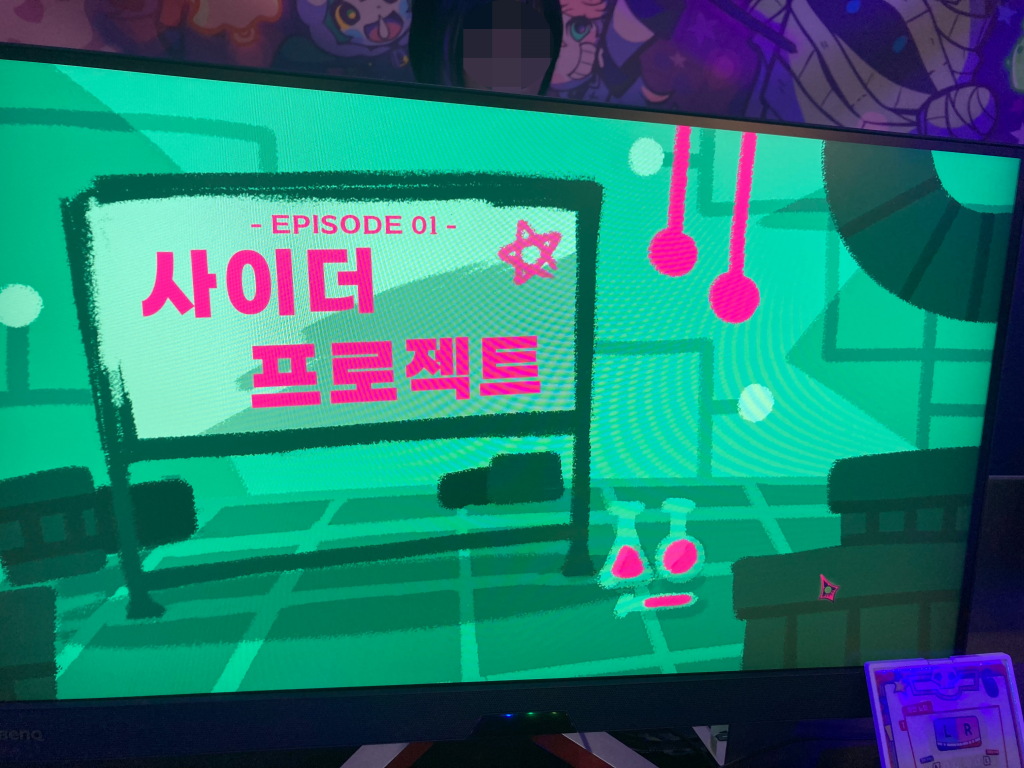
It makes you think of the episode's title screen.
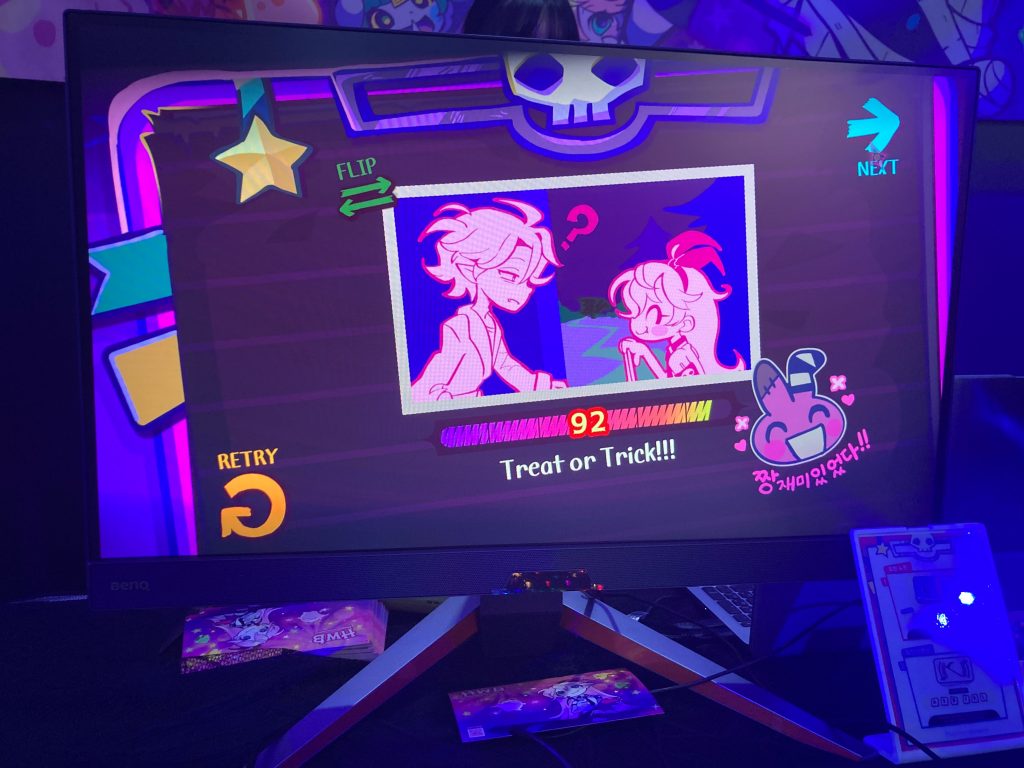
A Level of Completeness Unbelievable for a First Exhibition
Surprisingly, this Burning Beaver event was the first game event participation for the WhiteKite team. The level of completeness in everything from the booth setup to merchandise and game design was impressive, making it hard to believe it was their first exhibition.
It's also interesting that despite having no prior experience in event exhibitions, they have garnered such attention both domestically and internationally. The development team seems to be considering participation in various events, including those in Japan, in the future. Additionally, since this is a Halloween-themed work, they are reportedly aiming for a release during next year's Halloween season.
Potential That Transcends Cultural Boundaries
The charm of this title lies in its ability to appeal to a wide audience with its uniquely cute visuals, without being confined to a specific cultural sphere. By adopting the universally popular theme of Halloween, it may showcase a new way of rhythm games in the indie game scene. I hope to see opportunities to encounter this title at various events leading up to its release.
A Puzzle Adventure Reflecting the Realities of Society - 'Sohi'
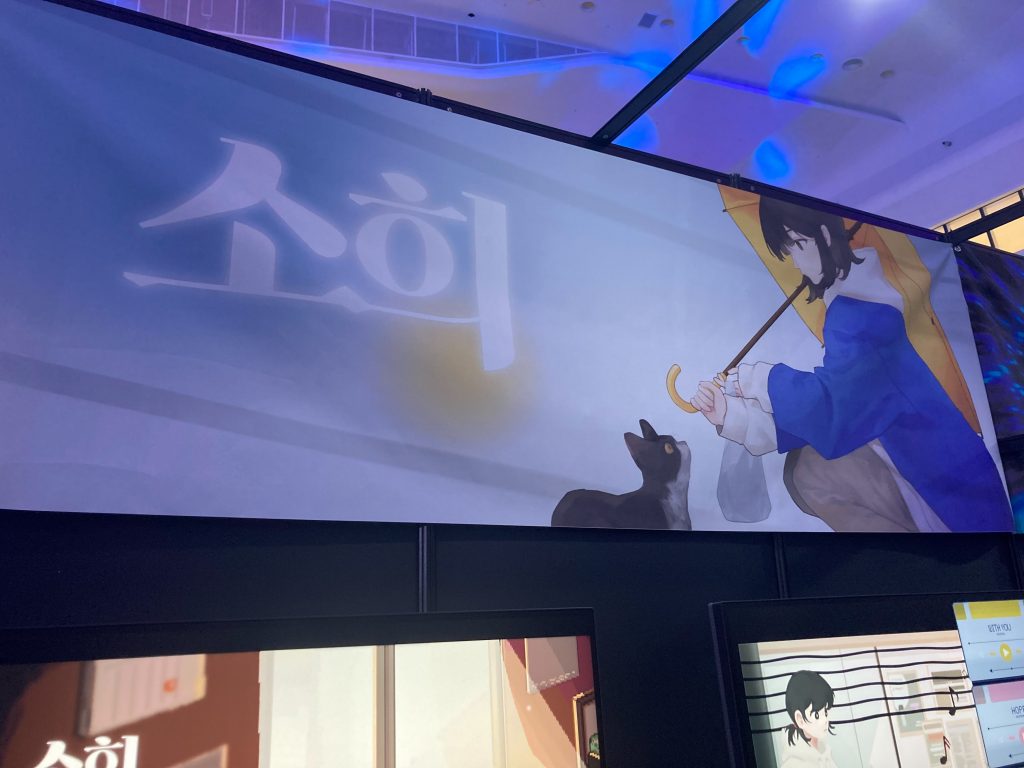
Encountered at booth 31, 'Sohi' is a 2D pixel graphic puzzle adventure game developed by Team Anemone. A free demo is currently available on STOVE, with the official release just around the corner.
Heavy Themes Hidden Beneath a Warm Appearance
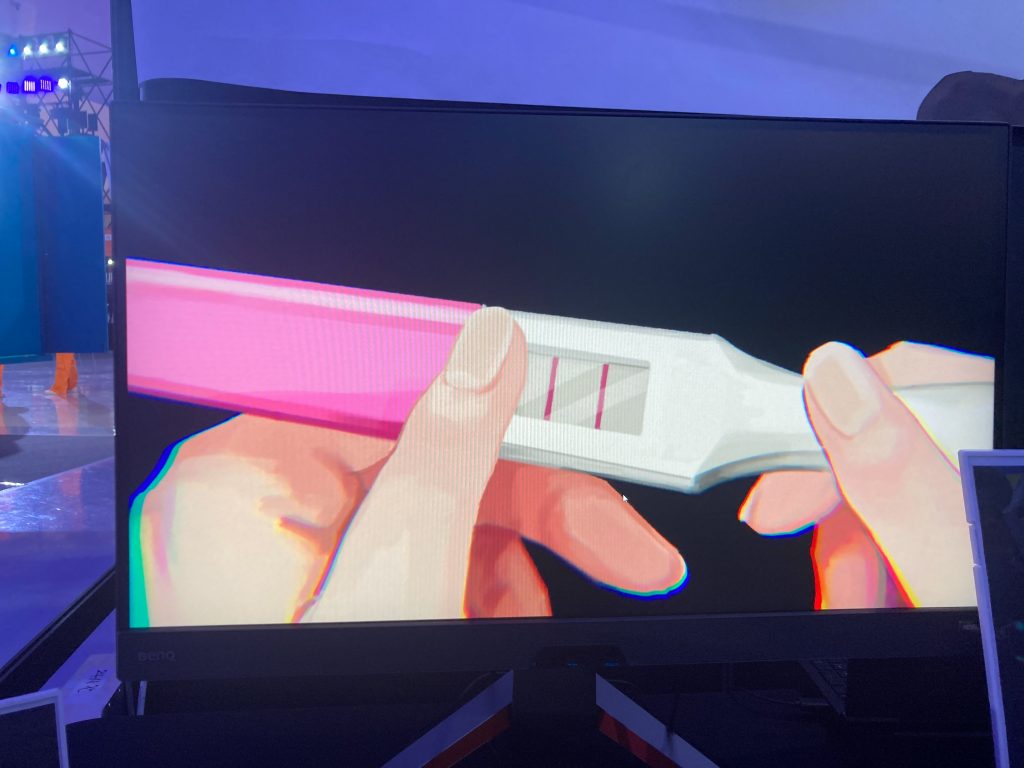
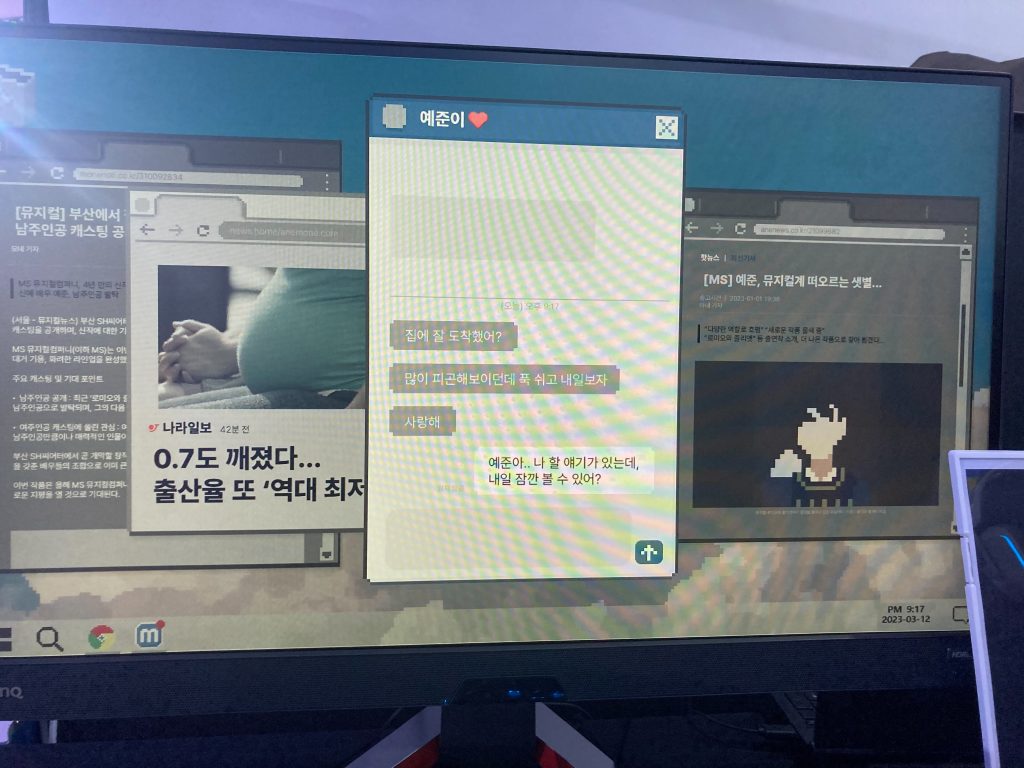
The story follows the now-quiet girl Sohi as she faces an unexpected pregnancy and an unfortunate accident after becoming an adult, leading her to consider abortion. In stark contrast to its warm visuals, the game delicately portrays heavy themes such as teenage pregnancy, abortion, single-parent households, and suicide.
How a game dealing with such heavy themes can provide an experience for players was my biggest concern. However, 'Sohi' brilliantly achieves a delicate balance between gameplay, themes, and story.
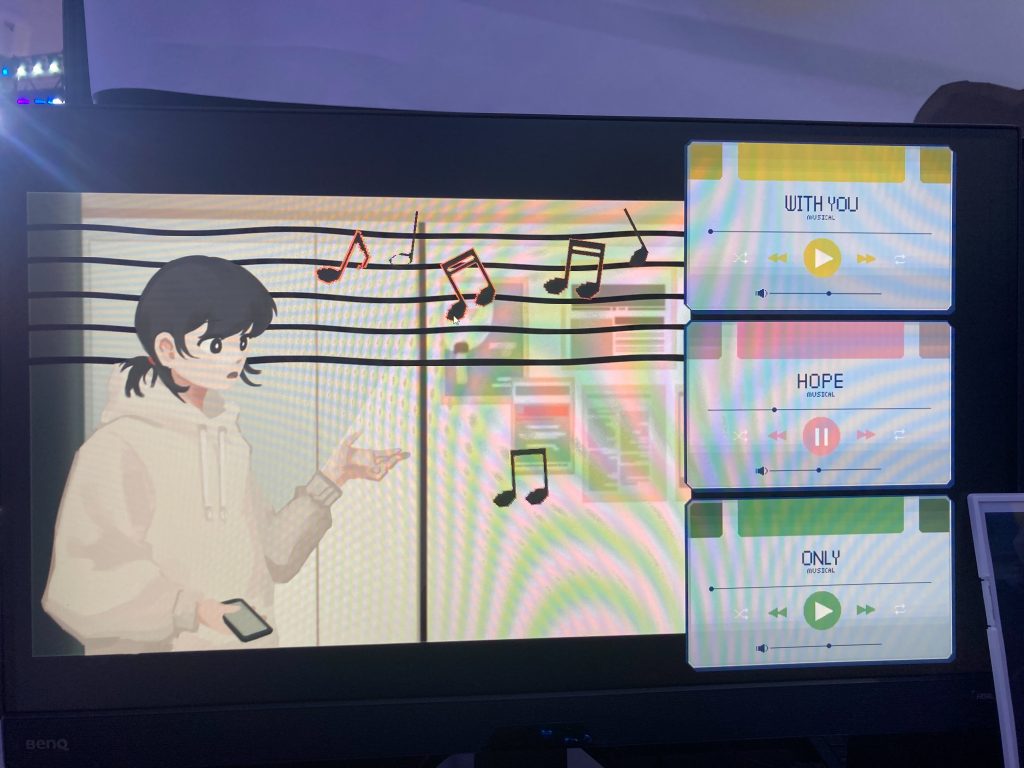
The mini-games that appear throughout serve not only as elements of a puzzle adventure but also function as devices to express the protagonist's emotions of anxiety, despair, and sadness. I believe it is an excellent attempt that reflects the developers' sincere approach to "playing from Sohi's perspective as a game."
Emotional Expressions Woven into Everyday Life
After playing, what stood out in my conversation with the developers was their statement about pursuing gameplay by incorporating mini-games "without compromising immersion." Through mini-games that depict everyday moments, such as attending university lectures while exhausted or preparing for auditions to become a musical actor, there was a meticulous calculation in expressing Sohi's anxiety and loneliness.
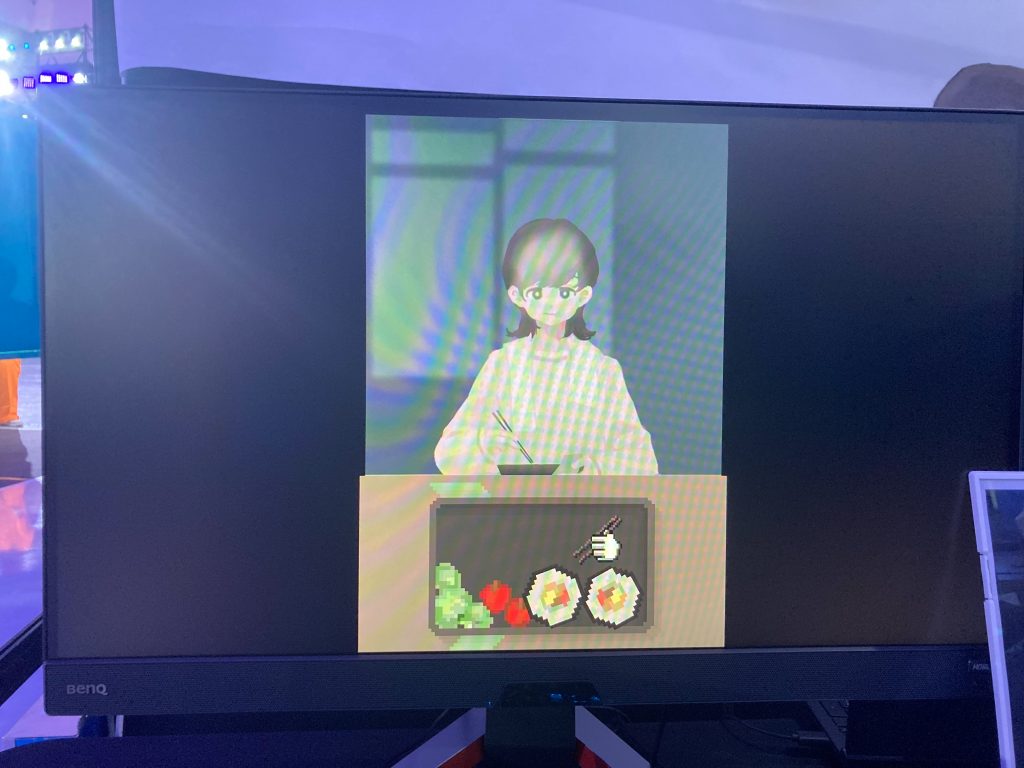
A Serious Approach to Social Issues
What stands out in this work is its straightforward approach to tackling social issues that are often considered taboo. At the same time, it appropriately depicts the landscape of Korean society within the constraints of portraying it as part of everyday life. In particular, the scene where young Sohee buys snacks at a stationery store in front of her school was vividly nostalgic.
In the Korean indie game scene, there are relatively many works that address such social issues. The fact that this work won the Social Impact Award at BIC may suggest that the direction of content sought by the Korean indie game scene, and by extension Korean society, differs from that of Japan.
[blogcard url=”https://store.onstove.com/ko/games/3820″]
Burning Beaver Report - This is the End of Part One
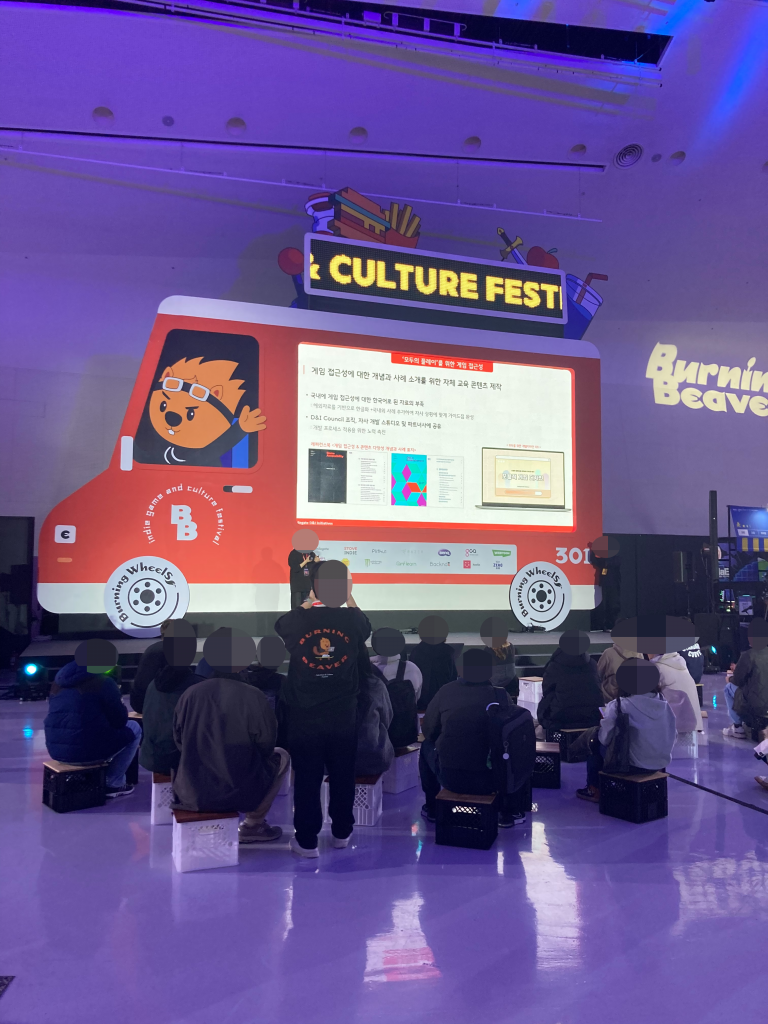
Looking back at the three works introduced so far, the passion of the developers trying to convey their stories in their own ways warms the heart. From Time To Live, which captures the creators' enthusiasm with limited graphics of 16 colors, to Haro Wonder Band, which hides intricate gameplay within its cute visuals, and Sohee, which calmly weaves heavy themes of modern society. Each work is exploring "expressions that can only be done in games" in different ways, and I felt a new breath of fresh air in the Korean indie game scene.
And the encounters with impressive works at Burning Beaver are far from over. In the next installment, I want to share my experiences filled with surprises and discoveries, thinking, "Games can take this form too!" From new adventures born from limiting the sense of sight to unexpected uses of devices. This event, which gathered such a diverse array of works that it hardly feels like the third edition, had me exclaiming in delight while playing several of the games! Please look forward to meeting those games!
(To be continued in Part Two.)