
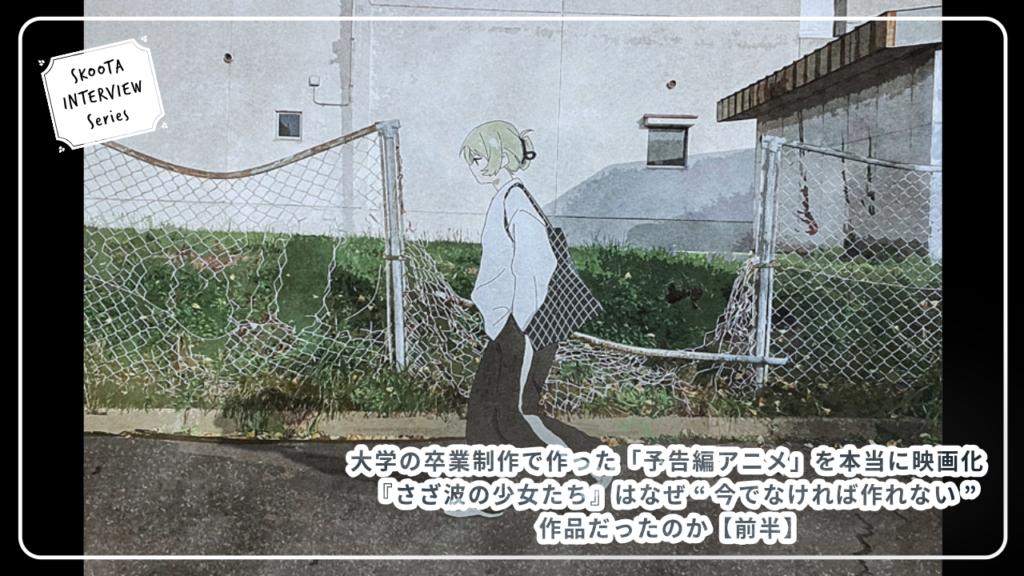
A university student who studied oil painting created a "trailer" that is actually being turned into a film. This unique journey led to the short animated film 'Maidens of the Ripples.'
The director is Michiko Soma, who works as an illustrator under the name toubou. With full support from the animation studio "Scooter Films," she handled everything from the original story and script to character design and background art herself.
Why was an individual creator with no track record in the animation industry suddenly entrusted with the major role of directing a "feature film"? We spoke with toubou. and Scooter Films to find out.
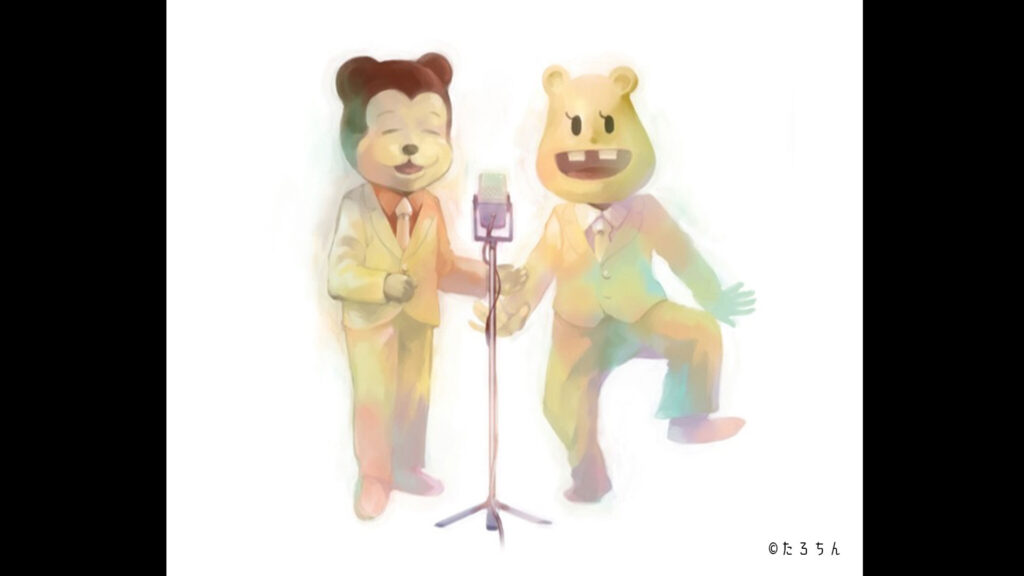
Interviewer: Taro-chin
Born in 1985. Real name: Shotaro Oi. In 2008, he started game commentary on Nico Nico Douga under the name Taro-chin. After working as a writer and editor for the web news site "Netorabo," he is now freelance. He was a person who loved alcohol dearly, but in 2022, he suffered from a serious illness called "severe acute pancreatitis," resulting in two-thirds of his pancreas becoming necrotic. He is now permanently abstinent.
A Sudden Overflow of Strong Feelings for "Anime" in the Oil Painting Department: "I Want to Be This, There’s Nothing Else"
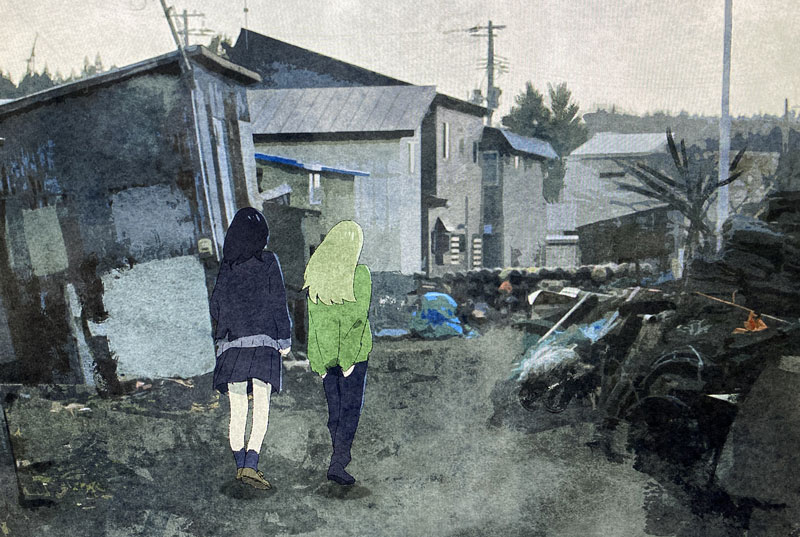
-- 'Maidens of the Ripples' was originally an anime created individually by toubou. as a graduation project, right?
Michiko Soma / toubou. (hereafter, toubou.): That's right. I was studying oil painting in the Western painting course at Tohoku University of Art and Design, but I was a bit of an unusual student who wanted to make anime from the very beginning.
-- What made you want to pursue anime in an oil painting department?
toubou.: Since I had been studying oil painting since high school, I entered university with the mindset of "I'm going to make it big with oil painting!" However, just before the entrance ceremony, I went to see the anime film 'Maquia: When the Promised Flower Blooms' directed by Mari Okada with a friend, and I was shocked. I thought, "I want to be this, there’s nothing else," just a week before starting university (laughs).
-- That’s quite a timing (laughs).
toubou.: So, in university, I painted oil paintings and, after returning home, lived a life creating my favorite anime and illustrations. Within the department, I was treated like, "What is she doing?" (laughs).
-- Were you presenting your works anywhere?
toubou.: I had been posting illustrations I drew since high school on Twitter. At first, it was just something to share with friends, but before I knew it, I started getting reactions from people overseas as well. Also, around the time I was in university, there was a "music video animation boom."
-- Yes, there was. Individual illustrators would animate for artists' songs...
toubou.: In that flow, I wanted to animate my own drawings, so I started posting my works on YouTube. Then, I began receiving requests for music video production from people who found my work.
-- Oh, so you had experience in anime work even during your student days!
toubou.:I think the timing of the COVID-19 pandemic played a big role. It has started to be proven that such productions can all be done online, and there was probably an environment where it was easier to find and request people like me online.
――I see, so even individual creators have been affected by remote work in that way...
toubou.:The video I made in a small apartment in Yamagata was playing in the background of an artist's live performance, and I was watching it online... that was a strange experience.
――Wow, that's emotional. How did you learn to create anime and videos?
toubou.:At first, I was completely self-taught. However, I was fortunate that I was required to buy a PC and a full set of Adobe software in college, which allowed me to start right away. I think it was good that I was in an art university.
――Still, being self-taught is impressive.
toubou.:On the other hand, I applied to an anime production company called "Pancake," which was looking for staff at the time, partly to learn. There, I met Yuki Sakoda, the then CEO of Pancake, who advised me, "Why don't you try making an anime for your graduation project?"
――You're finally moving away from oil painting (laughs). What impression did Sakoda have of you back then?
Yuki Sakoda (hereafter, Sakoda):Pancake was a company that had a relatively author-centric atmosphere, making anime films by directors who didn't do much commercial work, and was more flexible than typical anime companies. So, we received quite a few inquiries from aspiring creators, but among them, I felt that toubou. was someone who had a clear idea of what they wanted to do.
――I thought everyone aiming to be a creator had some ideal of "I want to be like this!" Is that not the case?
Sakoda:In a typical anime company, 90% of the new hires come in as animators and follow the route of doing the assigned work properly... That's not a bad thing, but at that time, it was an era where people could easily showcase their own created videos on platforms like Nico Nico Douga and YouTube, and I felt that those who were doing such outreach might not fit the usual pace.
Takuro Harada (hereafter, Harada):Looking back, I actually think that new trends have always emerged from individual creators. Before Nico Nico Douga, there was also a wave of Flash animations and GIF animations gaining popularity.
――Indeed, people with a strong desire to "do this" have always created and presented something on their own.
Sakoda:It's difficult to work with someone who is vaguely thinking, "I want to do anime," but isn't sure about what they want to create. Conversely, if someone has a clear idea of what they want, there might be things we can support them with. So, with toubou., who had a clear vision, we talked about trying something together while communicating.
――And what you created was the graduation project "The Girls of the Ripple - Trailer," right?
toubou.:That's right. Although it's called a "trailer," I didn't decide at that time to make the full version; I just wanted to create a digest of what I had in my head in anime form and package it as a "trailer."
――Does the "trailer" reflect your previous MV experiences and Sakoda's advice?
toubou.:Of course, it was helpful, but I remember making the "trailer" quite freely (laughs).
I had a professor in college who was really interesting and someone I liked, and he told me, "Since you won't be able to create what you love once you enter society, make a grand piece of junk before you go out into the world!"
――That's great advice (laughs).
toubou.:So, I made my graduation project the way I wanted!
Sakoda:For me, I didn't interfere with the core part of "putting out the gritty things inside toubou." I thought about where we could provide the most performance as a company and helped out in areas like voice acting and music, which are related to "sound."
――How was the reception at the graduation exhibition?
toubou.:There was a novelty factor, and students from various departments came to see it. I'm really bad at being in front of people and talking, so I sat far away pretending it wasn't my work and watched the reactions (laughs).
――The one you uploaded to YouTube received positive comments from overseas as well.
toubou.:I wonder about that? Originally, about half of my SNS followers are from overseas...
――What led to you being known by people overseas?
toubou.:I have no idea... But I think it might be because the illustrations I draw have a lot of painting elements rather than being purely two-dimensional anime, and since I post as a bot-like account that shares only images without much language, it might have been easier for people overseas to see them.
――The painterly quality is a characteristic of toubou.'s work, isn't it? In 'The Girls of the Ripples', toubou. handles not only the characters but also the background art all by themselves.
toubou.:To begin with, I don't feel a separation between characters and backgrounds in my art. This might be a painter's perspective, but both exist on the same layer, so if I'm painting, it naturally includes both characters and backgrounds. Rather than thinking of it as drawing people or backgrounds, I feel like I'm drawing a "world".
"If we don't do it now, we won't do it" - Skoota Films wants to support passionate young creators
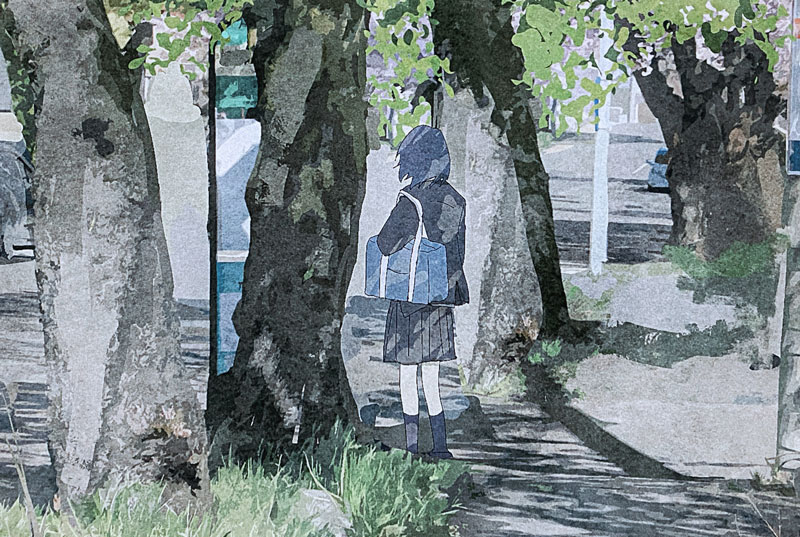
――What was the process that led to creating 'The Girls of the Ripples' as a theatrical short animation in collaboration with Skoota Films, starting from your graduation project 'Trailer'?
Harada:Skoota Films was established with the desire to create original works centered around individual creators. At that time, I met Sakoda from Pancake, who introduced me to toubou. saying, "There’s someone like this."
Sakoda:Among the majority who just want to be involved in any kind of video, toubou. was adamant about wanting to create theatrical animation, which I found interesting.
――And it wasn't just "I want to make someone else's animation," but rather "I want to make my own animation."
Sakoda:Having that level of commitment means there’s a valid reason behind "I like this, I want to do it this way." When that exists, you won't give up halfway, and it connects to the significance of investing money. I felt that Skoota Films would be a good match for that.
Ashizuka Akiko (hereafter, Ashizuka):As toubou. mentioned earlier, the people at Skoota Films might not really like the culture of having characters and backgrounds drawn by different people. It’s an unusual statement for an animation studio (laughs).
――Skoota Films also has a strong creator spirit, doesn't it? (laughs)
Ashizuka:We also haven't really created with a resource allocation that separates backgrounds and characters, so I sometimes think, "If you have something you want to draw, wouldn't you want to draw it all?" Therefore, I prefer people who have the feeling of "I want to do both!" and it seems to align well with Skoota Films.
――I see. However, in the industry, it’s quite a decision to suddenly let an individual creator with no track record create a "feature film," even if it’s a short.
Sakoda:Normally, decisions are made based on whether someone has worked on famous projects in the past or can produce impressive numbers. There really isn't a foundation in typical animation companies for individual creators to showcase their performance. I think Skoota Films is one of the few studios that can run alongside that.
Harada:For independent filmmakers, it’s quite common to say, "I can't make a full movie, so I made a trailer first." There are quite a few that turn out to be pretty bad (laughs).
――Ah, so that’s a common occurrence.
Harada:However, in toubou.'s case, I could genuinely feel the passion of "I have more I want to put out!"
They said, "At the time of the trailer, I wasn't thinking that clearly," but there must have been some kind of feeling, and that "something" would probably disappear if left alone. Because it’s not the inspiration of a seasoned director, it can only be created while that passion exists, and if created, something intense might come out of it.
Ashizuka:We talked about "If we don't do it now, we won't do it" among the three of us, Sakoda, Harada, and myself. If toubou. had become an animator or something, they probably wouldn't have created it anymore. It wouldn’t make sense if we didn’t release it while it was hot.
――That’s a really nice story. It’s about adults supporting the passionate desires of young individual creators...
Harada:When you take just that part, it sounds quite noble, but it means I felt enough passion from toubou. to convince me. I felt that energy even from a single piece of art. There are times when it’s a bit troublesome if someone brings in everything saying, "I want to do this!" (laughs).
toubou.:From my perspective, I still feel like "Why am I here?" every day. I feel blessed with various miracles.
Common Themes in toubou.'s Works: "My Life So Far as a Girl and Adolescence"
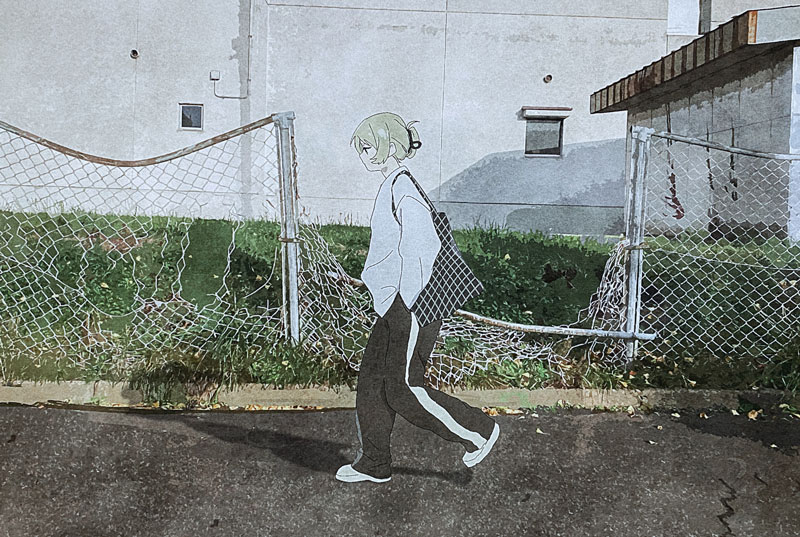
――Where does toubou.'s strong desire to "create theatrical animation" come from?
toubou.:I have been a bookworm since elementary school, always in the library, and before I realized I liked drawing, I loved "stories." I enjoyed imagining how characters would feel and move while reading books.
I started drawing due to my sister's influence, but when I thought about what I wanted to do, I realized I loved animated films.
――I see, so rather than just liking anime, you see animation as a means to express stories.
toubou.:I particularly love original animated films. If it's based on existing material, you might not enjoy it 100% if you don't know the source, but with original works, you can immerse yourself in that world for two hours at the theater without any prior knowledge, and I really like that. I'm quite easily bored.
――That indeed makes it more about wanting to "create original theatrical animation" rather than just "becoming an animator."
toubou.:In high school, I really loved Makoto Shinkai's "The Garden of Words" and watched it repeatedly. I learned that Shinkai started by making animated films on his own. I began to think that if I were to weave a story with my own drawings, theatrical animation would be the closest medium for me.
――Not just in "The Girls of the Ripple," but I feel that themes like "adolescence" and "girlhood" are common in toubou.'s works. Is this something you are particular about?
toubou.:Rather, it's that my life so far has been about girlhood and adolescence, so those motifs naturally come up.
――You want to express your own experiences and the feelings you had during them.
toubou.:That's right. I think my obsession with the emotions I felt at the time and the need to express them is reflected in my illustrations and characters. It's not about wanting to draw beautiful girls or handsome guys; it's more like a showcase of my emotions.
Harada:It's really interesting that you say "there's only girlhood and adolescence." Looking back, I think those are indeed the kinds of works they are.
――Ah, I can kind of understand that. For those of us in the middle-aged generation, it seems quite difficult to create vibrant works for teenagers.
Harada:Even those who have been active in shonen manga magazines for a long time may have started drawing when they were still young and connected to their boyhood. If they can create such works once, perhaps like Mitsuru Adachi, they can continue to depict youth even in their 70s. But for someone who has never created anything to suddenly do so in their 70s is definitely impossible.
――I see. That's why you want to create works with young creators like toubou. who are currently full of passion.
Harada:Yes, I believe there are works that have meaning in doing them now, works that can only be created now.
(To be continued in Part 2)