
Let’s go back to the summer of 2011. The author, now a middle school student, was as usual a webtoon-loving otaku.
No, rather, it might be said that during that period, I was “the most in love with webtoons in my life.”
The sensation of being able to “read comics anywhere, anytime” on a tiny tablet screen, about the size of my palm, was enough to captivate many middle and high school students, including my younger self.
Since smartphones began to spread among teenagers in 2010, the experience of reading vertical comics, or “webtoons,” by scrolling with our fingertips has permeated our lives at an unimaginable speed.
Therefore, from the perspective of the author, who was a middle school student at the time, it could be said that this period marked the beginning of the great webtoon era.
And the influx of middle and high school students into the webtoon readership began to influence the lineup of popular works at that time. This led to the rise of school-themed stories. Regardless of the genre, works that seemed to have some attachment to protagonists being middle or high school students started to appear one after another.
‘God of High School’, ‘Tale of Nokdu’, ‘Orange Marmalade’, ‘Fashion King’, ‘High Schooler Ran Away’, ‘I Don’t Want This Kind of Hero!’…
Looking at the works that started serialization in 2011, it’s hard not to think of them casually.
In each of these different works, the only thing that stands out is the switch to having middle or high school student protagonists.
This might be a rather arrogant way of thinking, but the adolescent me, who had a mysterious attachment to webtoons, might have been bewildered by the flow of that era.
The Sudden Appearance of the "Outsider" Webtoon
[blogcard url=”https://comic.naver.com/webtoon/list?titleId=389848&page=1&sort=ASC”]
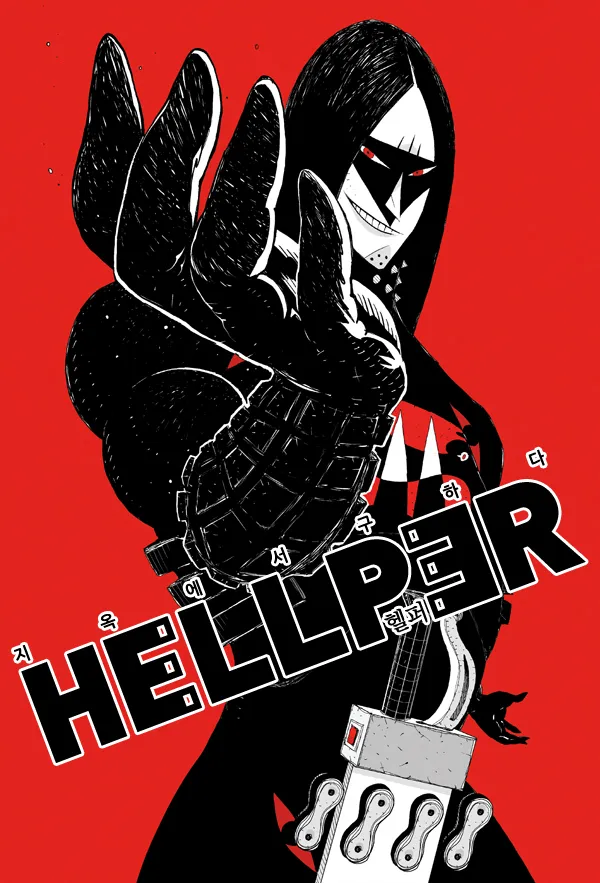
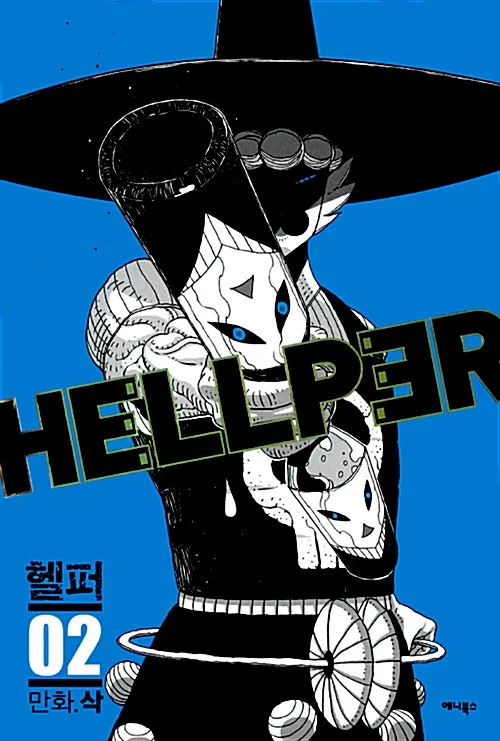
'HELLPER' (2011)
“As expected, it really is as expected.”
The leader of the Guard Tribe protecting the city, “Jang Kwan-nam.” After he dies in a mysterious traffic accident, a sensory action fantasy manga unfolds from the realm of the living and the dead. (Author's translation)- Description of 'HELLPER' Season 1 “MADMAN”
Amidst this, a work suddenly appeared.
A new “outsider” emerged in the webtoon world of that time, which felt somewhat familiar.
However, despite not being particularly innovative or overly familiar, I felt some kind of discomfort with this work.
The protagonist, Jang Kwan-nam, hails from a city known as a “greenhouse for gangsters.” To protect his hometown from gangsters, Kwan-nam gathers local delinquents to form the Guard Tribe, ‘Cerberus’. He was protecting the town with excellent leadership, but unexpectedly dies in a traffic accident.
Synopsis of Season 1 “MADMAN”
After death, Kwan-nam is given a black ticket that signifies a trip to hell. Rumor has it that collecting 100 black tickets will allow him to go to heaven or be reincarnated. Determined to collect the remaining 99 tickets to be reincarnated as the child of his lover who remains in the present world…
Even now, the unique and colorful art style is rare. The characters' dialogue, mixed with dialects, can be somewhat difficult to read. Moreover, it’s surprisingly not a popular school-themed story at the time, but rather has a strong shonen manga vibe.
At that time, when 'Noblesse' (2007) and 'Tower of God' (2010) were dominating, 'HELLPER', which began serialization, unfortunately did not receive a very good response initially.
Romance became an embarrassing word, and sensitivity turned into a middle school syndrome. Only those with leisure can afford it. I miss the days when the word “passion” wasn’t lame.
- 'HELLPER' Chapter 175
I loved this Webtoon, which felt somewhat familiar yet strangely unfamiliar at the same time.
From the ever-changing art style influenced by the background, the ambiguous yet vivid dialogue, to the unique yet classic story developments and expressions that push the boundaries of age restrictions...
In short, I want to summarize that it was a Webtoon that somehow appeared vague despite its well-crafted structure.
However, before any misunderstandings arise, there is one point I want to convey to everyone.
The "outlier" nature of 'HELLPER' that I will explain from here on is to be treated as something separate from the aforementioned story of overturning initial evaluations and seizing dominance.
How did 'HELLPER' become a successful work? Of course, that is an interesting topic in itself.
However, I want to add that the impact 'HELLPER' has left on the Webtoon world goes beyond mere numerical changes. Above all, let’s not forget that 'HELLPER' is the work that has brought the most change to the Webtoon world since it began serialization in 2011 until this month, when it concluded Season 2.
From the way Webtoons are read to the censorship that affects the entire industry...
What exactly is that "outlier" nature that has brought change to the Webtoon world?
What was missing from the existing "reading method" of Webtoons: The completion of scroll manga comes from the reader's fingertips
The element that initially drew attention to 'HELLPER' was surprisingly its "reading method."
"Webtoons were not originally meant to be read vertically."
Those of you who have read previous articles must have seen this sentence multiple times.
From 'The Strong Ones' (2008), which showed the reason for vertical reading in a "manga simply arranged in vertical panels," to Holan's 'Ghost at Oksu Station' (2011), which brought Webtoon readers a "consciousness of reading comics digitally."
Suddenly, 'HELLPER' posed a question that even those two works had overlooked.
It was as if it boldly asked the reader, who controls the reading of Webtoons, "Could you scroll through this part a bit faster or slower?"
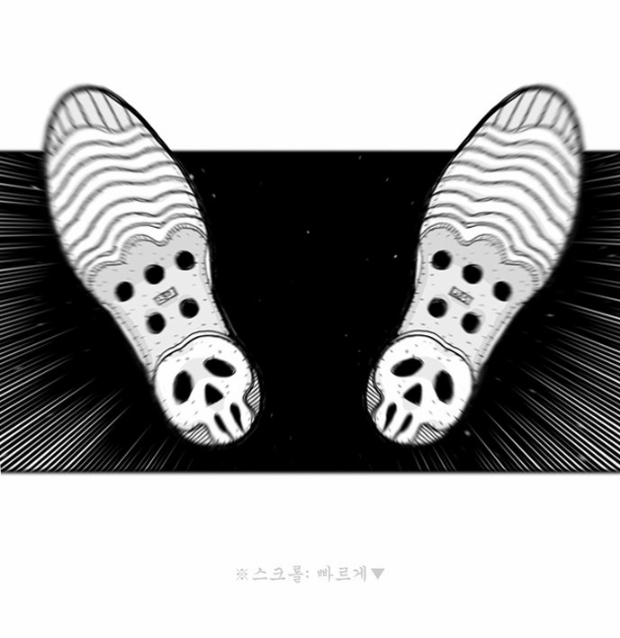
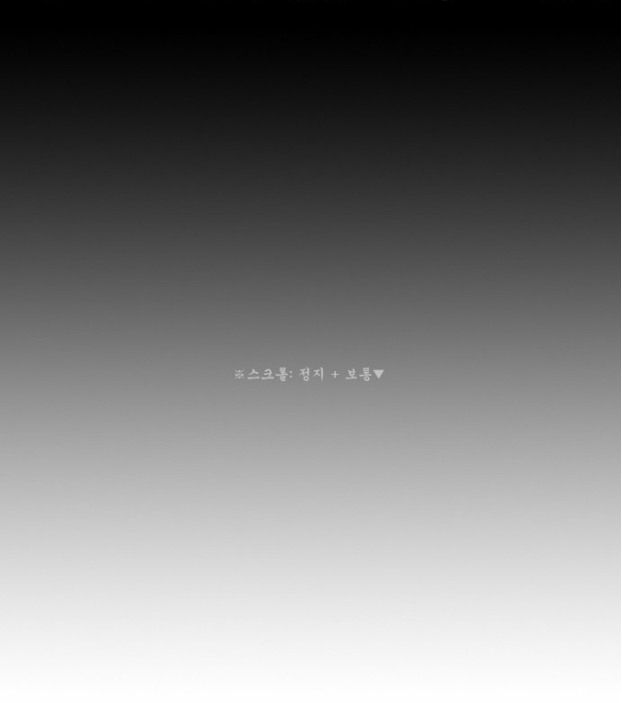
Within the limited space of Webtoons, seemingly meaningless panels continue.
However, the moment the reader sees the author's note "※Scroll: Faster ▼", it transforms into a device that brings a different sensation compared to existing Webtoons.
While it is unclear how much a single word indicating the speed of scrolling has contributed to the quality of the work, it likely sprouts a sense in the reader's mind that they had not noticed before.
Elements of the reading method that we usually take for granted. In other words, we inevitably confront the "rhythm of our own" when reading Webtoons.
This scene should be read faster, while that scene should be read more slowly.
By being conscious of this, differences arise in the reader's perspective. Readers who usually observe panels closely experience the tension and intensity of the scene they are reading, while those who tend to scroll quickly notice the details they previously overlooked.
The completion of scroll manga comes from the reader's fingertips (Author's translation)
-SAKK (Episode 10, from the author's note)
Of course, there may be voices pointing out that such remarks from the author are "unnecessary meddling."
However, as SAKK mentioned, this idea likely wouldn't have been reached in a horizontally read manga like a flip book; it has been created with the consciousness unique to vertically read Webtoons.
Therefore, I would like to evaluate that this seemingly joking remark is indeed written towards the proper “completion” of scroll manga.
Webtoons Beyond Manga: From Music to Fashion
There are other notable features that come to mind when thinking of 'HELLPER'.
One of them is that the author SAKK often collaborates with other genres through 'HELLPER'.
For example, the BGM that enters the Webtoon. As explained in Episode 2 of Road to Webtoon, since the appearance of the author Holan, adding BGM within Webtoons has become increasingly common. Therefore, while the function of BGM itself was not particularly rare, 'HELLPER' was recognized for the uniqueness of the songs it featured.
Regarding the selection of this song, it is known that SAKK, who has a wide network in the music industry, received songs directly from acquaintances who are producers. Among those producers were some famous figures in the Korean hip-hop scene (for example, Loptimist).
This close relationship with the Korean hip-hop scene might explain why 'HELLPER' is so intertwined with it.
An example of this is C JAMM, who is featured above. He has publicly declared his fandom for 'HELLPER' by releasing a song that pays homage to the line "It really is what it is." SAKK is well aware of C JAMM's strong feelings towards 'HELLPER', even including a cameo character of C JAMM in the work.
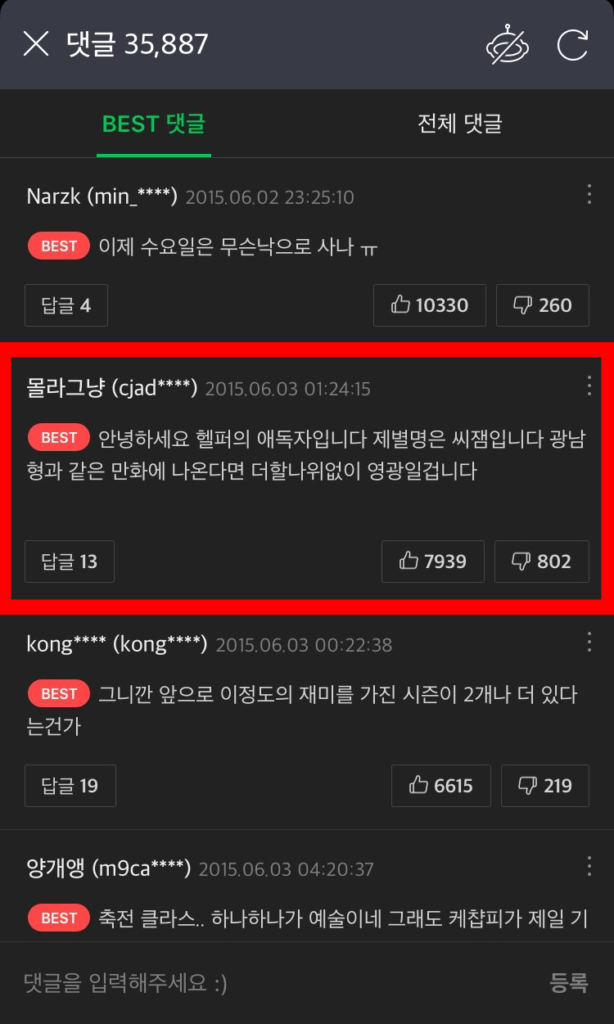
boldly displayed.
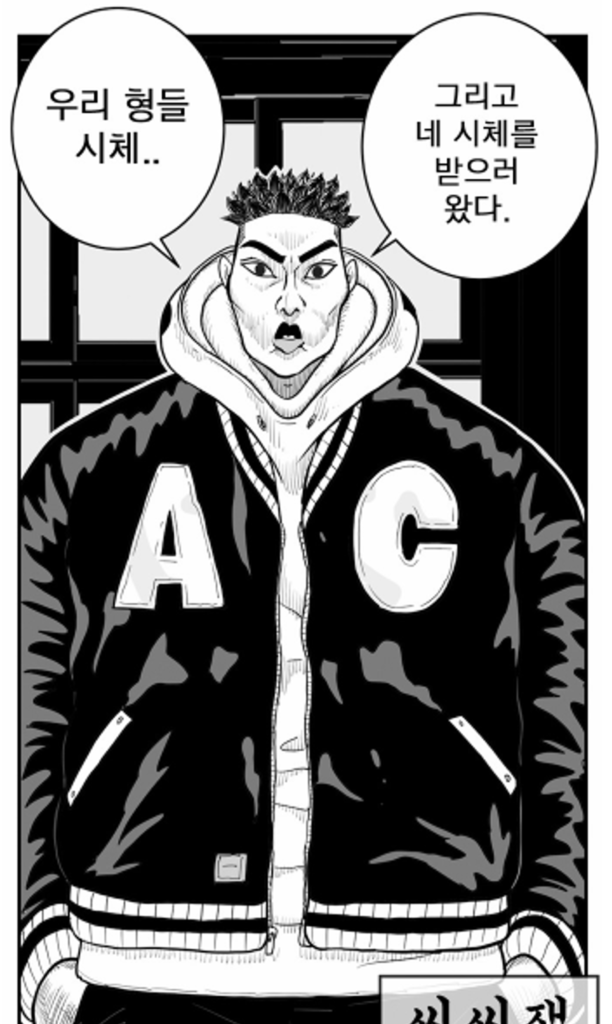
This trend has spread throughout the work, leading to suspicions that famous people unrelated to the work were also included as cameos.
For example, characters like "Jappmon" and "Minor," which parody BTS's RM and WINNER's Song Min-ho, appear. There is also a character named "Lee Jigum*" that clearly seems to be modeled after the famous Korean artist IU.
As a result, readers of the work might react with thoughts like, "It's funny to see a famous person I know turned into such a character," or "I feel uncomfortable that unrelated people are being used without permission."
*IU often refers to herself as "Lee Jigum" on social media and in content.
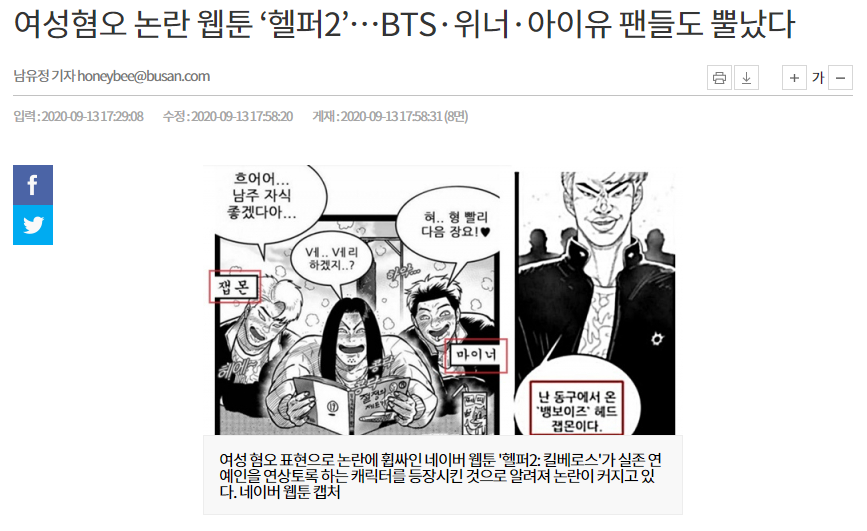
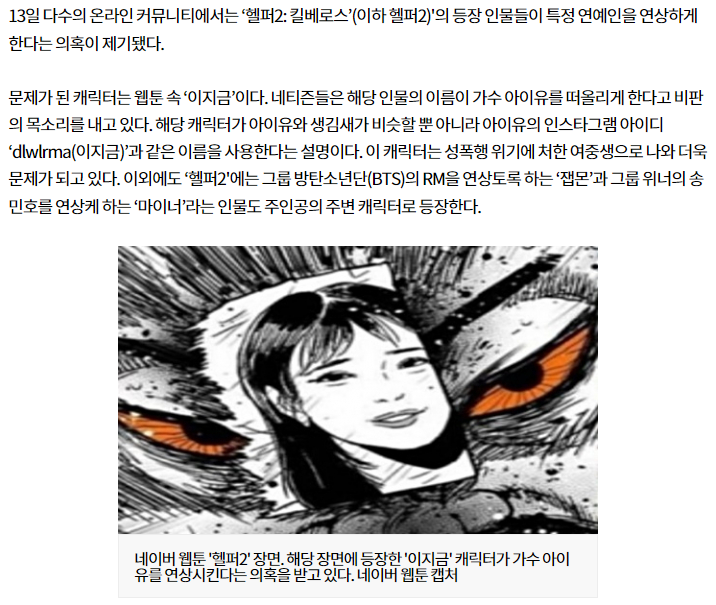
This is part of an article showing anger from idol fans about featuring celebrities in cameos.
(Source: https://www.busan.com/view/section/view.php?code=2020091317290798490)
Additionally, 'HELLPER' has a deep connection with fashion.
In the story, the protagonist, Gwan-nam, gathers former delinquents to run a clothing business. Leveraging this, SAKK has created a brand in the real world called 'KILLBEROS'. As stated on the site, it is Korea's first fashion brand based on a comic (Webtoon).
[blogcard url=”https://killberos.com/”]
This is somewhat different from the typical merchandise business we usually see; it incorporates the clothing sold on the site into the story's world, aiming for advertising effects by having characters wear them. (Of course, they also offer regular merchandise.)
However, these features have sparked considerable debate among readers.
As the series continues, opinions are divided among readers on whether to view this as the work's "uniqueness" or as "bad taste" that they wish to avoid. Regardless of the author's intentions, the elements of which real-life individuals the characters resemble and what clothes they wear connect to readers' impressions.
The seeds of this debate eventually ignited into an incident that shook the entire Webtoon industry.
To understand the incident that even led to increased censorship, one must consider the unique background of Korean society, including the content of the work. This may diverge from the "outlier" nature of 'HELLPER' that has been discussed so far, so I would like to explain it thoroughly in the next article.
Continuing with "The Work That Brought About the Largest Censorship in Webtoon History" HELLPER Discussion Part 2 - Road to Webtoon #5