

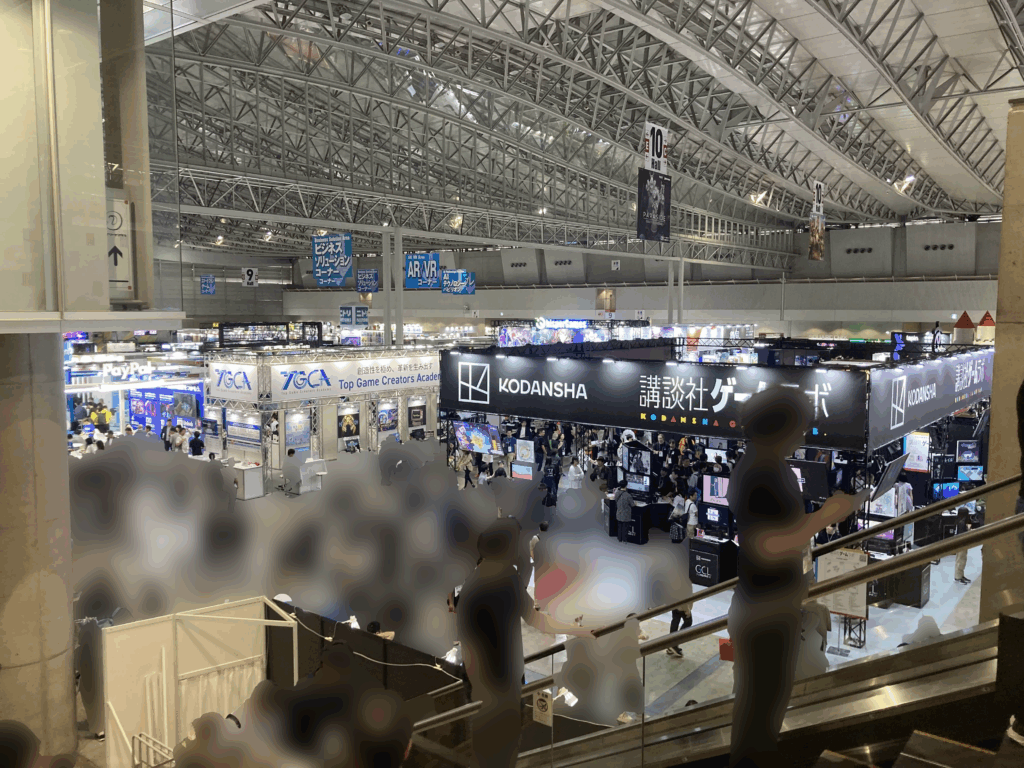
Now, as the enthusiasm from the previous article has not yet faded, the report will continue into the next part. Next, I will continue to share three shining gems discovered amidst the hustle and bustle of the Makuhari Messe.
In the previous article, we introduced Chinese games that reveal social injustices, Russian games that transcend language barriers with a strong presence, and German games that offer an overwhelming "experience" that goes beyond logic, each showcasing different philosophies. Because it is a grand celebration, the personalities that meet in one corner stand out even more.
In the next part, we will introduce games from other equally energetic countries. There exists a pure "heat" that cannot be explained by logic or refinement, reminiscent of the creators' initial impulses. Or perhaps a comforting "nostalgia" that awakens memories of past obsessions. Additionally, there is the "joy of reunion" that can only be experienced in the pursuit of indie games, transcending time.
So, let's quickly start with a game that captures the passion of South America.
Lucha Masters: Mighty Lucha: An Unfathomable Yet Tangible "Heat"
So, the first game introduced in the next part is Lucha Masters: Mighty Lucha from Mexico. My encounter with this game originated from a strange introduction video. In the video, a man takes a delicious bite of a taco, while behind him, an Ahorotel (a large lizard) sneaks up, snatches his taco, and runs away... Honestly, it was impossible to deduce the game's content from this video, but its impact was enough to spark a strong curiosity of "What is this?"
After actually trying it out at the booth, that feeling of "What is this?" deepened. This game is an action-adventure title that supports up to four players, featuring nostalgic 8-bit style graphics. In today's indie game scene, many titles boast unique ideas and innovative systems, but a game like this, which carries the spirit of old arcade games and is, in a sense, very "naive," feels fresh and strongly captured my attention.
However, despite its nostalgic appearance, the difficulty is quite high. Enemies appear in succession, and the traps are complex... I exhausted myself in the same spot and ultimately had to put down the controller in tears after my third attempt.
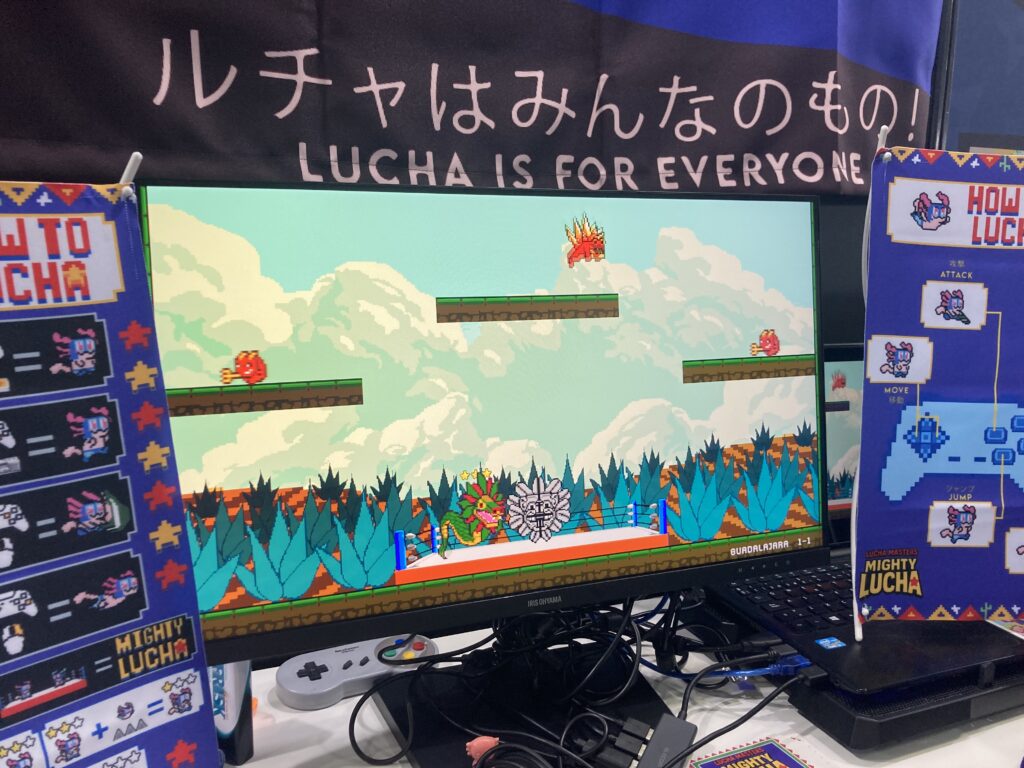
Normally, I might conclude here by saying, "This game is a bit unsuitable for me." However, this game possesses a mysterious "heat" that transcends such logic, attracting players and making them want to uncover its truth. Later, I looked it up and seemed to understand the source of this heat a bit better. The story of this game revolves around defeating the god of death "Mictlantecuhtli" from traditional Mexican legends and myths, particularly from Aztec mythology, with Ahorotel's "Lucha" in battle.
I see, I patted my knee. The energy I felt from this game, which was hard to comprehend, might be a pure crystallization formed by the developers' deep love and respect for their country's culture (wrestling, Aztec mythology) combined with the intention of "putting everything we find interesting into it." This is the unique brilliance of indie games, which cannot be created solely through refinement and calculation.
By the way, despite experiencing so many game overs, I still received a small character figurine from the gacha machine set up at the booth. This tiny warmth provided me with a bit of comfort, but that's a secret.
Shin Yonnome - Onmyoji Miko: A Mysterious Dungeon Intertwined with Nostalgia and the Terror of "Wa"
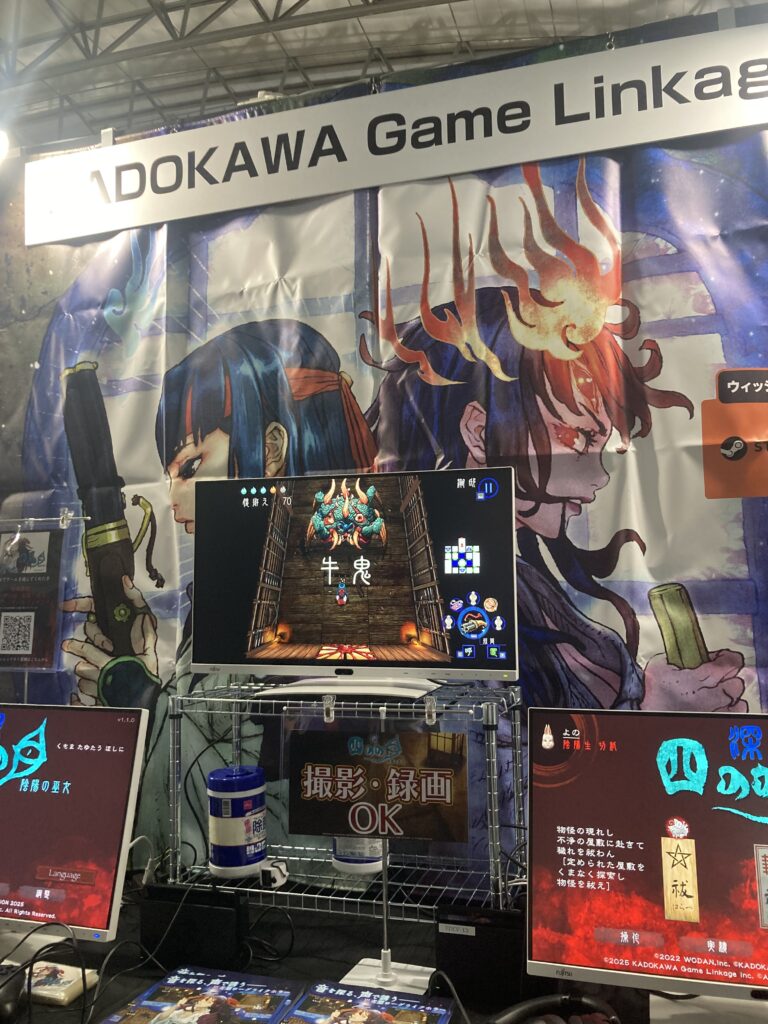
Next, I will introduce the only work from Japan in this report, Shin Yonnome - Onmyoji Miko. This Japanese-style roguelike dungeon exploration game showcased at the KADOKAWA Game Linkage booth may remind those over 20 of the "Mystery Dungeon" series created by Chunsoft. I personally encountered this genre through the Pokémon series, so I was able to play with a sense of nostalgia.
The story begins with the protagonist "Yono," a miko, who enters a haunted mansion to search for her missing brother. In the eerie mansion, where the structure changes each time you enter, players control Yono, dodging or fighting off the approaching yokai, aiming to delve deeper into the mansion.
The interesting aspect of this game is that the protagonist, Yono, is essentially a weak being without any means of attack. Therefore, players must not only progress by defeating enemies but also utilize items to set traps and master enemy positions to avoid them, constantly requiring players to think strategically. This sense of "vulnerability," combined with the Japanese horror-themed worldview, creates a unique tension.
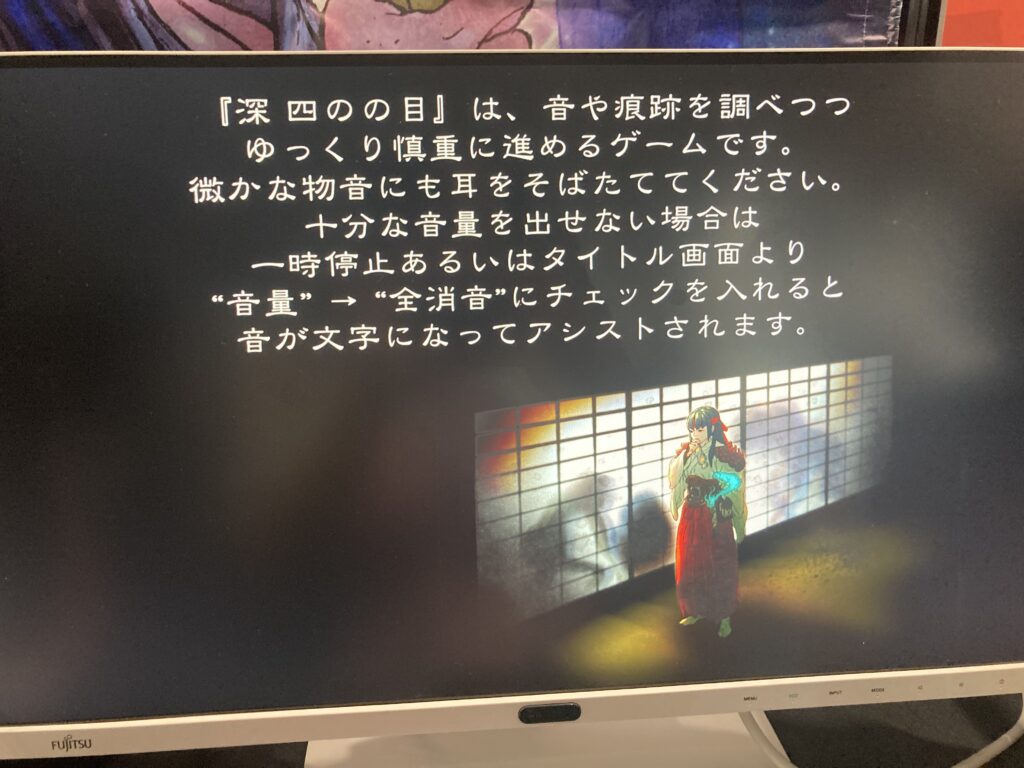
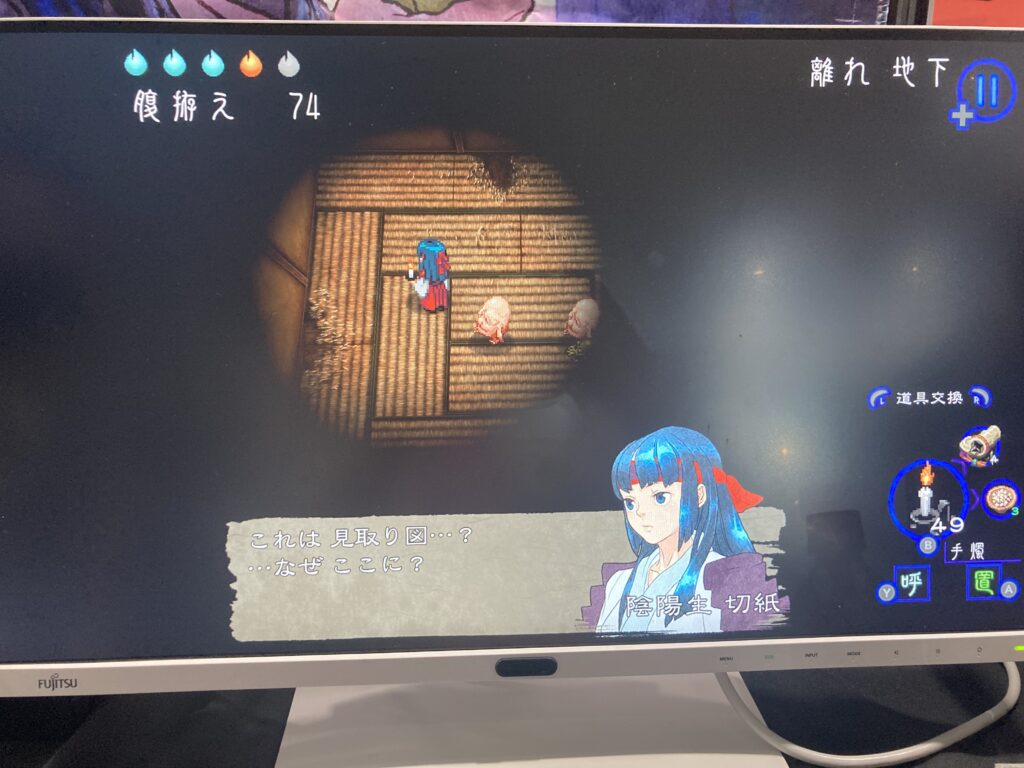
What surprised me the most was the high quality of the sound. Even though it was a demo version, I was impressed by the full voice acting of the characters. More importantly, the balance of environmental sounds and volume was adjusted very comfortably, cleverly creating a serene horror atmosphere. By the way, the voice of Yono saying "Moshi moshi" when checking if there are any monsters behind the door struck me as very cute and left a deep impression.
Of course, the system of setting traps or attacking specific areas is not uncommon in this genre of games. However, seeing these objects and settings, which are not usually encountered, reinterpreted within the "Wa" worldview was still a small but delightful experience.
Unfortunately, in this demo version, I couldn't experience the diverse enemies and mechanisms seen in the trailer, as well as the other persona of Yono that appears in moments of crisis, which touch on the core of the story. However, this in turn raises my expectations for the official version. I look forward to the day when the full picture of this nostalgic yet novel "Wonderful Dungeon" is revealed.
Reverie: A Puzzle of Reversed Space and Memory Reunion
Now, to conclude this visit to the Tokyo Game Show, I would like to introduce a puzzle adventure game from South Korea, Reverie. This work quietly stood in the Selected Indie area, catching my attention with its unique system.
The core of this game lies in the reversal of "buried space" and "open space," which is a very unique rule. Players can stand on black block spaces and freely move in empty spaces. These two characteristics can be interchanged through specific actions. Places that were once walls become roads, and places that were once roads become walls. This simple rule transformation creates surprisingly deep puzzles.
Whenever I encounter many puzzle games, I always think, "How did they come up with such a concept?" This pure surprise and respect. For someone like me, who is not very good at puzzle games, this is the first step to understanding and enjoying the game. Reverie also posed this question to me.
However, what makes this encounter with the game even more special is that it is not my first encounter. In fact, I had previously experienced an early version of Reverie at another event. It was indeed last year at "Burning Beaver" with Hana-senpai. According to my memory at that time, this work seemed to be a more rigorous and pure puzzle game. Although I was attracted by its unique art and worldview, I also have some helpless memories of its high difficulty.
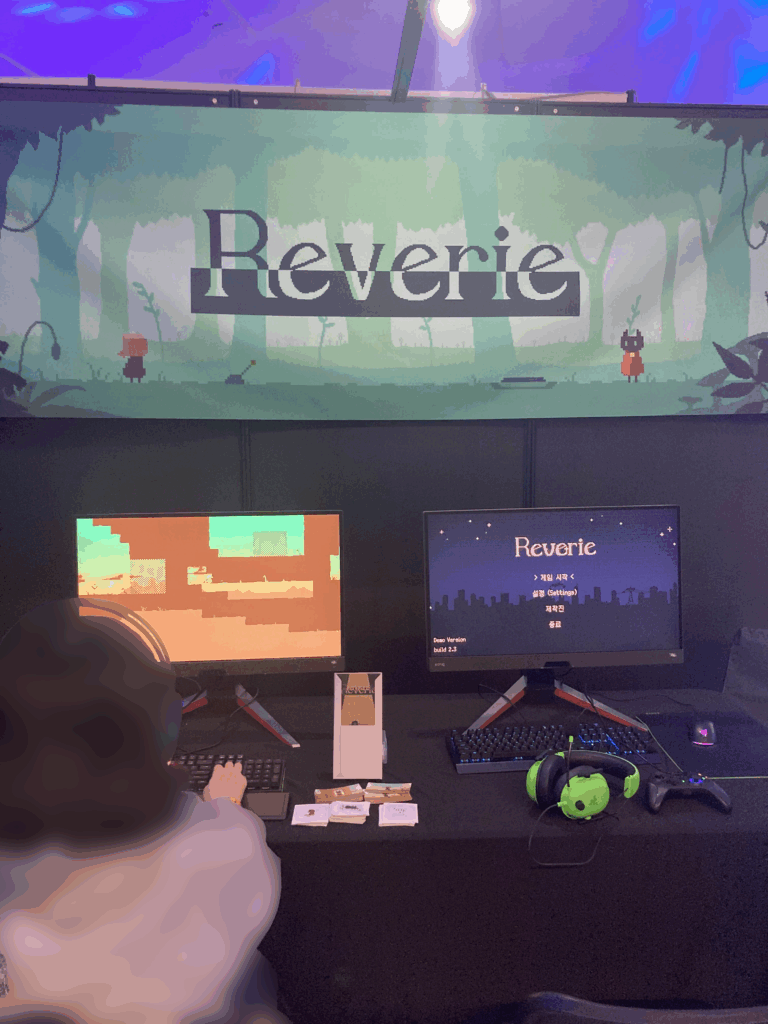
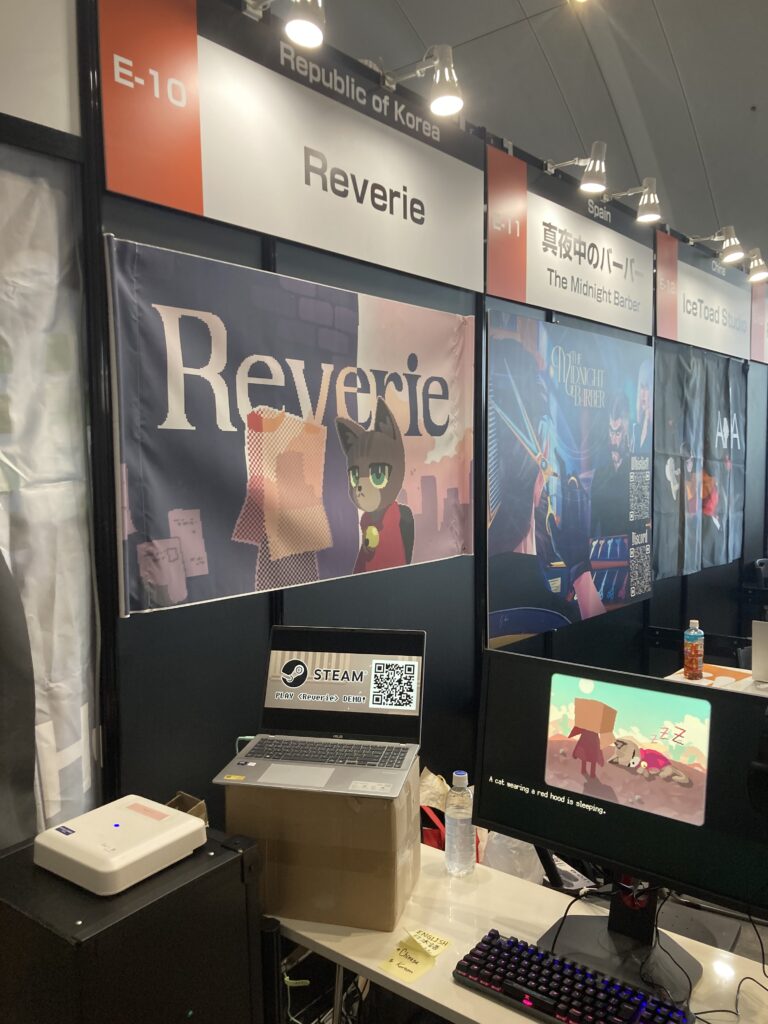
About 10 months have passed. The game "Reverie," which I unexpectedly reunited with at the world's largest gaming festival, has undergone significant evolution from what I remembered. This time's demo, while shorter in gameplay duration than before, provides a more detailed introduction to the story, characters, and world-building.
When pursuing indie games, you sometimes encounter such delightful reunions. Parts that once felt somewhat regrettable or that I silently hoped would be improved have been perfectly supplemented over time, presented in a broader form before my eyes. This is one of the irreplaceable joys for indie game enthusiasts.
Once likely to attract only pure puzzle lovers, "Reverie" has now grown into a profound work that gently welcomes players drawn in by its unique atmosphere. It is precisely because I can witness this delightful change that I want to conclude this lengthy report with this game.
Conclusion of the Report
So, regarding the 【first part】 and 【second part】, we introduced six uniquely characterized indie games from six different countries. What do you think?
China's "Thank You for Your Application" reveals the absurdities of modern society. Russia's "SOBAKISTAN" depicts an atmosphere that transcends language barriers. Germany's "PVKK" showcases the power of experiences beyond logic. Mexico's "Lucha Masters" exudes an incomprehensible passion. Japan's "Deep Four Eyes - The Yin-Yang Shaman -" awakens nostalgia and new fears. And Korea's "Reverie" presents a delightful reunion and a genuine growth story.
The common thread among these six works is that even amidst the hustle and bustle of TGS, the creators' solid "soul" remains at its core, never to be drowned out.
The glamour of major titles is also impressive. However, in a place with such diverse nations and cultures, the creators' dedication to what they believe is "interesting" ultimately leads to a dazzling array of creations that are diverse, sometimes twisted, but all the more lovable for it. This may be the greatest joy of walking through the indie game area at the Tokyo Game Show, and I feel it deeply once again.
The six different "questions" they posed have once again stimulated me and given me some homework. So, what will my "answers" look like? That is another story.
Well then, see you in the next report.