

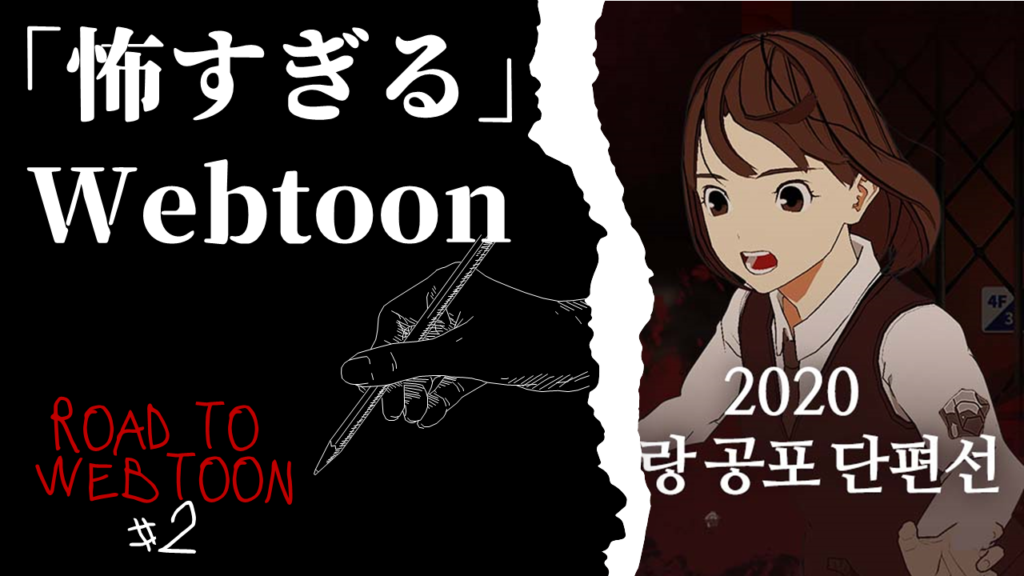
There were actually complaints from people living in that area. "It's too scary." (Translation by the author)
‐ Horan, July 9, 2014
[blogcard url=”https://www.mk.co.kr/news/all/6176661″]
In 2011, an incident shook the Korean Webtoon scene. A work that was released at the time became a hot topic for being "too scary." What kind of content could have caused such a stir?
Back then, I had no tolerance for horror at all, so I started reading works that were popular at the time only years later.
One such example is the work I briefly mentioned in the previous section, 'Let's Fight Ghosts' (2007). Despite being in the horror genre, it gained popularity for its unique humor and interesting storyline. If it hadn't shifted to a gag manga style midway, I might never have read it until now.
[blogcard url=”https://comic.naver.com/webtoon/list?titleId=23182&tab=finish”]
Therefore, of course, there was no way I could read the "too scary" Webtoon that had become a hot topic at the time. However, hearing that it was covered by the media and gained attention overseas, I made a big decision. After school, I gathered about five friends in the classroom to read the Webtoon together.
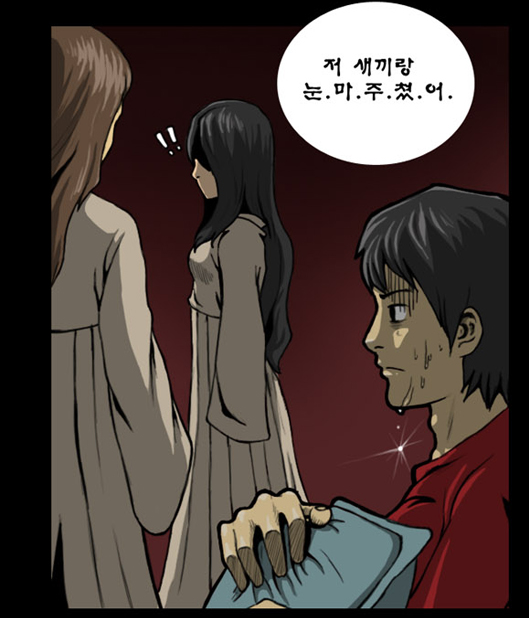
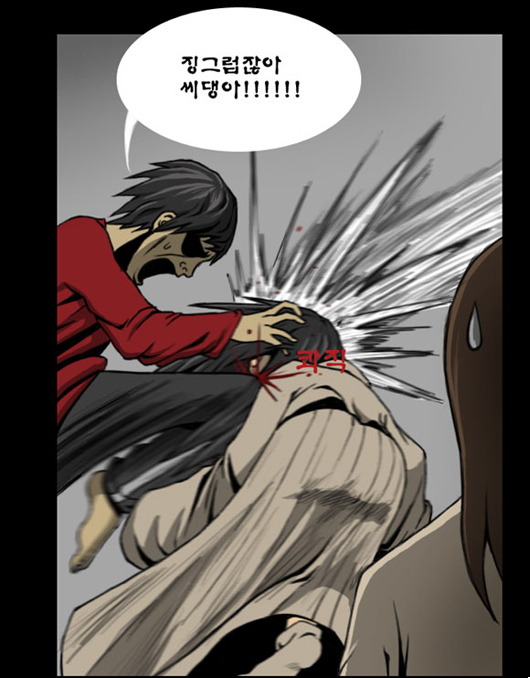
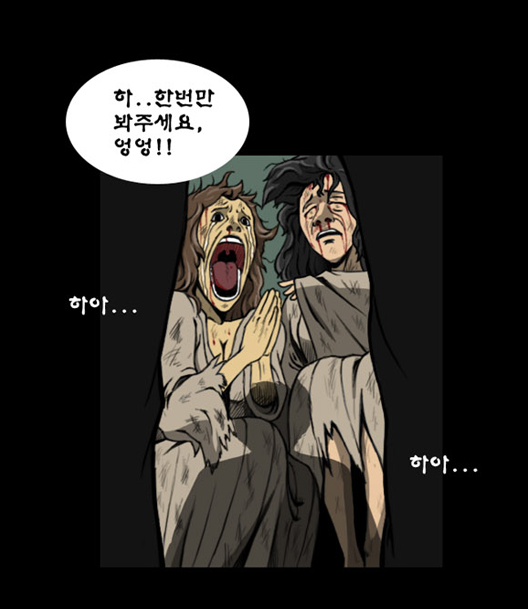
What was the work that I went to such ridiculous lengths to read? It was the two episodes titled "Oksu Station Ghost옥수역 귀신" and "Bongcheon Dong Ghost봉천동 귀신" that appeared in the '2011 Horror Short Story Collection.'
By the way, unlike the previous work 'The Strong Ones,' this one was published four years ago under the name '2020 Horror Short Story Collection' on LINE Manga. As a result, the titles have also changed to "Platform Ghost" and "Ghost of the Back Alley."
Episodes 9 and 10 of this short story collection are the ones that became a hot topic. Viewer discretion is advised for those who are not good with horror 🚫
[blogcard url=”https://manga.line.me/pr/horror_2020_summer/”]
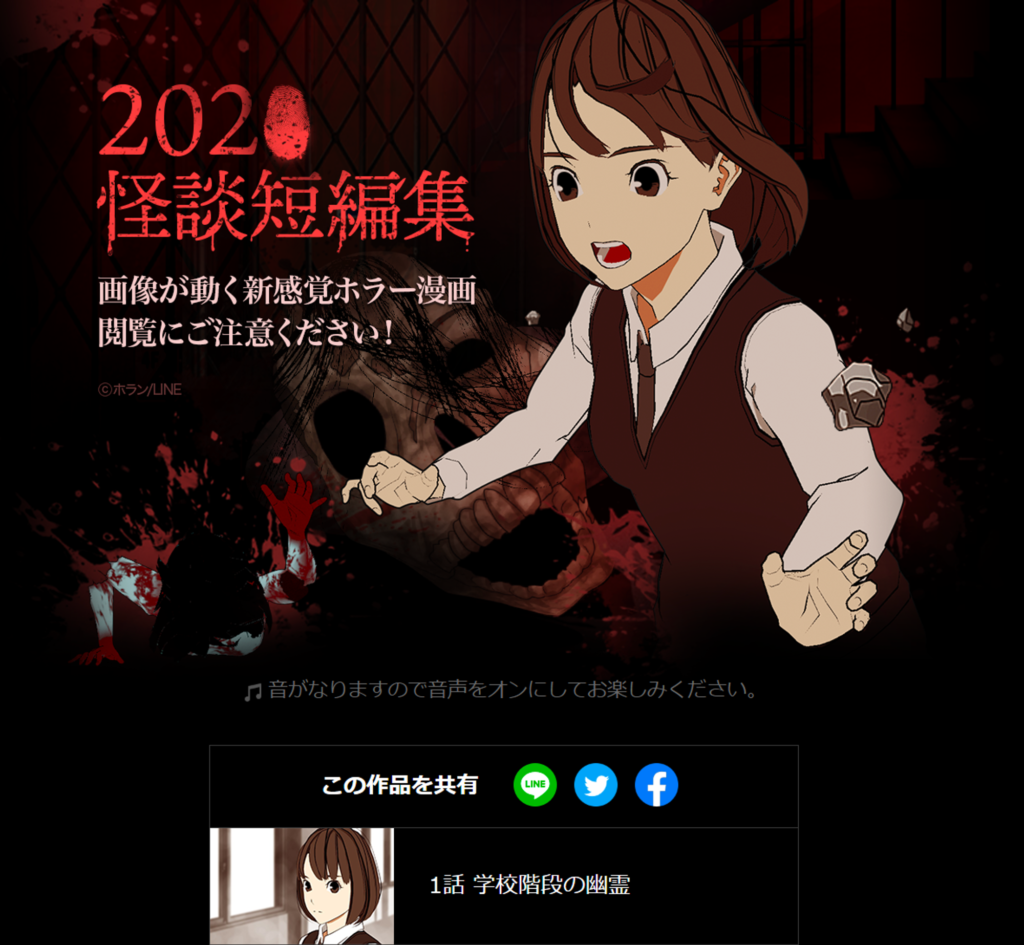
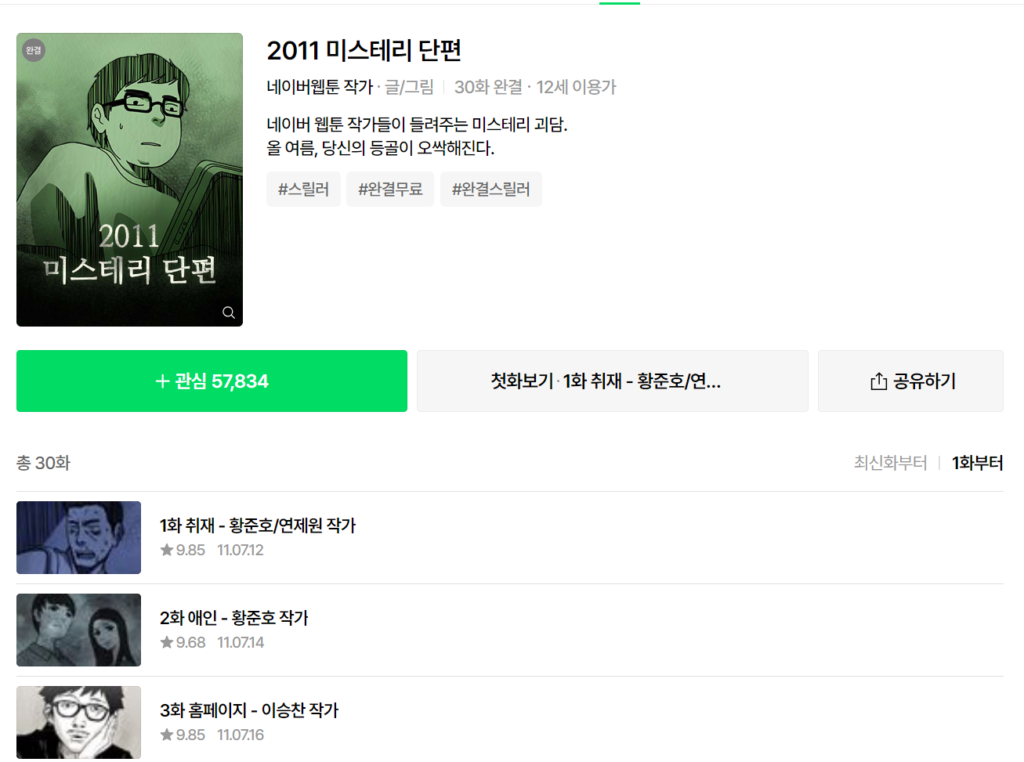
Looking back now, many might not find it as scary as they did back then.
After rereading this work for the first time in 13 years, I found myself laughing, wondering, "Why was I so scared back then?" But the reason is quite clear. It was simply because, 13 years ago, there was no other work like this on Webtoon.
The Webtoon creator Horan, who wrote this work, showcased unprecedented directing techniques that were unimaginable at the time. One of the highlights of this work is the "animation effects using 3D software and FLASH." Readers back then could hardly imagine a horror Webtoon, which was typically static, suddenly coming to life right in front of them.
In the aforementioned episode, "The Ghost of Oksu Station" (Japanese title: Platform Ghost), 3D software is used to create an effect where hands seem to reach out from the screen. However, what deserves even more attention is "The Ghost of Bonchondong" (Japanese title: Ghost of the Back Alley). Now remastered, it features a similar 3D effect as "The Ghost of Oksu Station," but...
When this episode first appeared 13 years ago, it was the first Webtoon to attempt a flipbook-style animation by using FLASH to forcefully scroll the user's view, making several images appear to move.
From a technical standpoint, I believe that current Webtoons are still at a level where they merely bring published comics to the web. I want to establish the standards for production techniques of "Interactive Toon" that can express what digital media can offer and respond to user interactions. (Translated by the author)
– Horan, May 23, 2014
[blogcard url=”https://news.mt.co.kr/mtview.php?no=2014052311263945369″]
Continuing from the previous discussion, one standard that defines current Webtoons is "reading methods suitable for smartphones and tablets."
However, we often overlook the fundamental premise that we are reading comics on digital media, not on paper.
With paper, you can adjust your reading pace.
Images on paper do not move unless you flip through them yourself.
Paper comics do not make sounds.
The common sense of (paper) comics, which we took for granted, is overturned when it shifts to digital. Horan was the only Webtoon creator who began to question what people at that time ignored or overlooked.
Triggered by these two works, which shocked not only Webtoon readers but also those who had no prior interest, the Webtoon world underwent significant changes.
The most notable change is that Webtoons now include background music. While it has become a common technique with the addition of a feature to include BGM on Webtoon sites, until the early 2010s, it was nearly impossible to add BGM without Horan's assistance, leading to his name being credited in many works.
Even in the late 2010s, when the reading methods for Webtoons were in disarray, Horan's name remained prominent. From Smart Toon, where panels are swiped horizontally to fit smartphone screens, to Moving Toon, where images move in sync with scrolling, and Cut Toon, where square panels flow horizontally, Horan continued to be referred to as the Prometheus who brought change to Webtoons.
The way Webtoons are read has gone through various attempts to reach their current form.
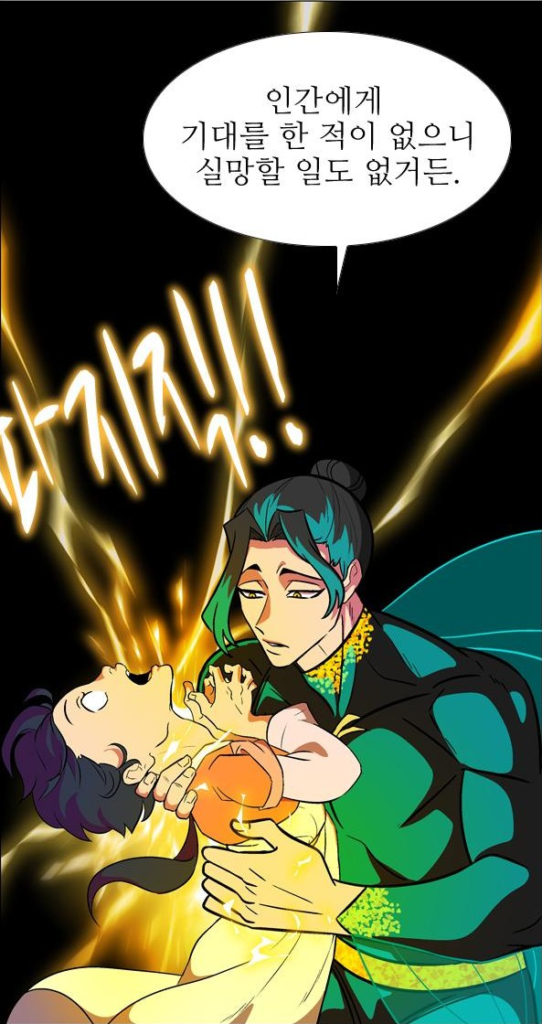
"Street Talks" (2016)
Quoted from the first episode of the work.
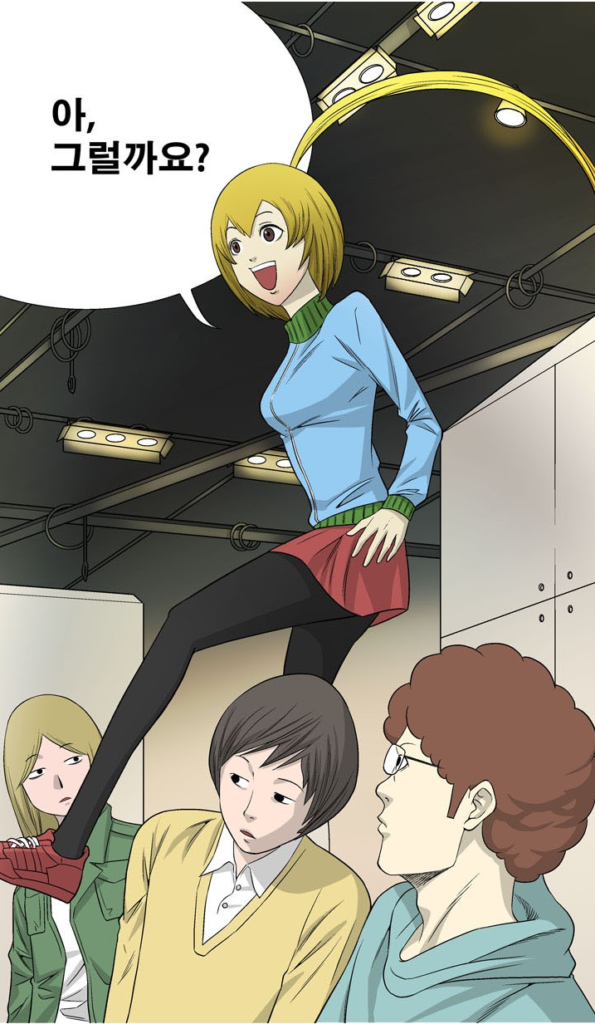
"Buff Girl Oora" (2012)
Quoted from the first episode of the work.
The genre that exists on the boundary between manga and animation is referred to as "motion comics" abroad. In Korea, it is said that the Webtoon "Ghost of Oksu Station" by writer Horan, released in 2011, marks the beginning. (Translated by the author)
[blogcard url=”https://www.hani.co.kr/arti/culture/culture_general/645612.html”]
Horan did not simply create a work where "the pictures come to life." What Horan created was the awareness that readers had almost forgotten, the realization that they are reading comics digitally, not on paper.
Even now, Webtoon works that make the pictures move are considered quite rare. However, to reach the current form of Webtoon, which is easy to read on smartphones and tablets, this awareness is essential.
In this post, I won't delve deeply into the content of the works. However, among the readers of this article, there may be those who want to experience the history of Webtoon themselves and touch upon its changes, even if just a little. For those fashionable individuals, I would like to recommend this work...
[blogcard url=”https://manga.line.me/pr/horror_2020_summer/”]
Park Juhyun
Born in 1998, from Korea. Working at a Japanese animation studio since this year. After reading Webtoons for over 15 years, I realized I had spent over 100,000 yen on early access. Currently, I am writing articles about Webtoons with the desire to earn back what I spent through view counts.