

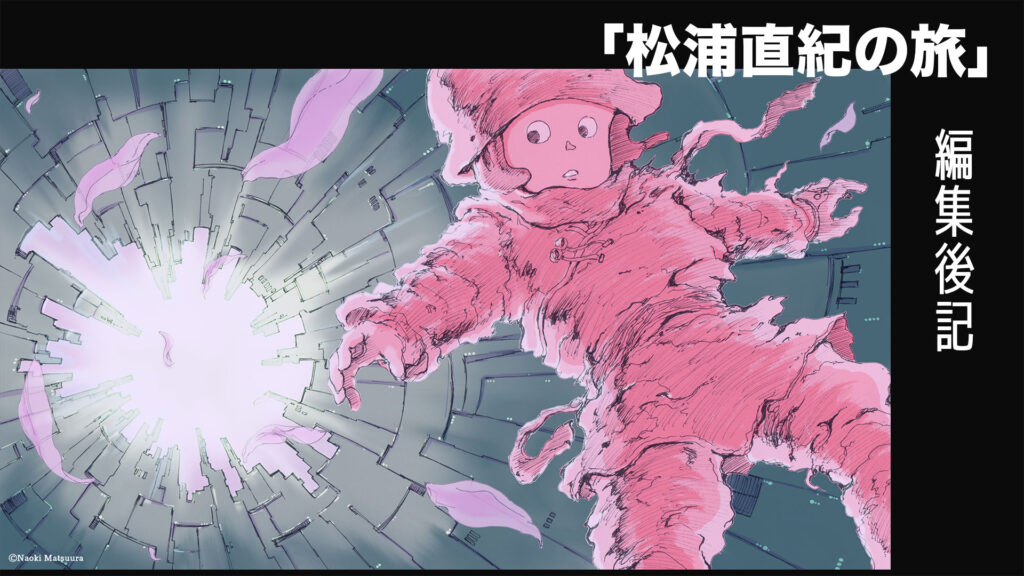
This time, we recorded a session with animation director Matsuura. Through our conversation, his passion and philosophy for creation were deeply conveyed. In this article, I would like to delve deeper into his history, the way of thinking he has cultivated, and the background and production process of his self-produced work, "Fire Making." I will break it down into simple chapters to discuss the topics.
Passion and Influences from Childhood
The roots of Matsuura's creative activities are strongly reflected in the diverse influences from his childhood. His first passion for manga began with Fujiko F. Fujio's "Doraemon," and he has been influenced by numerous works such as "Dragon Ball," "Akira," and "Parasyte." These works nurtured Matsuura's sensibility and became a source of creative energy.
In particular, "Doraemon" was Matsuura's first manga experience and had a strong influence on storytelling and character creation. The episode where he was drawn to "Akira's" tagline of "violent yet beautiful" offers a glimpse into Matsuura's creative philosophy. I can understand why his works, built on such manga experiences, reflect a stance that values depicting complex human emotions and situations rather than simple good versus evil.
Creative Philosophy and Worldview
Matsuura gained insights about the unspoken understandings of society from childhood experiences like "the little person in my stomach" and "Santa Claus." These episodes indicate that Matsuura is sensitive to the boundary between reality and fiction, often reflecting that ambiguity in his works. I felt that this was the reason why his works are not just entertainment but contain deep philosophical inquiries.
Synergy of Music and Visuals
In Matsuura's works, music plays an important role. From the music of Geinoh Yamashirogumi in "Akira" to his encounter with his brother, it is clear that music is a significant source of inspiration in his creations. Quoting Mamoru Oshii's words, "Half of a movie is music," Matsuura emphasizes the synergy between music and visuals. I feel that the way he selects and uses music in his works functions not just as background sound but as an integral part of the story.
Matsuura's Encounter with Satoshi Kon
Reflecting on his encounter with director Satoshi Kon, animation director Matsuura felt that it was a moment that greatly influenced his career. What stood out particularly was when Matsuura showed a flyer for "Hottarake no Shima," and Satoshi Kon remarked, "Nothing from what Japanese animation has cultivated is being utilized." This single statement was a significant shock for Matsuura and provided important insights for his subsequent career development.
Satoshi Kon's words contained deep insights and critiques regarding his own animation. What Matsuura felt at that moment was likely a sense of disappointment regarding the tradition of Japanese animation and the failure to inherit it, beyond just a technical critique that Satoshi Kon was expressing. This observation likely served as a catalyst for Matsuura to reevaluate animation, prompting him to put in even more effort in his future works.
Inheritance and Innovation in Japanese Animation
Satoshi Kon's words, "Nothing from what Japanese animation has cultivated is being utilized," carry deep meaning. Japanese animation has built its own unique expression techniques and aesthetics over a long history. However, there is criticism that these traditional techniques are not being sufficiently utilized in the face of modern technological advancements.
In response to these words, Matsuura was likely prompted to reflect on his own works and take on new challenges. His works show attempts to integrate traditional animation aesthetics with the introduction of CG technology. This demonstrates a pursuit of new expressions while inheriting the spirit of Japanese animation, going beyond mere technical evolution.
Episode with Director Mamoru Oshii
Another significant encounter for Matsuura was the dialogue with director Mamoru Oshii. In particular, the words "I haven't opened Photoshop in years" were shocking for Matsuura. This statement indicates that for a director, not only technical skills but also vision and communication abilities are essential.
Moreover, Oshii's words, "You can save what you want to do for next time," teach the importance of having a long-term perspective rather than trying to accomplish everything at once. This highlights the significance of planning and sustained effort in creative work, offering profound insights and a sense of patience.
Oshii's words taught Matsuura the importance of having a broad perspective beyond the role of a production manager. This helped him establish a unique position as a director while leveraging his experience as a production manager in his later career.
The experience of receiving these words directly from directors is a valuable lesson for young creators, I believe. Matsuura's journey illustrates the importance of pursuing one's vision without being confined to techniques or methods of expression. Additionally, the attitude of learning from various encounters and words and connecting them to personal growth will inspire many creators.
Theme and Background of "Fire Craft"
"Fire Craft" is based on Sasuke, a real-life scissor blacksmith from Sakai City, Osaka. This historic blacksmith shop has been in operation since the late Edo period, and the current fifth-generation blacksmith, Yasuhiro Hirakawa, continues this tradition. Matsuura became interested in this theme through a connection with his friend Aoi, who supports Sasuke.
Moved by the sharpness of the scissors crafted by the blacksmith, Matsuura decided to express that skill and beauty through animation. The emotion felt at the moment of holding a well-crafted pair of scissors was something that could not be captured by sight or sound alone; it was a sensation felt throughout the body. How to express this in animation was one of the significant challenges of "Fire Craft."
Particularly noteworthy in "Fire Craft" is the blacksmithing scene. Matsuura focused on depicting the precision and beauty of craftsmanship through this scene. The portrayal of the hammering of scissors pursues visual realism while utilizing the rich expressiveness unique to animation. By conveying the texture of materials such as heat and hardness through sight and sound, it evokes a bodily sensation in the viewer.
Production Process and Crowdfunding
Crowdfunding played a significant role in the production of "Fire Craft." Matsuura gathered funds from many supporters through crowdfunding to support this independent project. In particular, the participation of the music unit UQiYO became a factor that further enhanced the quality of the work.
The collaboration with Yuqi from UQiYO began when Matsuura fell in love with their music. Inspired by their song "TWiLiGHT," Matsuura attended their live performance and approached them directly. This proactive attitude led to the collaboration with UQiYO, successfully adding deep musical elements to the work.
The Relationship Between Physicality and the Work
What Matsuura wants to convey through his work is the importance of physicality. In modern society, there is a tendency to focus on sight and sound, but he believes it is crucial to re-recognize the value of sensations felt throughout the body. The sensations that can be felt through the work of a blacksmith, as well as the weight and sharpness felt at the moment of holding a tool, are things that cannot be captured by sight or sound alone, and expressing this through animation is one of the goals of "Fire Craft."
Sasuke's Scissors and 150 Years of History
Matsuura recalls that when he held Sasuke's scissors, he felt the 150 years of history and the thoughts of the craftsmen behind them. He found great significance in expressing this history and tradition through animation, considering how to inherit and pass on long-standing techniques and traditions in the face of evolving modern technology and culture as an important challenge.
"Fire Craft" is not just a record of craftsmanship; it aims to depict the history and culture behind it, as well as the thoughts of those who carry it on, creating a work that will deeply move its viewers.
In Conclusion
Matsuura's "Fire Craft" is a work filled with his philosophy and passion for animation production. Created with the support of many backers through crowdfunding, this work emphasizes the sensations felt throughout the body, transcending sight and sound.
Looking forward, I hope Matsuura continues to pursue the possibilities of animation by blending tradition and innovation through new works, and I also wish for "Fire Craft" to be seen by many people, increasing opportunities to share its impact.
(Written by: Yuki Sakoda)